



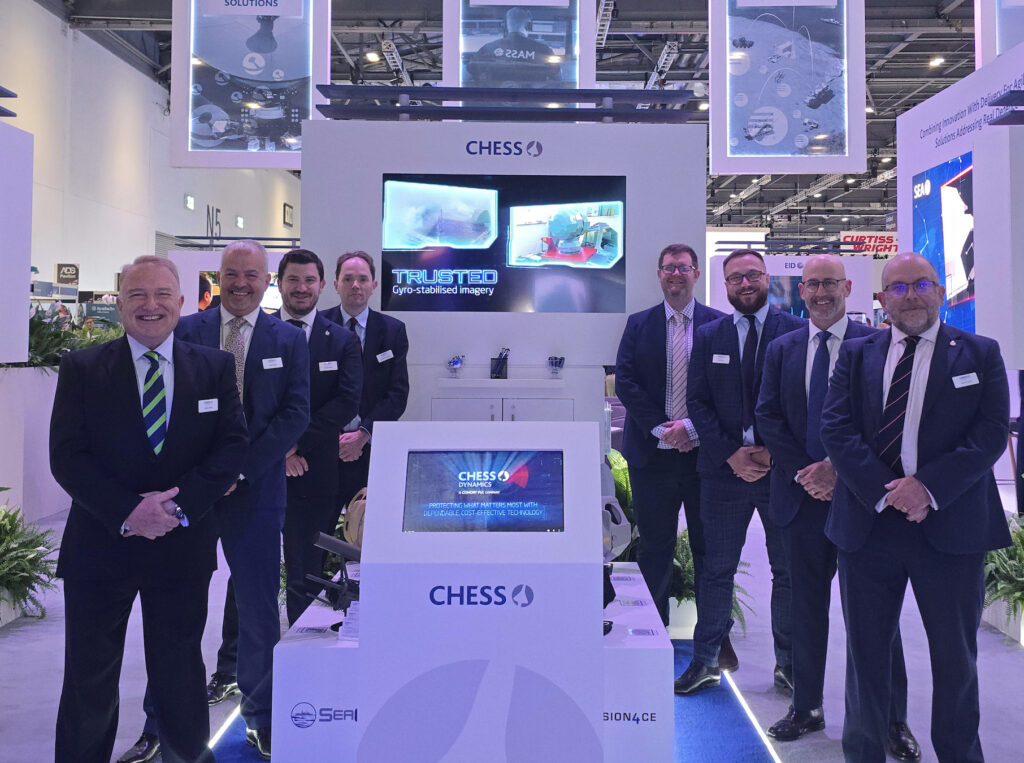
Chess Dynamics showcased innovations in surveillance, AI-powered tracking, and ruggedized video systems at DSEI 2025.
In an exclusive Q&A, Senior Land Sales Manager Richard Varley and Vision4ce Sales Manager Owen Sogeler highlight advances in fine-grained drone detection algorithms, high-accuracy pan-tilt systems, and the adaptable Hawkeye Fixed Surveillance system for precise target grids.
They also discuss resilient maritime video processing units and rugged video recorders, proven in harsh naval environments. Addressing rising drone threats, Chess emphasizes AI-driven automation to reduce operator burden while maintaining human oversight, demonstrating rapid detection, classification, and tracking of small UAVs in complex scenarios.
What are the key innovations and solutions Chess Dynamics is highlighting at DSEI 2025?
RV: From a hardware perspective, our goal is to broaden our customer base by responding directly to the evolving threat environment. We’re constantly monitoring the information being released, assessing it within the context of our current operating environments, and looking for ways to integrate those insights into our product line.
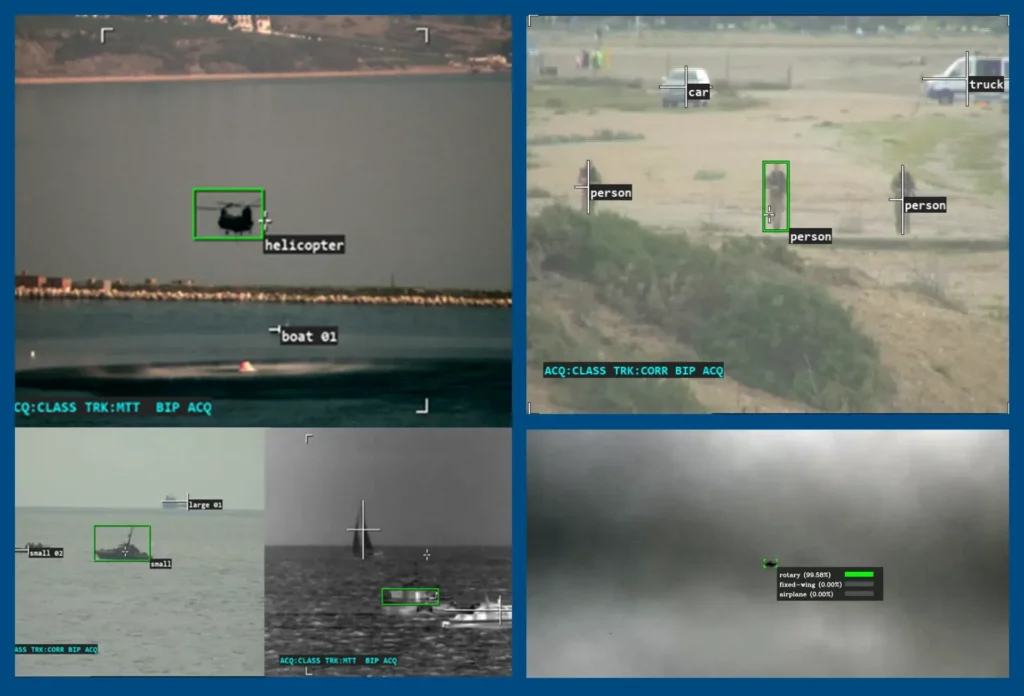
OS: From a vision standpoint, we want to demonstrate the effectiveness of our algorithms. For example, on the board right now, you can see the IR version. This represents a new algorithm we’re developing for drone detection. It incorporates a new aerial-based fine-grained classifier that now covers six categories: multi-rotor UAV, fixed-wing UAV, airplane, helicopter, and related platforms. Any of these that appear in the video feed can be detected, classified, and tracked. This fine-grained classifier is distinct from our more generic one, which identifies broader categories such as person, vehicle, drone, aircraft, or ship. The ability to switch between general and fine-grained classification depending on operational needs is a key capability we’re showcasing. A video at our stand highlights this, demonstrating how our system can detect and track drone threats even against highly complex backgrounds or foregrounds, maintaining consistent accuracy.
RV: Highly accurate pan-tilt systems have been around for some time, but when combined with the continuous advancements our team is making in algorithms and tracking, the result is a true force multiplier. Together, these innovations transform pan-tilt accuracy into a world-leading system.
Could you elaborate on the capabilities of your Hawkeye Fixed Surveillance system and how it complements your other Hawkeye variants?
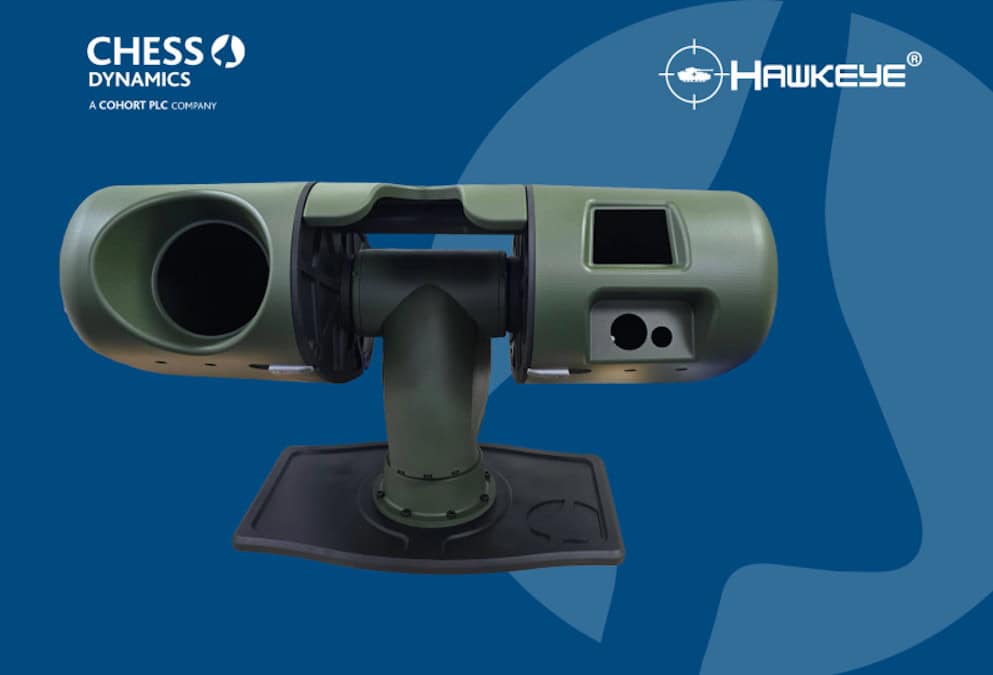
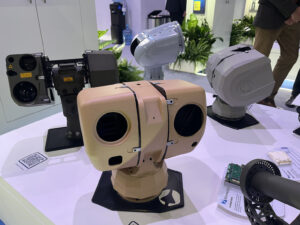 RV: The Hawkeye multi-sensor is built around what we call a Viper pan-tilt positioner head, but it can be configured to meet specific end-user requirements. Thanks to the high accuracy of the pan-tilt system, we can generate highly precise grids using electro-optical, infrared, and other sensors. With the addition of laser rangefinders, this accuracy allows us to create target grids that can be used to support battlespace effects at both the tactical and higher operational levels, since the information can be rapidly disseminated across the wider force.
Could you provide details on your maritime video processing units and rugged video recorders, specifically, their resilience and performance in harsh marine environments?
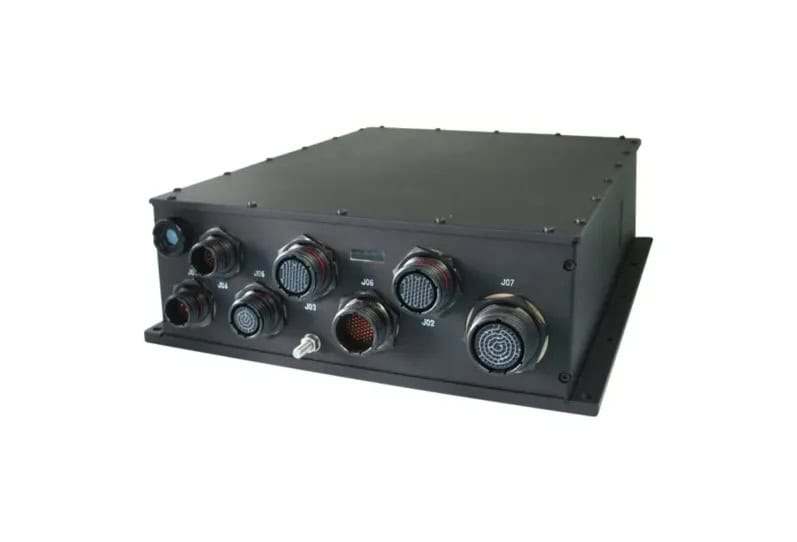
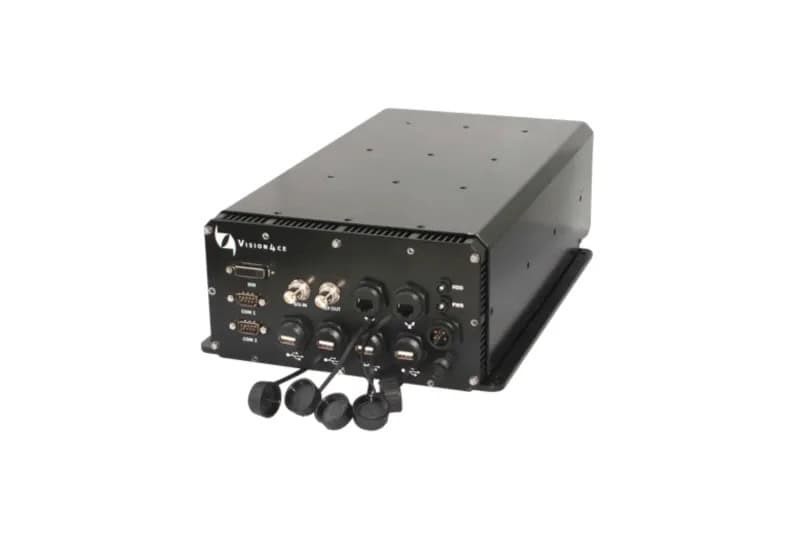
OS: That refers to our GRIP range of products. Essentially, we offer a selection of IPCs, and based on your specific requirements, we build a custom system. At present, we have several deployed with European navies, where we integrate multiple video feeds and output them to a range of displays, using the systems as Video Display Processing Units (VPDUs). In terms of performance in harsh environments, we adapt and rebuild to meet the exact specifications required.
RV: We bring over a decade of experience in ruggedizing products. Some of our systems have been operating on maritime platforms for more than ten years without requiring servicing. By applying this knowledge and expertise to both our hardware and processing, we ensure the complete package is robust, reliable, and fully suited for demanding maritime and land environments.
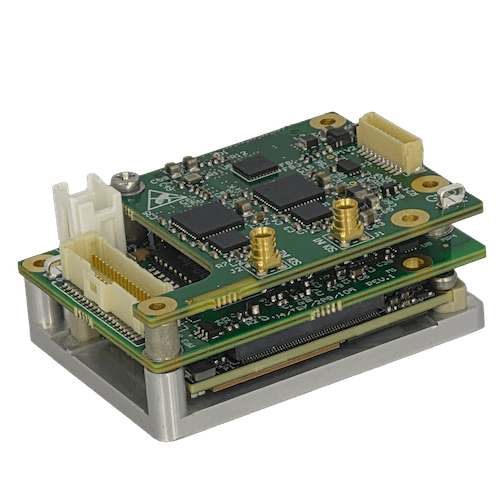
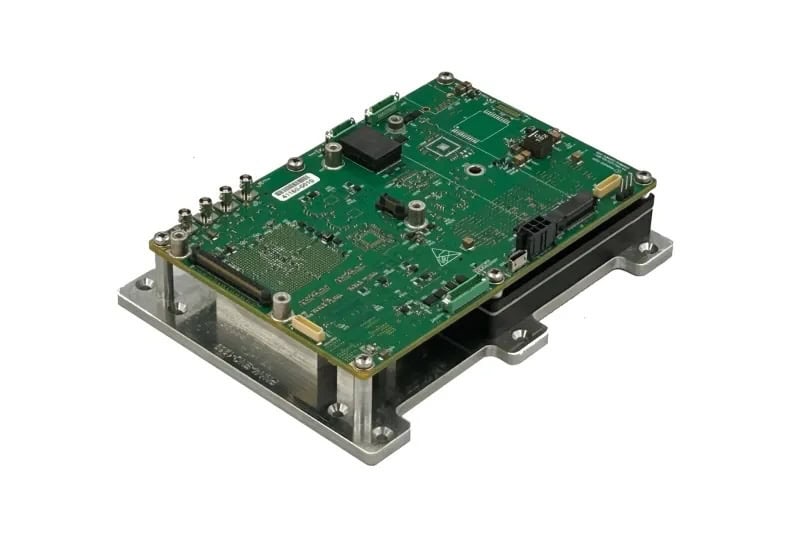
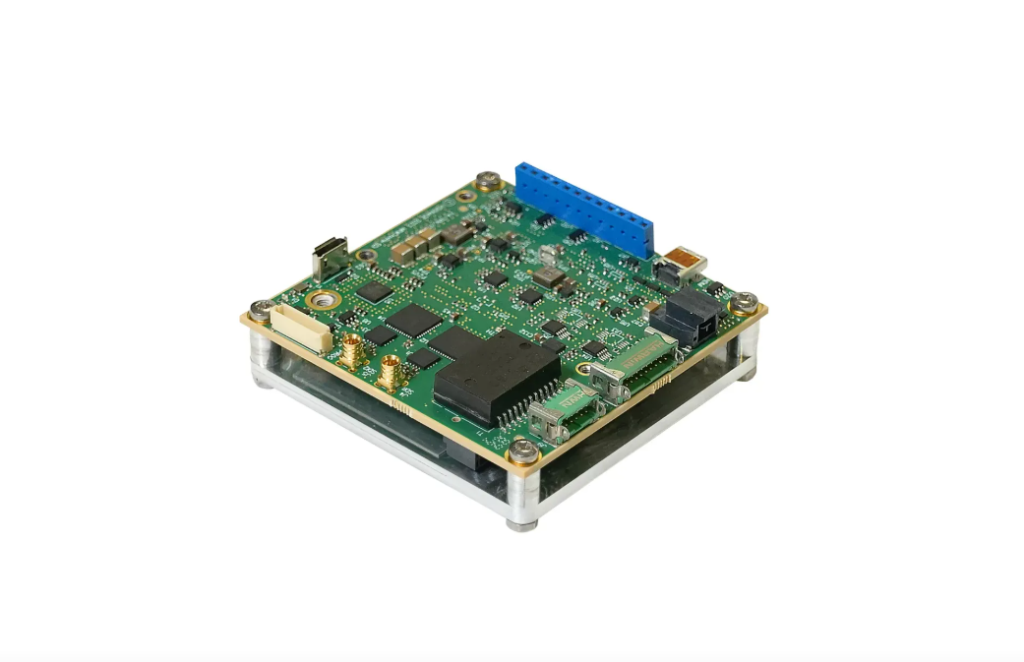
With the recently launched CHARM150AGX delivering twice the processing power of the CHARM100NX and supporting dual-sensor fusion, what new applications or deployment scenarios does this enable?
OS: We already have this capability, but what the 150 enables us to do is concurrent detection and tracking. In other words, while we are tracking one particular object, we can simultaneously detect and begin tracking new ones as they appear. This means we can handle multiple targets at once while still maintaining protective functions. It also allows us to perform track-while-scan operations.
For naval systems, you can have a single sensor mounted on the front of a vessel. As it scans back and forth, searching for specific objects, it may detect something, such as a navigation hazard, even as the vessel moves. If that object temporarily moves out of the sensor’s field of view, we can continue to track it and update its position relative to the vessel when it comes back into view.
We are also able to process higher input resolutions for initial detection and tracking. As both resolution and processing speeds increase, our systems are better equipped to manage them. Traditionally, we’ve moved from low-resolution analog systems to today’s high-resolution capabilities. This transition allows us to process a much larger field of view, meaning we can see farther and detect smaller objects more reliably.
With the rapid rise of drone and loitering munition threats on the modern battlefield, how are your Hawkeye Air Defence and Vision4ce AI-powered tracking solutions being adapted to provide faster detection, classification, and engagement of unmanned systems?
RV: We are acutely aware of the rapid advancement and widespread use of drones on the modern battlefield. You can’t turn on the television without seeing the latest figures from ongoing conflicts, and that reality is always front of mind as we develop our systems.
A key priority for us is reducing operator burden. The people monitoring these systems may be at their stations for long stretches of time, and they now need AI support to perform effectively. If we expect an operator to stare at a screen for eight hours, we are failing them. Our responsibility is to provide automation wherever possible, whether that’s detection through passive and active sensors, target recognition, or automatic slew-to-cue driven by advanced algorithms.
That does not diminish the role of the human operator. They remain firmly in the loop with full authority to override the system, which is a critical principle for us. Our approach combines state-of-the-art hardware, with the best sensors integrated into our systems, with in-house developed software that enables rapid, accurate detection, recognition, and classification.
OS: We’ve got a video demonstrating its capability, which will be available on our website. In this clip, you’ll see a Class 1 drone, measuring 20 by 20 centimeters, flown about 500 meters from our position by an FPV pilot from the British Armed Forces. This showcases the new drone tracking algorithm, including the fine-grain classifier I mentioned earlier.
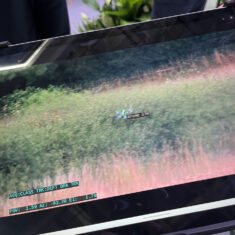
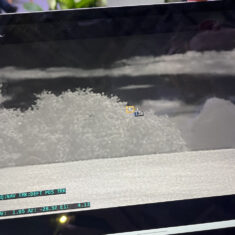
The footage captures the drone moving at real speed, simulating an attack on our position in a realistic scenario. The drone is flying below the tree line against a highly dynamic background. This is where the depth-based, deep embedded feature tracker comes into play, you can see it working across the hedgerow, which remains in perfect focus alongside the drone itself.
What has been achieved here is teaching the system to recognize what the drone looks like, allowing it to subtract and distinguish the drone from both the background and the foreground.