

UAV/Drone Cameras
Discover cutting-edge solutions from 4 leading global suppliers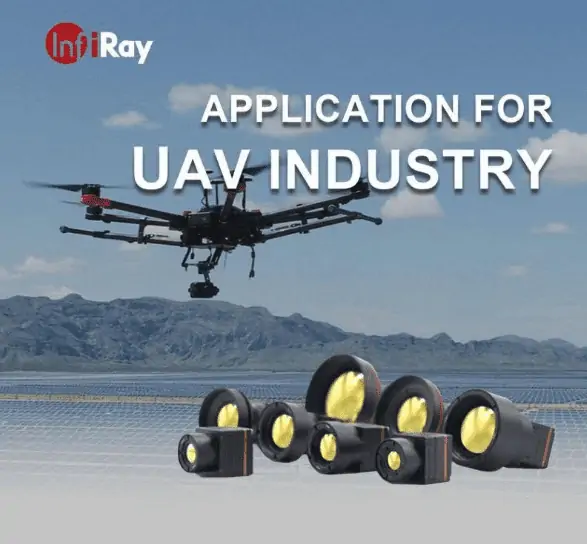
IRay Technology Co., Ltd. (InfiRay) discuss the advantages of combining unmanned aerial vehicles (UAVs) with thermal imaging technologies, widely used in fire protection, powerline inspection, industry, construction, transportation, and scientific research.
The routine inspection capability of UAVs has improved. Thermal imaging technologies enable UAVs to timely identify abnormal high-temperature and low-temperature areas without being affected by light, smoke, and mist. UAVs can find various problems and causes in target areas through round-the-clock and real-time monitoring, and are capable of observing the basic surface as well as conducting routine inspection with in-depth observation and analysis.
The disaster relief capacity of UAVs has also improved. With the application of thermal imaging technologies, UAVs have become more powerful in fast people search and fast source positioning, making them an important tool for post-disaster rescue, fire source confirmation, and daily police search.
The combination of “UAV + thermal imaging technologies” realizes night vision tracking and heat source detection without the limitations of space, terrain, and light. In this way, UAVs have upgraded from “eyes in the sky” to “eyes visualizing heat”, they have greater capabilities and broader application fields, including fire rescue, electric routine inspection, environmental protection supervision, routine inspection and enforcement, and wildlife research.
Fire & Rescue

With great temperature-sensing ability, thermal cameras can clearly distinguish the temperature of people from that of the surrounding environment and accurately find the location of people stranded, even at night, to ensure timely rescue. At present, they are widely available for fields such as: urban fire protection, forest fire prevention, maritime rescue, post-disaster personnel and search & rescue.
Routine Powerline Inspection

Routine Inspection of Photovoltaic Plants

Environmental Protection & Supervision

Law Enforcement

Wildlife Research

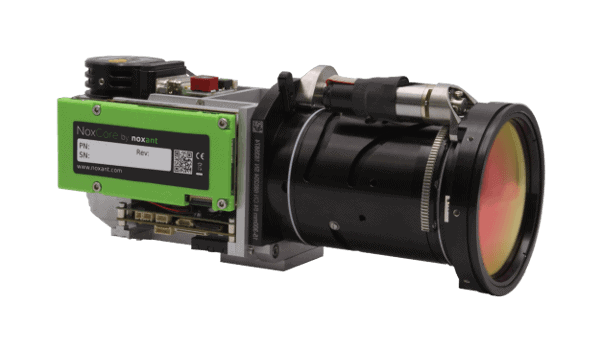
InfiRay Micro III Series Ultra-Small Professional Thermal Camera Core adopts a unique process and optimized circuit to produce a product that is extremely compact and lightweight, with low power-consumption.
Matrix III image algorithms and Altemp intelligent temperature measuring algorithms are adopted to output highly precise temperature measuring data. Rich data interfaces and comprehensive analysis functions make it easy to operate and quick to integrate, providing professional solutions for thermal imaging products for users in the UAV industry.
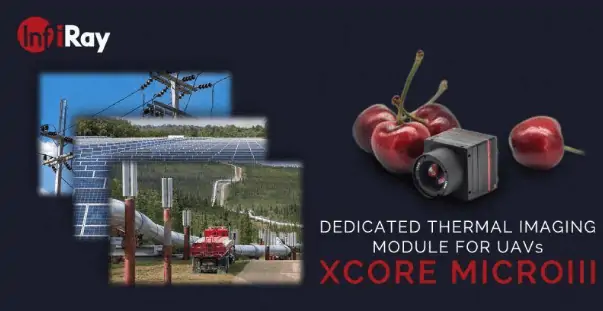
Cherry Chip, Tiny Titan
- Compact, neat cherry-like shape and size, easy to integrate
- Lightweight & SWaP conscious for even the smallest UAVs
- Extremely low power consumption alleviates heat dissipation concerns
Satisfying integrator’s demands regards scope and accuracy
- The maximum 1280×1024 HD infrared resolution allows you to observe greater temperature details and delivers clearer infrared image quality
- Meets the application needs of different industries with -20°C to +550°C wide-range temperature measurement, ±2 or ±2% high measurement accuracy, and fast and stable temperature measurement
- The frame rate can reach 30Hz (50Hz optional), so that the video is smooth when observing high-speed moving targets or targets with rapid temperature changes
- High sensitivity (0.04°C), providing HD images while rendering more details and detecting farther targets
The Matrix III intelligent image algorithm not only provides accurate temperature data but also makes image details clearer
Equipped with interfaces, lenses, temperature measurement mode, secondary development, and more…
- Various data interfaces adaptable to the UAV platform, effectively shortening the R&D cycle and reducing the R&D cost
- Multiple focal length lenses are available to output high-quality infrared images, which can easily meet the detection demands of various application scenarios
- Multiple palettes and temperature measurement modes help engineers conduct professional and comprehensive temperature analyses without missing any temperature anomalies
- SDKs are provided to facilitate users’ integration development, improve practicability and feasibility, and benefit users