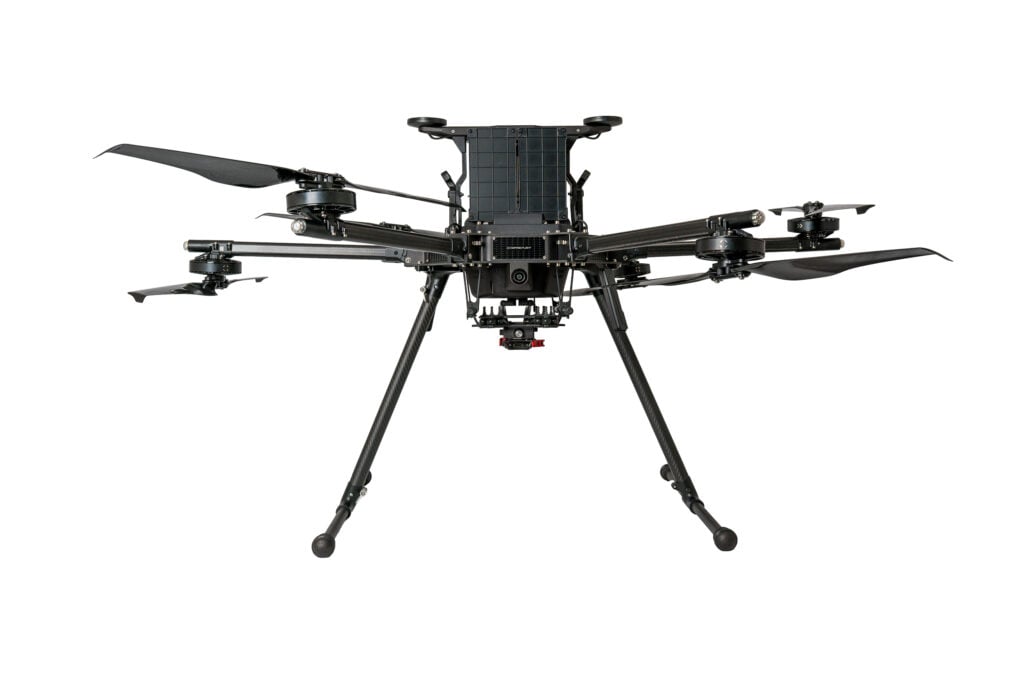
Defense Drones
Discover cutting-edge solutions from 6 leading global suppliers
A NATO surveillance drone has concluded a flight over Finland, Allied Air Command’s newest member.
The unmanned aircraft, traveling at high altitudes above Allies’ territories and in international airspace, collected data for Allies to support their collective deterrence and defense.
Nicknamed “Phoenix”, the RQ-4D remotely piloted aircraft are among the world’s most advanced drones, providing intelligence, surveillance and reconnaissance over a wide area. The NATO-owned and operated aircraft are based in Sigonella, Italy and can stay in the air for more than 30 hours at a time.
Surveillance and reconnaissance data collected by the aircraft and analyzed by NAGSF experts are made available to all Allies to inform Alliance decision-making processes.

This mission, completed on September 13th, was the first time a NATO Alliance Ground Surveillance Force (NAGSF) RQ-4D drone flew over Finland.
This mission came as NATO Air Forces continue to step up their reconnaissance missions on the Alliance’s eastern borders. Since 2022, NATO’s fleet of Alliance Ground Surveillance drones has conducted multiple missions on the Alliance’s eastern flank, predominantly in the Black Sea region. The flight also helped NAGSF operators to familiarize with the new terrain.