Discover World-Leading Unmanned and Autonomous Technologies
Discover cutting-edge solutions from leading global suppliers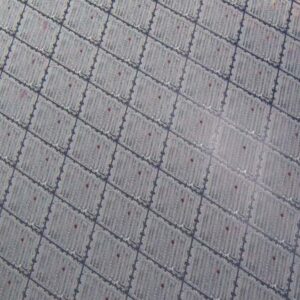 UniversityWafer.com, who provide researchers with wafers and other semiconductor related materials and services, now distributes super-thin silicon wafers that are as little as 2 microns thick and suitable for solar power applications.
Below 50 microns thick, silicon becomes flexible to a point. This makes it possible to wrap the silicon around rounded surfaces, such as a cylinder or ball. This flexibility can allow researchers to experiment with alternative solar power sources for autonomous vehicles such as Unmanned Aerial Vehicles (UAVs) which require rounded surfaces for aerodynamic purposes and to save on weight.
Experiments have show that 100um thin monocrystalline silicon can be three times more efficient in converting the sun rays into electricity than conventional solar wafers used today. Conventional cells currently average 14% efficiency. 100um thin solar cells can potentially see 45% efficiency, although the thinner wafers are typically higher cost.