
Tyto Robotics discusses the results of an experimental test campaign examining the impact of ice accretion on small Unmanned Aerial Vehicle (UAV) propeller performance and the effectiveness of an integrated propeller ice protection system. Read more >>
The test campaign was conducted by UBIQ Aerospace in collaboration with the NTNU, using Tyto Robotics’ Flight Stand 15 as the primary experimental platform. Testing was carried out in a dedicated icing wind tunnel at the VTT Research Center in Helsinki, located within a cold chamber and equipped with a spray system to generate artificial icing conditions.
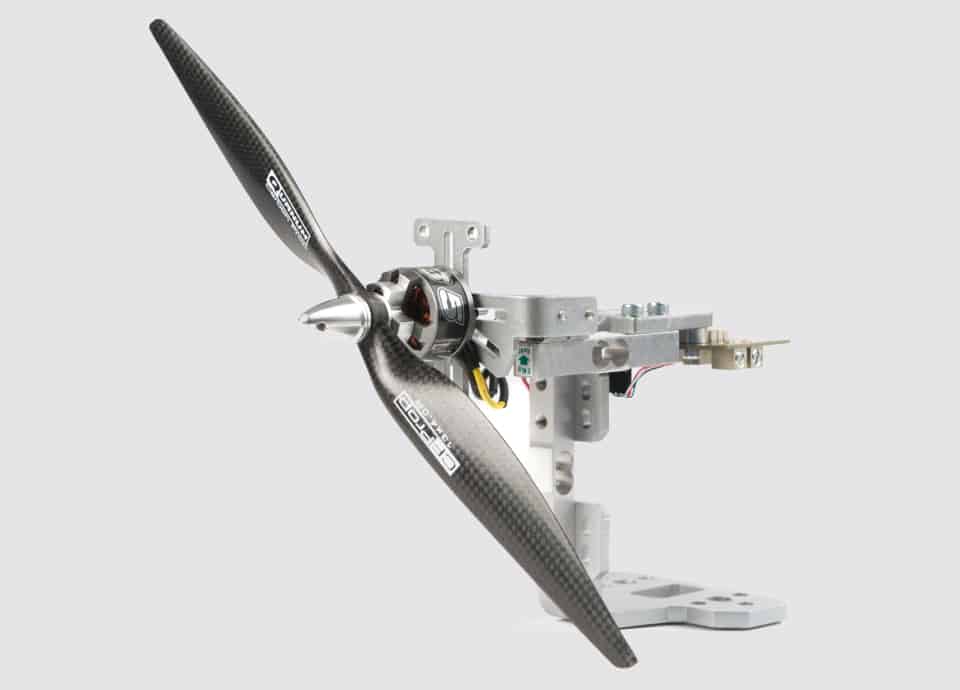
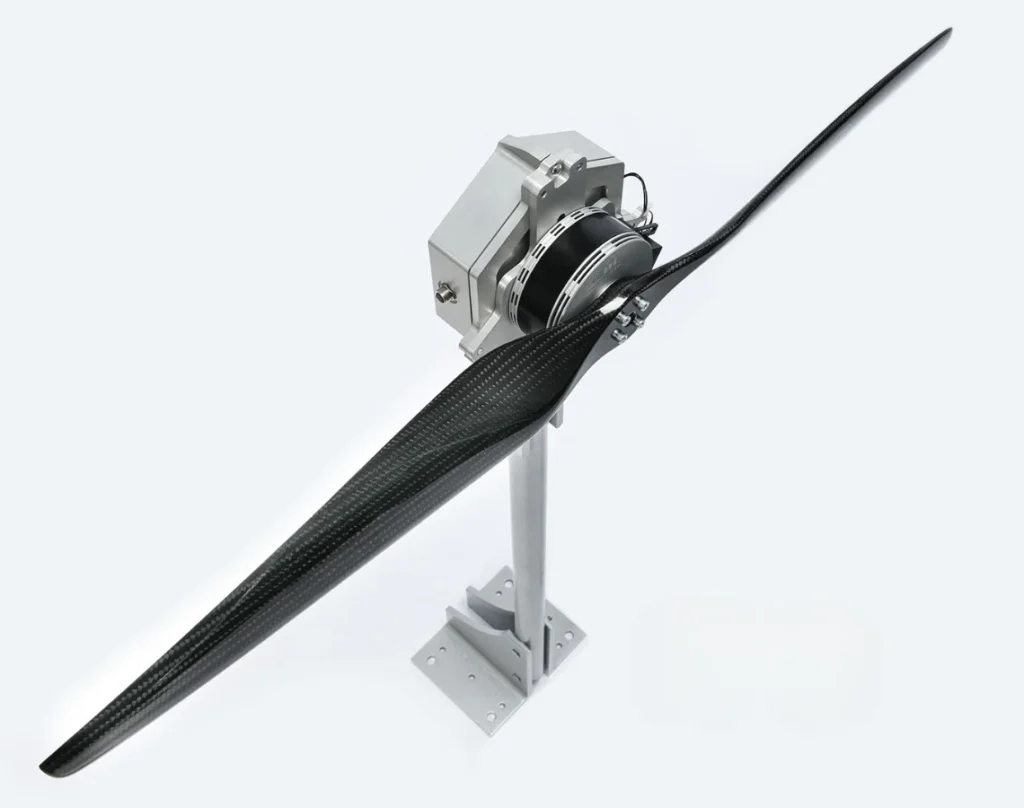
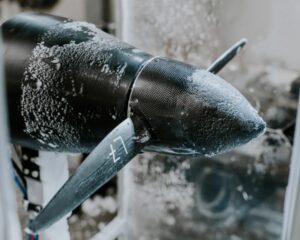 The tested propeller was based on a Mejzlik propeller and modified by UBIQ Aerospace to include a carbon fiber heating element designed to remove ice from the propeller surface. A Hacker Q80 motor was mounted to the Flight Stand 15, and a slip ring was used to supply power to the heating element. The Python interface of the Flight Stand 15 was used to control the experiment and enable real-time analysis of propeller performance.
Results showed that without an ice protection system, the propeller can experience up to an 80% loss in efficiency within 60 seconds, primarily due to a reduction in thrust. As ice began to shed from the propeller, efficiency stabilised at approximately 20% of the clean condition.
In contrast, propellers equipped with the ice protection system demonstrated reduced efficiency loss and maintained propeller performance under the same icing conditions.
The article highlights the role of the Flight Stand 15 in enabling and accelerating the analysis of propeller performance during icing tests.
To find out more information, read ‘Propeller Ice Protection System for UAVs (Results)’ here >>