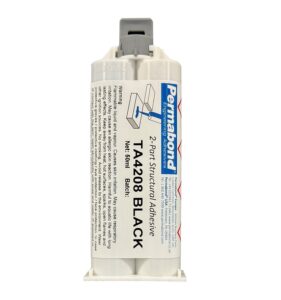
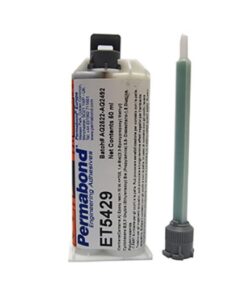
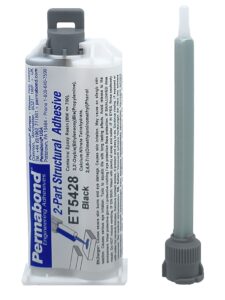
Showcase your capabilities
If you design, build or supply Structural Adhesives, create a profile to showcase your capabilities and connect with visitors who have an active requirement for your solutions.


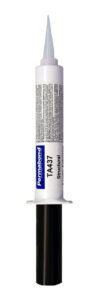
Structural adhesives are load-bearing bonding materials used to join metals, composites, plastics, and other substrates in drones and unmanned systems. Epoxy, acrylic, polyurethane, film, and flexible adhesive technologies support UAV, UGV, USV, AUV, and ROV structures, including airframes, hull components, payload mounts, propulsion assemblies, batteries, and electronics.
This page features leading structural adhesives suppliers with solutions for distributing loads across joints while reducing reliance on mechanical fasteners.
Read the Technology Overview


Engineering Adhesives for UAV Assembly, Composite Bonding & Drone Manufacturing

If you design, build or supply Structural Adhesives, create a profile to showcase your capabilities and connect with visitors who have an active requirement for your solutions.

Structural adhesives create load-bearing bonds between metals, composites, plastics, and other materials without relying exclusively on bolts, rivets, or welding. In drones and unmanned systems, structural adhesive bonding can reduce fastener count, support lightweight construction, and distribute loads across a larger bonded area.
Adhesive selection depends on more than published strength values. Substrate materials, surface preparation, joint geometry, bondline thickness, temperature, vibration, fatigue, moisture, chemical exposure, curing conditions, and manufacturing throughput all influence performance. Epoxy, acrylic, polyurethane, and other adhesive technologies therefore serve different requirements within UAV, UGV, USV, AUV, and ROV structures.
Epoxy structural adhesives are widely used where high strength, stiffness, environmental resistance, and durable bonding are priorities. A high-strength epoxy adhesive can join metals, composites, ceramics, and certain plastics, depending on the formulation and surface preparation. Structural epoxy systems are particularly relevant to permanent airframe, panel, and composite assemblies.
Structural acrylic adhesives, including methacrylate systems, can provide rapid strength development, toughness, and effective bonding across a broad range of substrates. Their relatively fast cure makes acrylic structural adhesive systems useful in production environments where reducing fixture time is important.
Many polyurethane structural adhesives provide greater flexibility than rigid structural epoxy systems. This can help joints tolerate vibration, impact, thermal movement, and differences in substrate stiffness. Temperature capability, moisture resistance, and other environmental properties remain formulation-specific and must match the intended operating conditions.
Conventional cyanoacrylates develop handling strength quickly and can be useful for small, close-fitting components or secondary assemblies. Their gap-filling capability, temperature resistance, impact performance, and environmental durability vary considerably by formulation. They should therefore not be treated as a universal replacement for aerospace structural adhesives in primary load-bearing joints.
Silicone adhesives and sealants are useful where joints must tolerate movement, thermal expansion, vibration, or environmental exposure. Their role generally differs from that of high-strength structural adhesives because flexibility, sealing, and stress relief are often more important than high joint stiffness or load-transfer capability.
Film adhesives provide a controlled quantity of bonding material in a preformed layer. They are widely used in controlled aerospace, composite, sandwich-panel, and honeycomb bonding processes where consistent bondline thickness and adhesive distribution are important. Depending on the system, elevated-temperature curing and applied pressure, including pressure produced through vacuum-bag processing, may be required.
One-part adhesives simplify material preparation but may require heat, moisture, UV light, or another curing mechanism. Two-part adhesives combine reactive components before application and are available in epoxy, acrylic, polyurethane, and other chemistries. Cure method, working life, fixture time, storage requirements, and production rate should be considered together.
Aerospace structural adhesives can join skins, ribs, spars, stiffeners, sandwich panels, fairings, and other UAV flight structures. Structural bonding spreads loads across the joint area and can reduce fastener holes, supporting lightweight composite and mixed-material construction. Primary structures also require control of peel and cleavage loading, fatigue, bond defects, inspection, surface preparation, and manufacturing consistency.
UGVs can use high-performance structural adhesives for body panels, structural inserts, composite assemblies, protective and armor-related structures, and equipment mounts. Flexible or toughened systems may be appropriate where vibration, shock, impact, and repeated ground-induced loading are significant.
Marine structural adhesive systems can bond composite hull sections, fairings, covers, brackets, and external components. Adhesives for these platforms must be evaluated for immersion, temperature, saltwater exposure, hydrostatic pressure and pressure cycling where applicable, and compatibility with surrounding materials. Adhesive bonding should not be assumed suitable for a primary pressure-containing hull joint without dedicated structural, environmental, and pressure qualification.
A UAV adhesive or structural bonding adhesive may secure sensor housings, payload interfaces, antennas, radomes, brackets, and internal supports. Bonding can be useful where drilling would compromise a thin panel, composite laminate, sealed enclosure, or RF-transparent structure.
Structural adhesives can support selected motor mounts, housings, magnets, brackets, and propulsion-related assemblies where qualified for expected temperature, vibration, fatigue, impact, and mechanical loads. Rotating assemblies may also impose centrifugal and thermal loads. Joint design should limit localized peel and cleavage stresses.
Battery modules and electronics may require bonding combined with electrical insulation, vibration control, or heat transfer. Thermally conductive structural adhesives can provide mechanical attachment while creating a thermal path between components. Thermal performance must be balanced against mechanical loads, serviceability, cure requirements, and electrical properties, which should be verified rather than assumed.
Qualification should reproduce the relevant substrates, surface preparation, bondline thickness, cure process, joint geometry, loads, manufacturing variation, and environmental conditions as closely as practical. Common ASTM methods can provide comparative data and process-control information for structural adhesive bonding.
These methods help characterize materials and bonding processes, but coupon results require engineering interpretation. ASTM D4896 cautions against using single-lap specimen strength values directly as allowable design stresses for structural joints. Critical applications should also address fatigue, environmental aging, creep where relevant, failure mode, manufacturing variation, inspection capability, and component-level testing.
Choosing an aircraft structural adhesive, marine structural adhesive, or general unmanned-system bonding material requires consideration of the complete assembly and manufacturing process. Important selection factors include:
Manufacturing requirements also influence the choice between structural epoxy adhesive, acrylic, polyurethane, and other technologies. Two-part adhesives, fast-curing systems, automated dispensing, and, in some applications, structural UV-curing adhesives can reduce assembly time. UV-curing systems require sufficient light to reach the required bond area, while all cure mechanisms must remain compatible with joint geometry and process control.
For high-rate production, a fast-curing high-strength adhesive for automated drone assembly may be suitable when it provides adequate working time, repeatable dispensing, appropriate fixture time, and verified long-term performance. The best structural adhesive is therefore the system that meets the structural, environmental, manufacturing, inspection, and repair requirements of the intended unmanned platform.


 Searching Companies & Products


 Subscribe to the Weekly eBrief
The latest engineering and technical developments straight to your inbox - join thousands of engineers who receive it.
Subscribe to the Weekly eBrief
The latest engineering and technical developments straight to your inbox - join thousands of engineers who receive it.