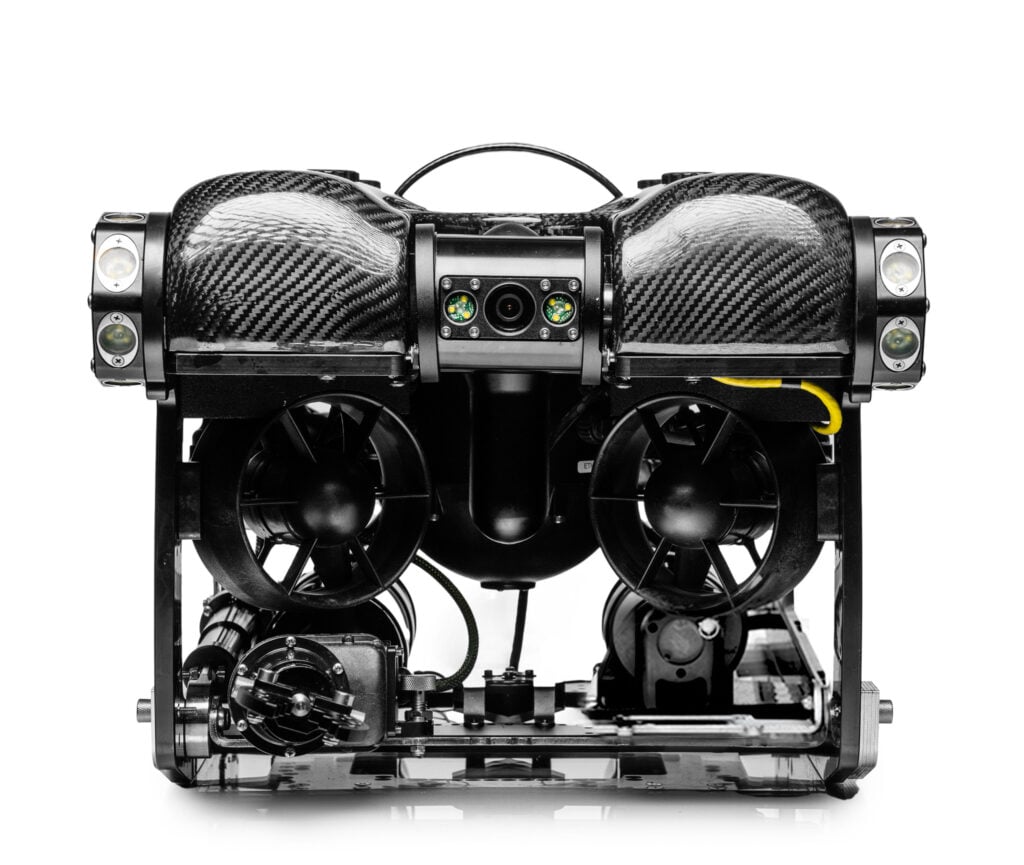
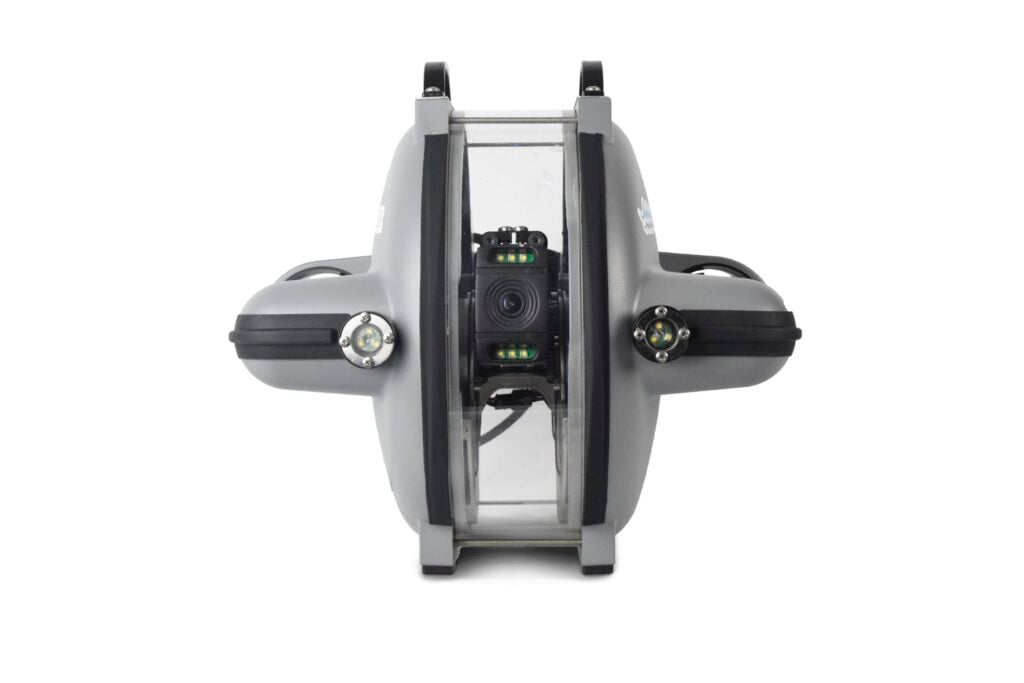
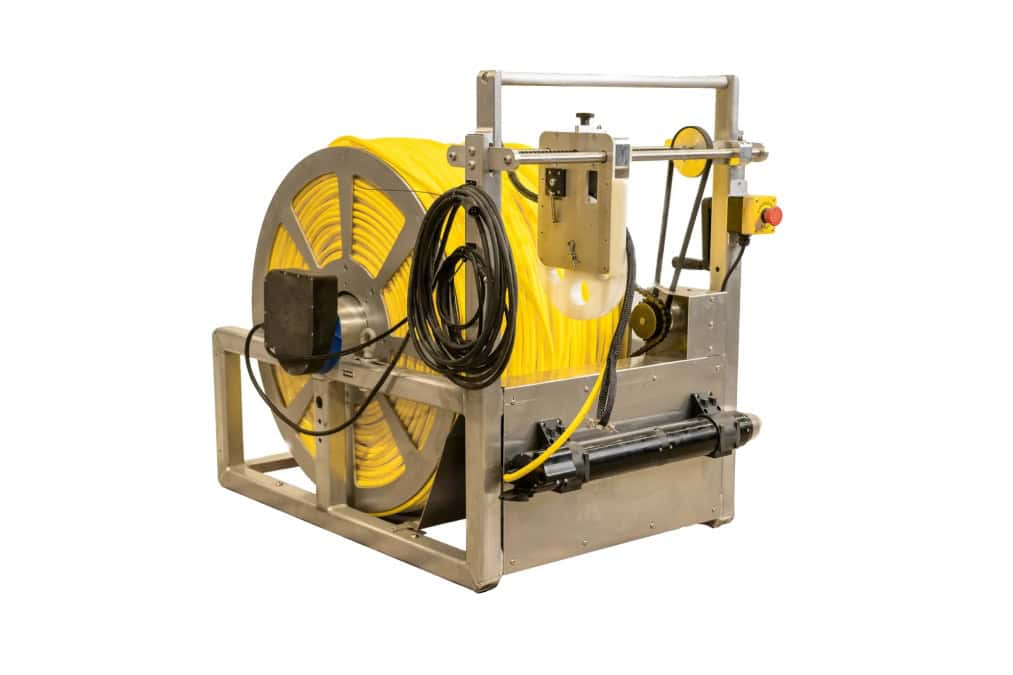
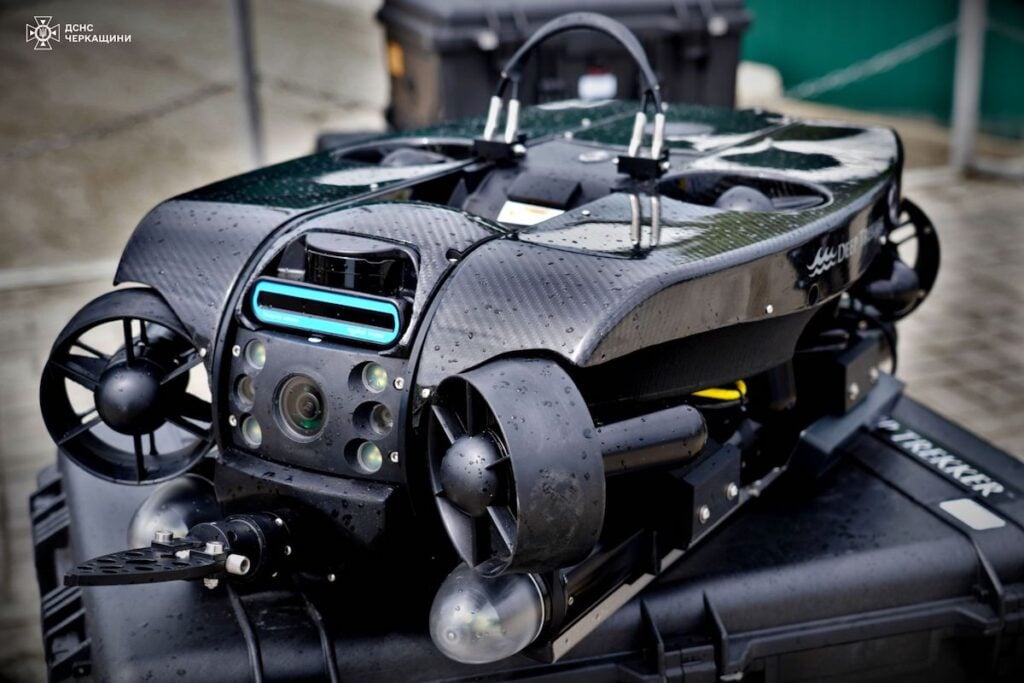
Deep Trekker discusses how its Pipe Trekker A-200 pipe crawler, deployed by the French drone inspection firm Escadrone, assisted the CNRS (Centre National de la Recherche Scientifique) researchers in accessing hazardous, obstructed sections of Notre-Dame’s fire-damaged structure to support acoustic restoration. Read more >>
Notre-Dame de Paris was badly damaged by a fire on April 15, 2019, which destroyed the spire and roof and caused extensive damage to the nave and upper structure. CNRS researchers focused on understanding and preserving the cathedral’s acoustic properties, as its unusually long reverberation time of 6-7 seconds is central to its distinctive sonic character.
 Structural instability however meant parts of the nave and transept containing valuable acoustic data were unsafe and inaccessible after the fire.
The deployment of Deep Trekker’s A-200 pipe crawler provided quick, non-invasive access to blocked passageways and elevated structures to remotely deploy measurement equipment and acoustic sensors, compare baseline reverberation data to pre-fire recordings, and capture ambient sounds during restoration work.
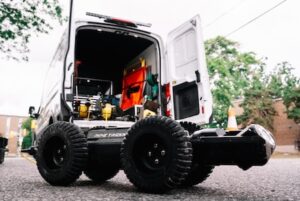
This advanced robotic inspection technology is compact, portable, and deployable in one minute. The A-200 features an 8-hour battery life, rugged construction, and customized accessories for increased stability and traction, such as puncture-resistant air-filled tires for maximum control inside unstable conditions.
The Pipe Trekker A-200 provides reliable, high-resolution visual access to unsafe environments, with onboard cameras and optional sensors supporting real-time monitoring and enabling operators to record quantitative inspection data for post-analysis
The data collected with the support of the A-200 pipe crawler refined digital models of Notre-Dame’s interior acoustics, guiding reconstruction to preserve its historical sound signature.
Brian FG Katz, Research Director at CNRS, stated “For our work in Notre-Dame cathedral, right after the fire, we were confronted with a new challenge. We needed to be able to position our measurement equipment remotely, due to safety concerns. The Pipe Trekker met our needs remarkably well, being able to pull several wheeled instrumentation setups easily and precisely.
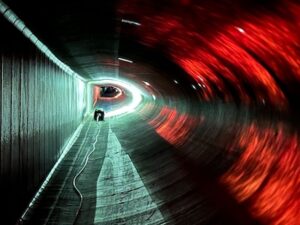 “The onboard camera and headlight provided immediate feedback, which was a significant help during the task. And the pulling power and traction of the Trekker easily met our requirements.”
Deep Trekker’s Pipe Trekker A-200 was originally designed for municipal and industrial pipe inspections, but its adaptability and durability means the system is increasingly being used across multiple sectors. These include confined space inspections, energy sectors, and mining and heavy industrial applications.
The system’s high-quality, actionable inspection data supports condition assessment and grading using NASSCO PACP standards, precision measurements for crack width, blockage dimensions or corrosion depth, and geotagging and mapping when integrated with external GIS platforms.
The Pipe Trekker A-200, as opposed to a manual inspection method, improves safety, and response times, as well as reduces operational costs and disruptions.