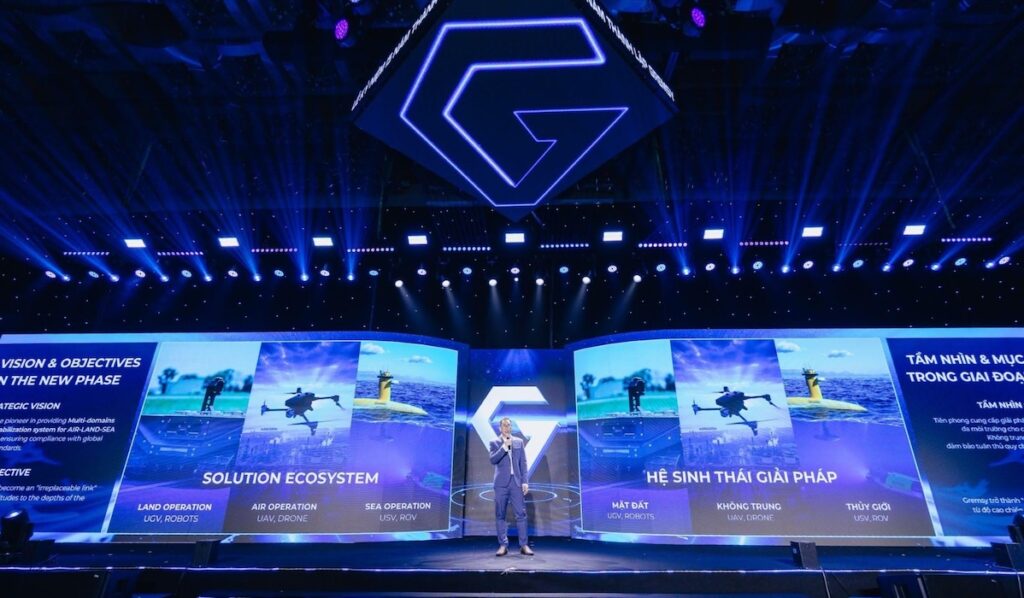
Gremsy has unveiled a strategic roadmap aimed at transforming the company into a Hardware Technology Unicorn by 2030, marking its 15-year milestone.
The technology firm, which specializes in stabilization systems and payload solutions for unmanned platforms, is shifting its focus from steady growth to accelerated global expansion. This next phase prioritizes scalability, ecosystem development, and the advancement of autonomous technologies, alongside efforts to strengthen its position in the global hardware market through product portfolio expansion and increased production capacity for high-performance imaging and sensing systems.
Moving beyond its traditional focus on Unmanned Aerial Vehicles (UAVs), Gremsy is developing a multi-domain autonomous ecosystem. This includes investment in ground-based robotics and underwater systems, such as Unmanned Surface Vehicles (USVs) and Remotely Operated Vehicles (ROVs), with the aim of creating an integrated framework operating across air, land, and sea. In parallel, the company is advancing its capabilities in system integration and research and development, transitioning from a component manufacturer to a provider of end-to-end solutions for complex operational domains.
Tran Quoc Vinh, CEO of Gremsy, commented, “Over the past 15 years, we have built a strong foundation in high-performance hardware. Our next phase is about scaling that foundation – expanding into new domains, advancing our technology capabilities, and delivering integrated solutions that meet the evolving demands of global markets.”
As part of its long-term growth strategy, Gremsy is also investing in next-generation manufacturing capabilities, including a new camera module production facility. This initiative is expected to enhance efficiency, strengthen supply chain resilience, and support expansion into new application areas.
Through this strategic direction, Gremsy is positioning itself as a key enabler in the global autonomous technology landscape, bridging hardware innovation with scalable deployment across industries.