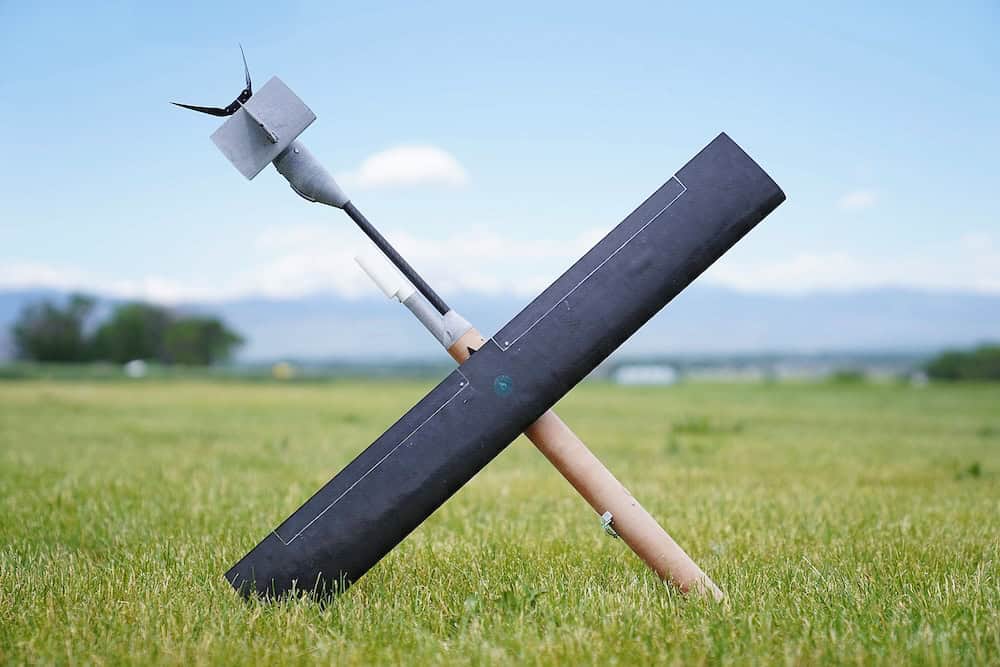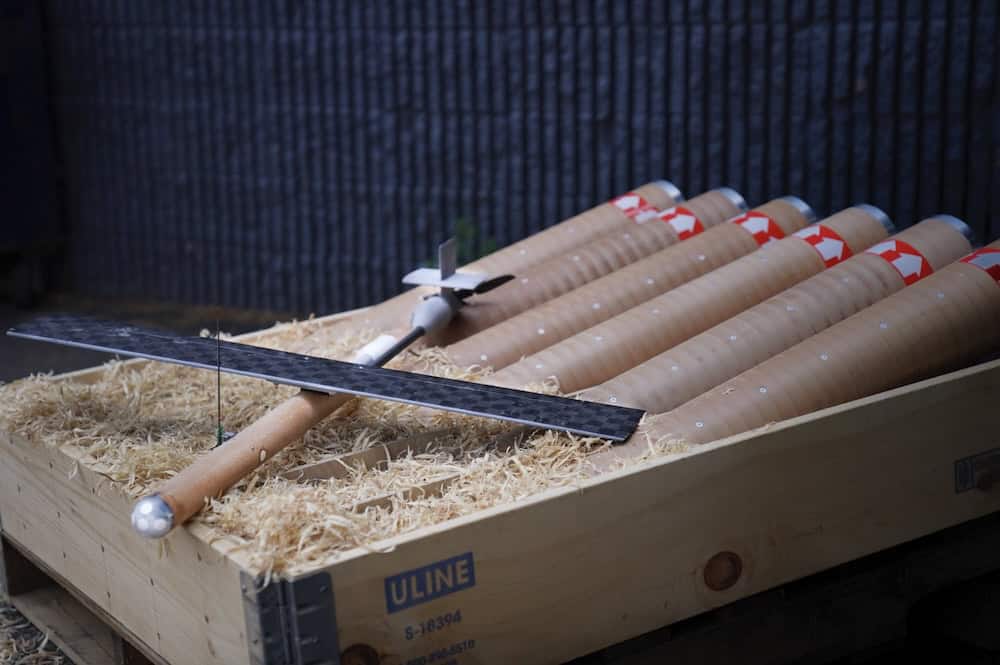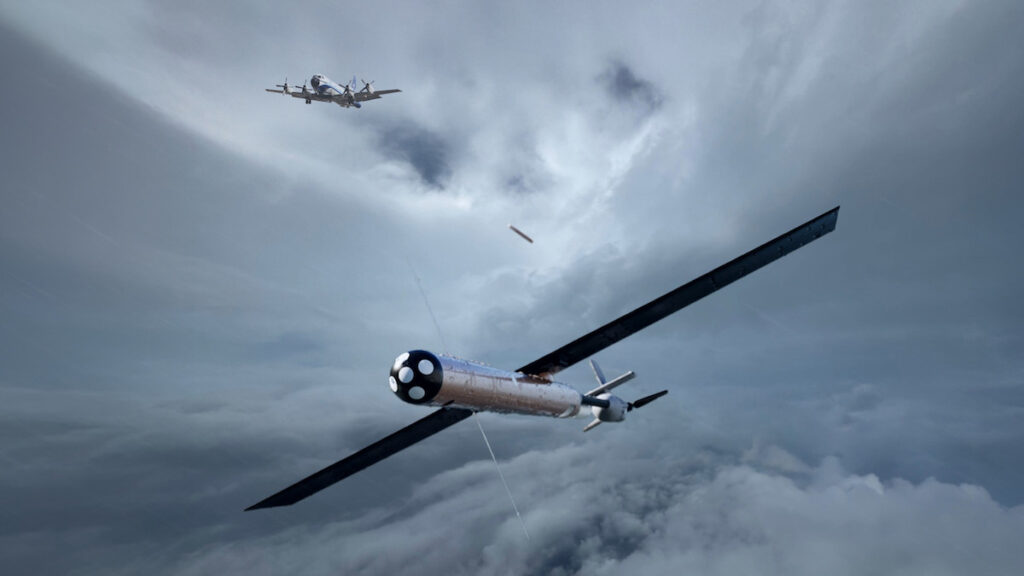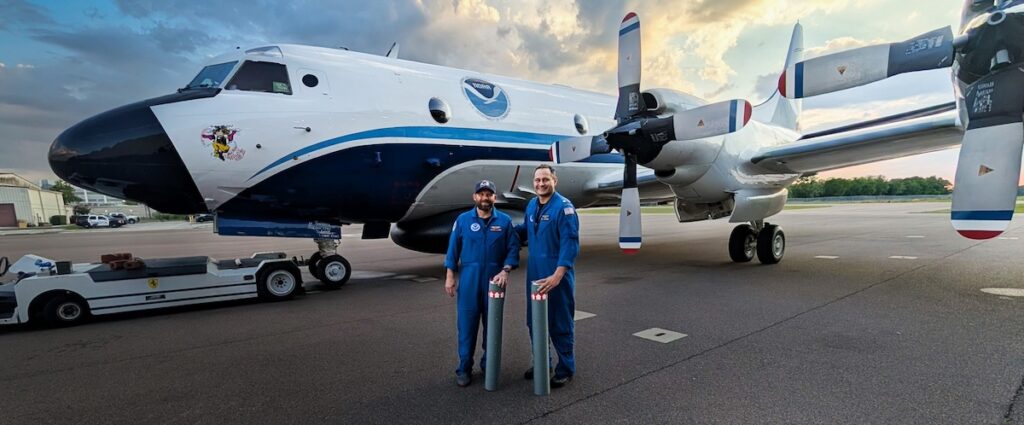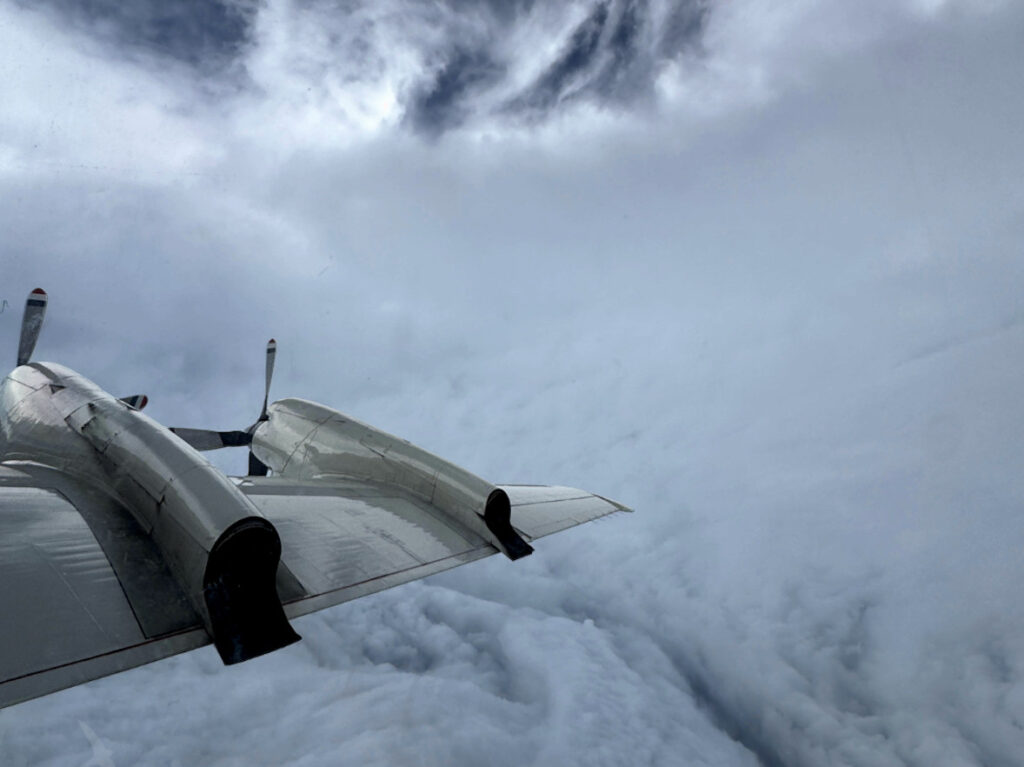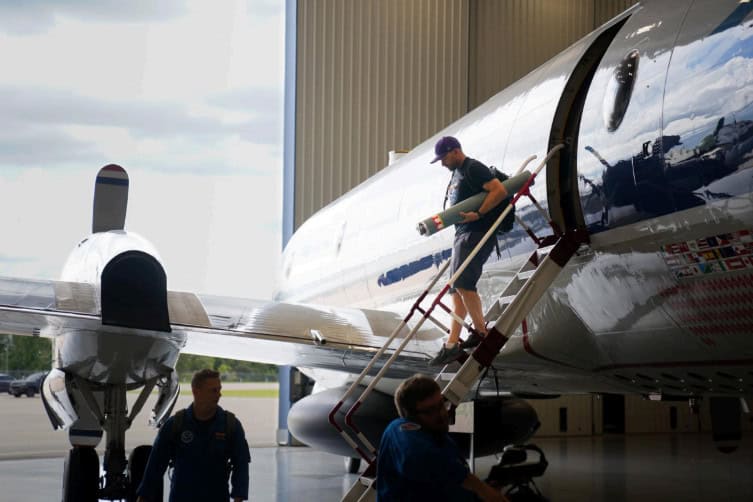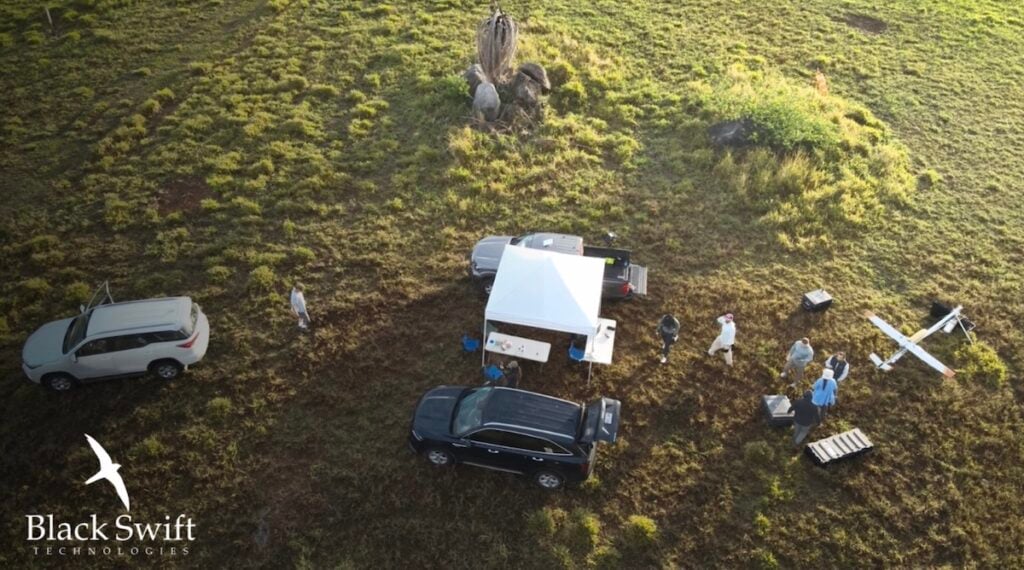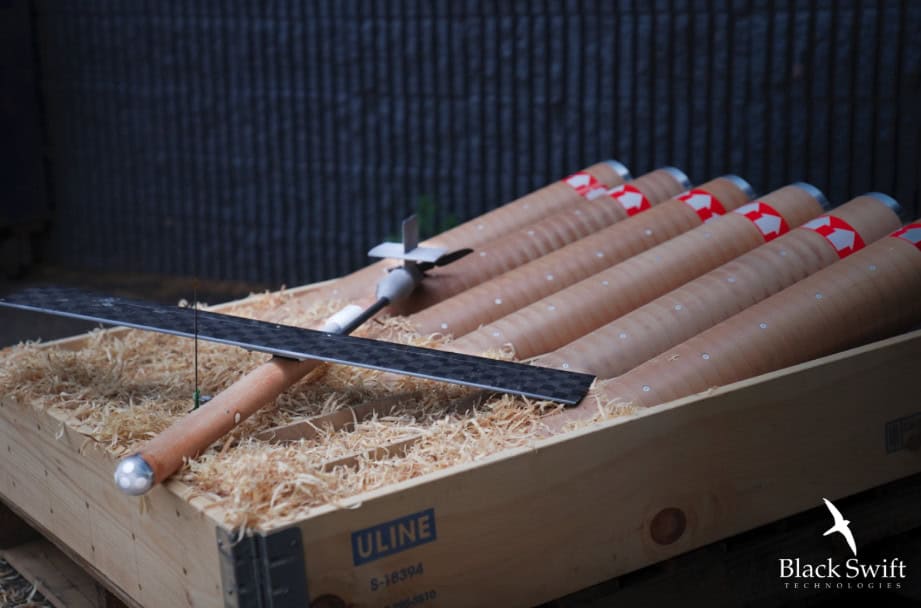




Black Swift Technologies, a leading developer of specialized state-of-the-art unmanned aerial systems (UAS) for flying scientific payloads, has partnered with Unmanned Systems Technology (“UST”) to demonstrate their expertise in this field. The ‘Silver’ profile highlights how their purpose-built research UAS can be utilised for a variety of missions in demanding atmospheric environments and weather conditions, including the monitoring and assessing of wild fires, volcanoes, tornadoes, and hurricanes.
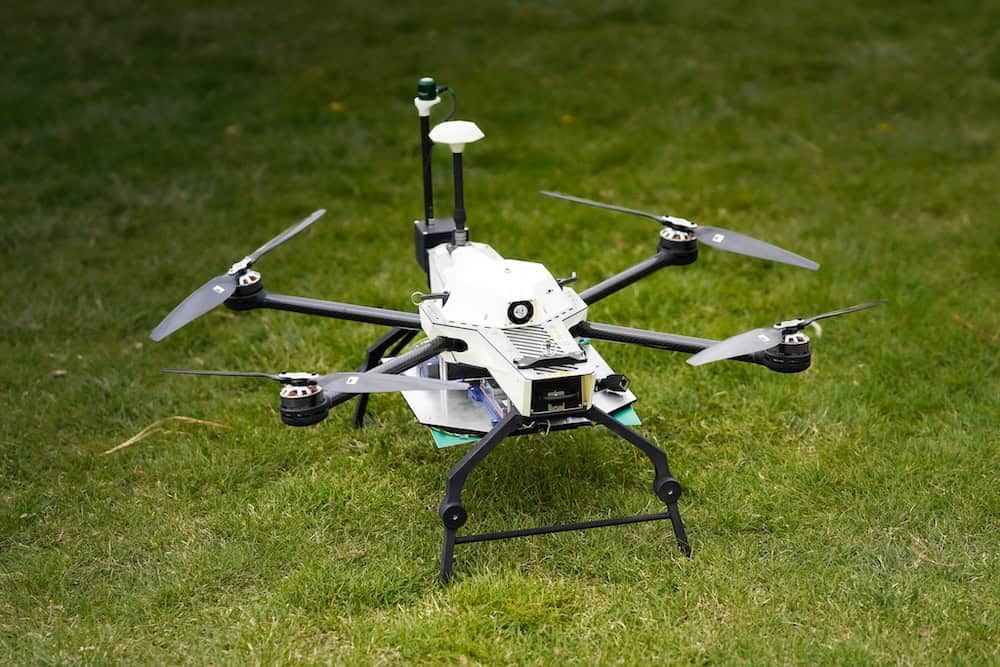
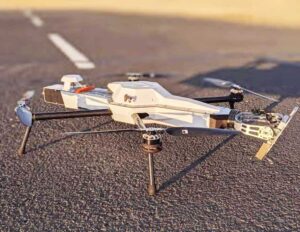 The Black Swift E2 is an advanced quadcopter UAS that has been specifically engineered for high-accuracy, up-close structural and industrial inspections. Capable of fully autonomous operation, the E2 leverages powerful computer vision and machine learning technologies to provide precise, reliable and safe navigation in complex environments while delivering real-time actionable data.
The Black Swift E2 carries its payload at the nose of the aircraft instead of the underside, allowing operators to obtain full sensor field-of-view even when looking vertically. Both the payload and battery are easily field-swappable, and the battery position can also be adjusted depending on the weight the aircraft is carrying. A typical loadout for the E2 includes an RGB camera, laser positioning and guidance system and radio modem, but can be customized to individual mission requirements to include LiDAR, thermal and multi-spectral cameras, trace gas sensors, radiometers and more.
The highly mobile E2 can be easily folded down and fits into a custom carrying case for convenient transport and protection from potential damage during transit.
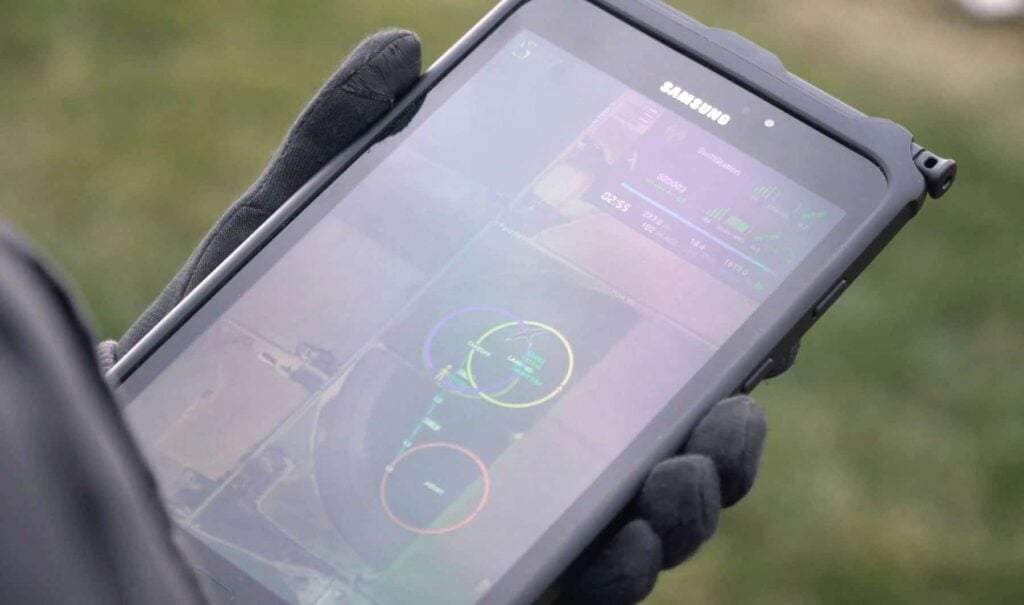
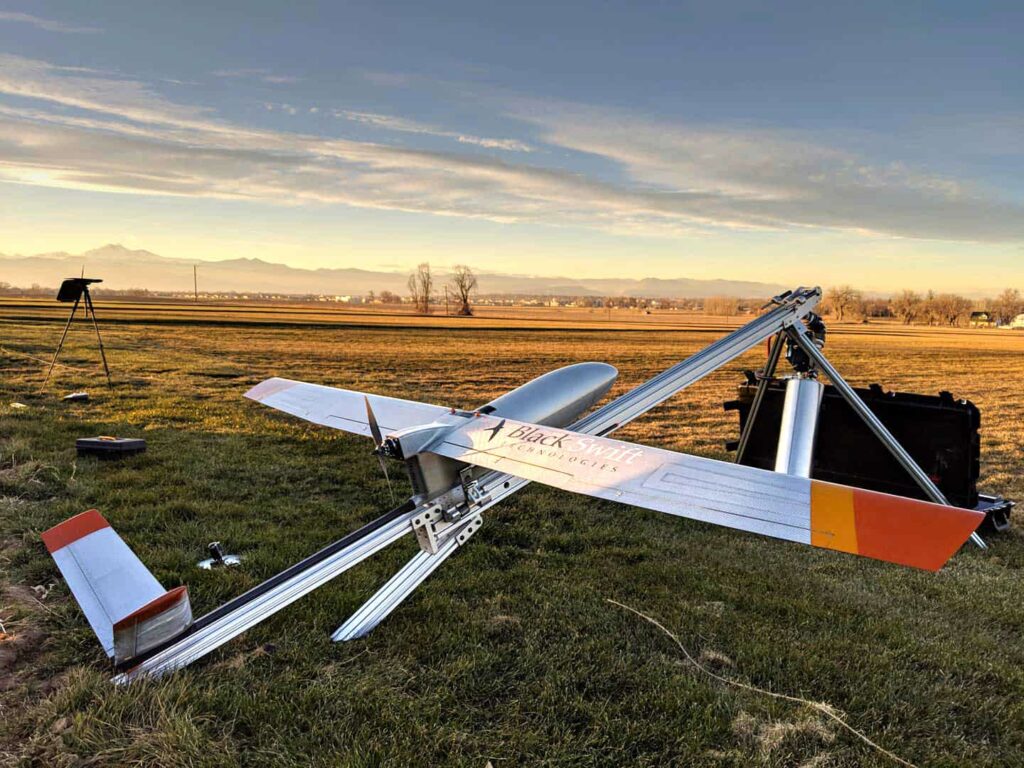
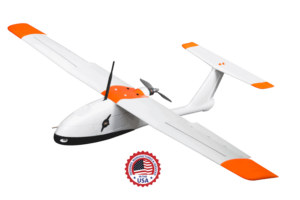 The Black Swift S1 is a fully autonomous fixed-wing UAS that serves as an ideal introduction to commercial mapping and surveying operations such as aerial photogrammetry. The intuitive interface, with gesture-based planning, can be rapidly learned and mastered while flying real-world missions.
Ready to fly straight out of the box and equipped with a Sony a5100 camera, the system includes everything required to immediately get started with conducting survey missions. The all-inclusive package comprises the aircraft, batteries, SwiftStation ground control station with tripod, tablet computer with SwiftTab flight management software, field toolbox, carrying case, and control handset.
The S1 is easily launched via hand, and features advanced landing algorithms for robust, precise autonomous belly landings. The platform has been deployed for mapping missions at altitudes of 14000 feet, and is also ideal for surveying work, land management, crop damage assessments, and large-area ecological studies.
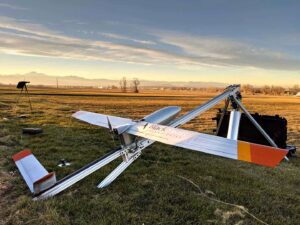 The Black Swift S2 is an advanced fixed-wing UAS that has been custom-built for scientific research in demanding atmospheric conditions such as high altitudes, high levels of corrosive particulates, and strong turbulence. With a rugged airframe, high flight ceiling and extended endurance and range, the S2 is capable of autonomous launch, flight, and landing even in difficult mountainous regions.
The S2 features a convenient field-swappable payload system that encloses the sensor suite within the nose cone in front of the propeller, ensuring clean and uncontaminated measurements of the atmosphere. With a common power, data, and mechanical interface, different payloads can be rapidly swapped in the field without any specialized tools. Payloads can thus be field-calibrated separately from the aircraft, and different sensor suites can be rapidly deployed in successive missions using the same UAS, extending the versatility of the aircraft.
To find out more about Black Swift Technologies and their specialized UAS for scientific research and data collection, please visit their profile page:
https://www.unmannedsystemstechnology.com/company/black-swift-technologies/