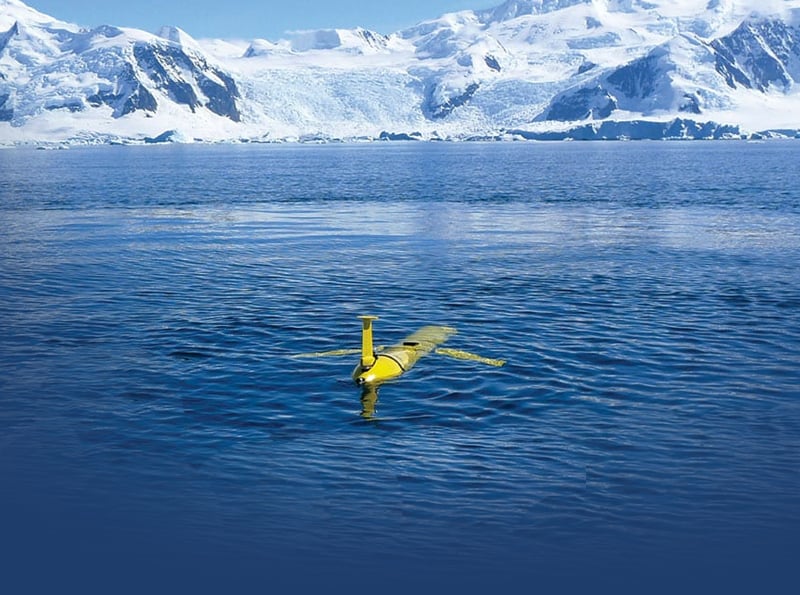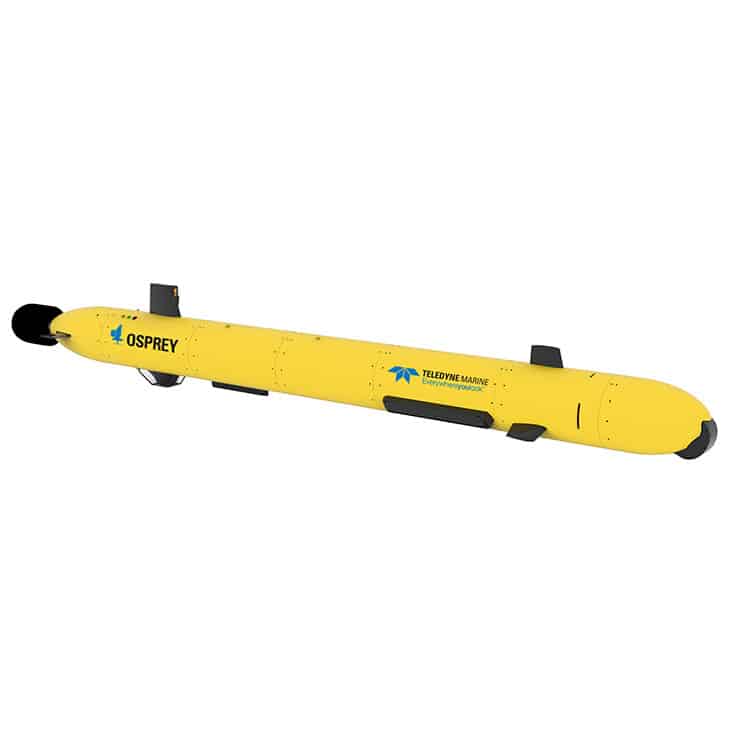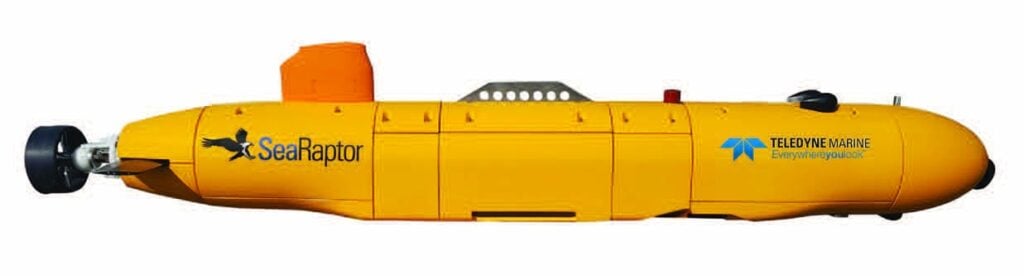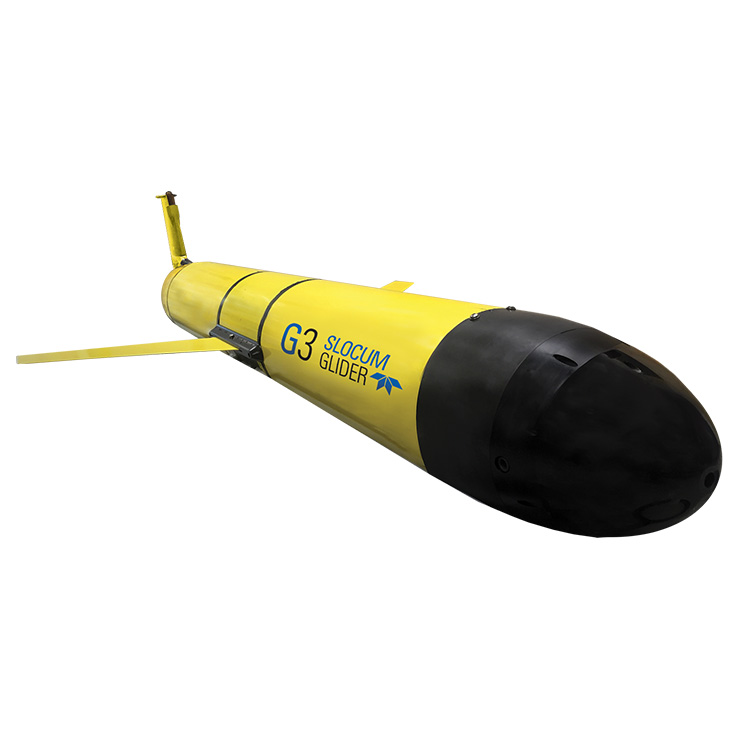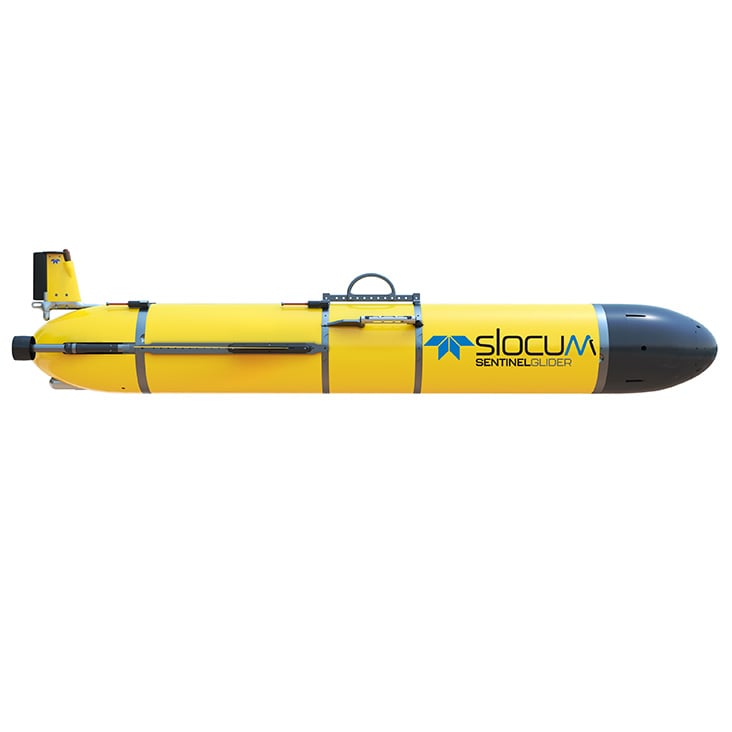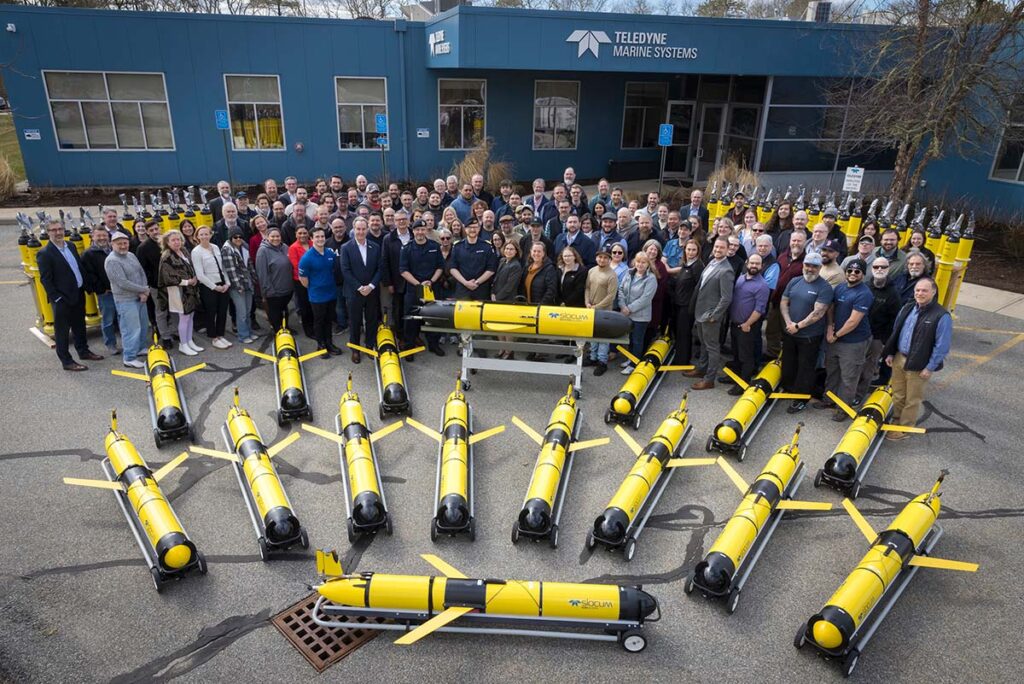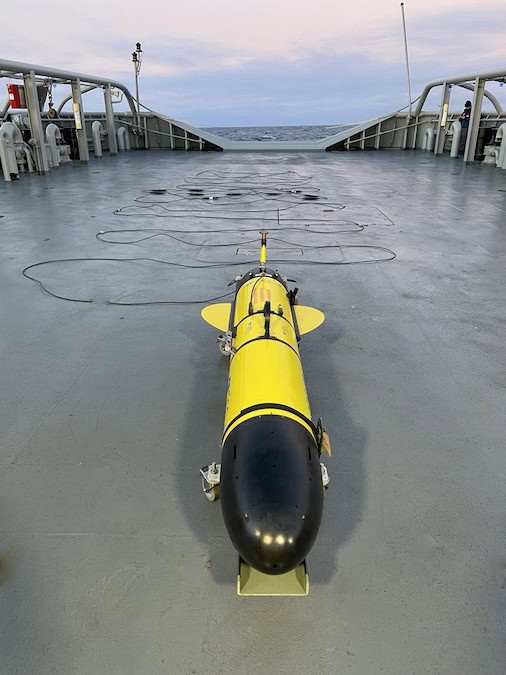

Teledyne Marine provides an in-depth overview of the five-year Sentinel Mission, in which its next-generation Slocum Sentinel “Redwing” glider will circumnavigate the globe, thought to be the first Autonomous Underwater Vehicle (AUV) to do so. Read more >>
Redwing was successfully launched into the Atlantic Ocean on October 11, 2025, approximately 43 miles southeast of Woods Hole, Massachusetts. The Slocum Sentinel Glider will autonomously navigate ocean currents, avoid obstacles such as fishing nets, and collect critical oceanographic data.
Its journey will span the Gulf Stream to Europe, south to Gran Canaria, onward to Cape Town, across the Indian Ocean to Australia and New Zealand, through the Antarctic Circumpolar Current, and back to the Atlantic via the Falkland Islands, Brazil, and the Caribbean.
The mission aims to transform ocean data collection, enhance weather forecasting, and understanding of extreme weather events, inspiring the next generation of ocean scientists and engineers.
Redwing Features, Capabilities & Importance
Redwing is designed with a carbon fiber hull and buoyancy-driven movement. This allows the AUV to operate for up to two years at a time, diving to various depths for a three-dimensional view of the ocean.
Data is transmitted to scientists via satellite every 8-12 hours. The glider carries a fish tracker to monitor tagged marine animals, providing insights into migration patterns.
Redwing is also equipped to measure salinity, temperature, and depth, providing scientists with detailed insights into ocean movement and the influence on weather and climate.
This mission will help establish a future global fleet of autonomous underwater gliders, continuously monitoring the world’s oceans. These gliders will provide early warnings of extreme weather and track changes in ocean currents, improving long-term climate projections.
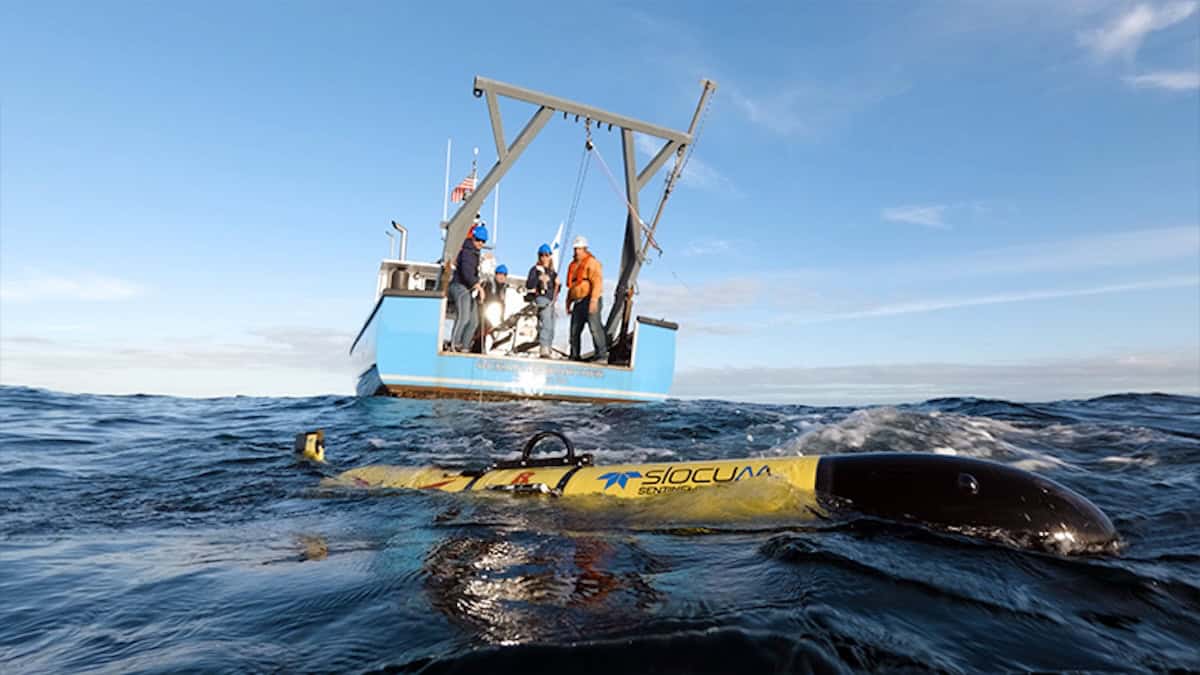
Brian Maguire, COO at Teledyne Marine, commented: “We are humbled by the scale of this mission. To send a glider around the globe, every detail must be world class – the design, the hardware and software, the support, and the people executing the mission. This is our moonshot!
“This mission is what Teledyne Marine is about. We are sensing at the edge, analyzing, and distributing data at the speed of decision making; doing this with highly engineered products that solve tough, real-world challenges. This is not just a technical achievement. It’s a testament to what happens when bold customers, brilliant engineers, and relentless operators come together with a shared purpose: to explore, to protect, and to understand our oceans. We have fielded over 1,000 Gliders. As Sentinel begins its journey, it carries the legacy of learning from every mission our customers have run with our gliders.”
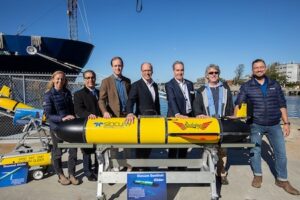
Left to right: Cordie Goodrich – Teledyne Marine, Michael Kasparian – Falmouth Chamber of Commerce, Thomas Moakley – MA State Rep, Peter B. de Menocal- WHOI, Brian Maguire – Teledyne Marine, Clayton Jones – Teledyne Marine, and Shea Quinn – Teledyne Marine.
Shea Quinn, Sentinel Mission Project Lead at Teledyne Marine, added: “Beyond the attempt at the first ever global circumnavigation by an AUV, this mission will demonstrate that we now have the capability to send autonomous systems to the most remote areas of the ocean. We can use them for months or years at a time to gather valuable scientific data to take the next step in ocean data gathering and hopefully inspire more people to become involved in the study of our oceans and the technologies that enable it.”
Strategic Collaboration
The Sentinel Mission is a collaboration between Teledyne Marine and Rutgers University, engaging Teledyne engineers and over 50 students who contributed to the development of Redwing’s flight tools and navigation software. They will partner to track and keep Redwing on its time-critical flight path.
Mission control is split between Teledyne and Rutgers’ Center of Ocean Observing Leadership (COOL), where data will be continuously analyzed throughout the five-year mission.
The initiative also includes global classroom connections, enabling students worldwide to participate in virtual sessions, share cultural stories, and exchange letters with Rutgers students.