Advanced Navigation outlines how Counter-UAS (C-UAS) platforms can maintain accurate heading and positioning in GNSS-denied environments, detailing how its inertial navigation technologies address the limitations of GNSS-dependent systems.
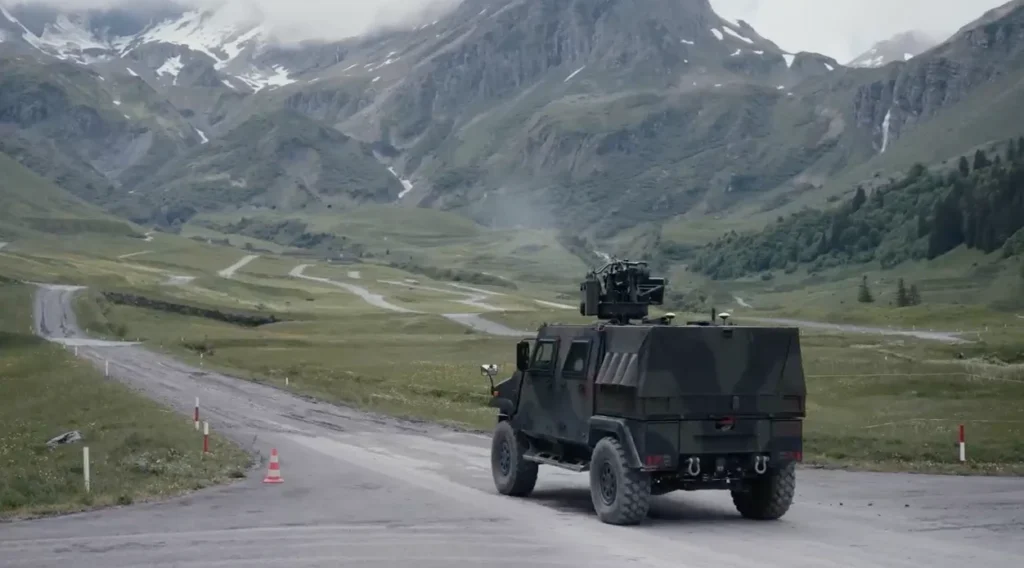
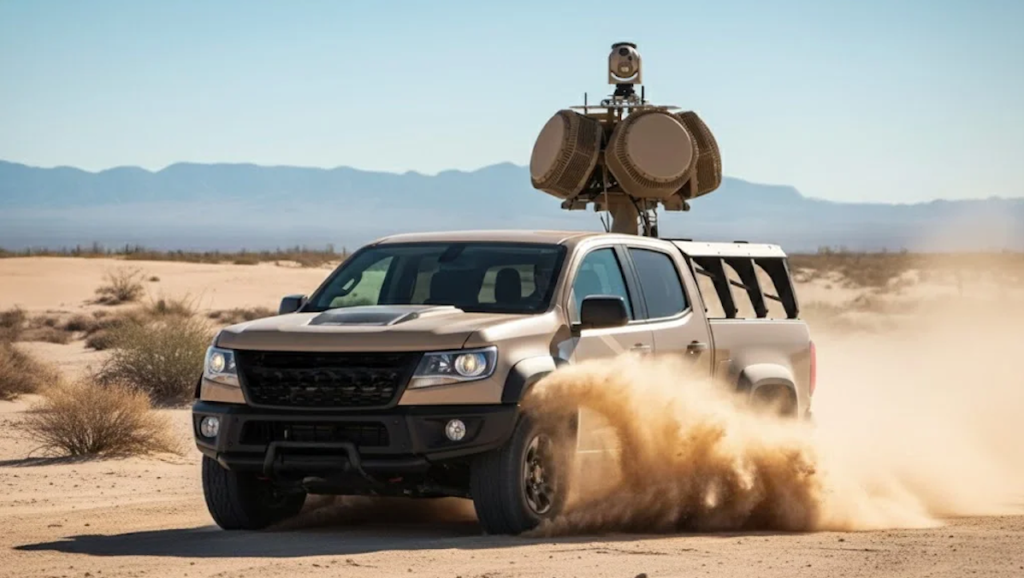
As integrators deploy C-UAS platforms on commercial off-the-shelf vehicles to enable faster deployment and greater logistical flexibility, navigation performance remains a fundamental requirement.
Navigation Requirements for Commercial C-UAS Platforms
C-UAS platforms depend on accurate heading and positioning to operate effectively. Radar and optical sensors must be correctly oriented to track or interdict targets, requiring a high-performance navigation system with low Size, Weight, and Power, and Cost (SWaP-C).
The use of commercial vehicles does not remove these requirements. Legacy navigation solutions have presented challenges in ease of integration, ongoing maintenance, and SWaP. At the same time, traditional defense-grade Inertial Navigation Systems (INS) are often over-engineered and prohibitively large to integrate into these platforms.
Heading Challenges in GNSS-Denied Environments
Advanced Navigation states that GNSS jamming and spoofing are no longer edge cases but represent baseline operating conditions in modern environments. Under these conditions, heading accuracy is critical to C-UAS performance.
Systems that rely on dual-antenna GNSS for heading introduce a single point of failure. Magnetic compasses are also unreliable due to ferrous interference from the vehicle structure and mounted equipment. These constraints limit the effectiveness of traditional approaches in GNSS-denied environments.
Inertial Navigation Solutions
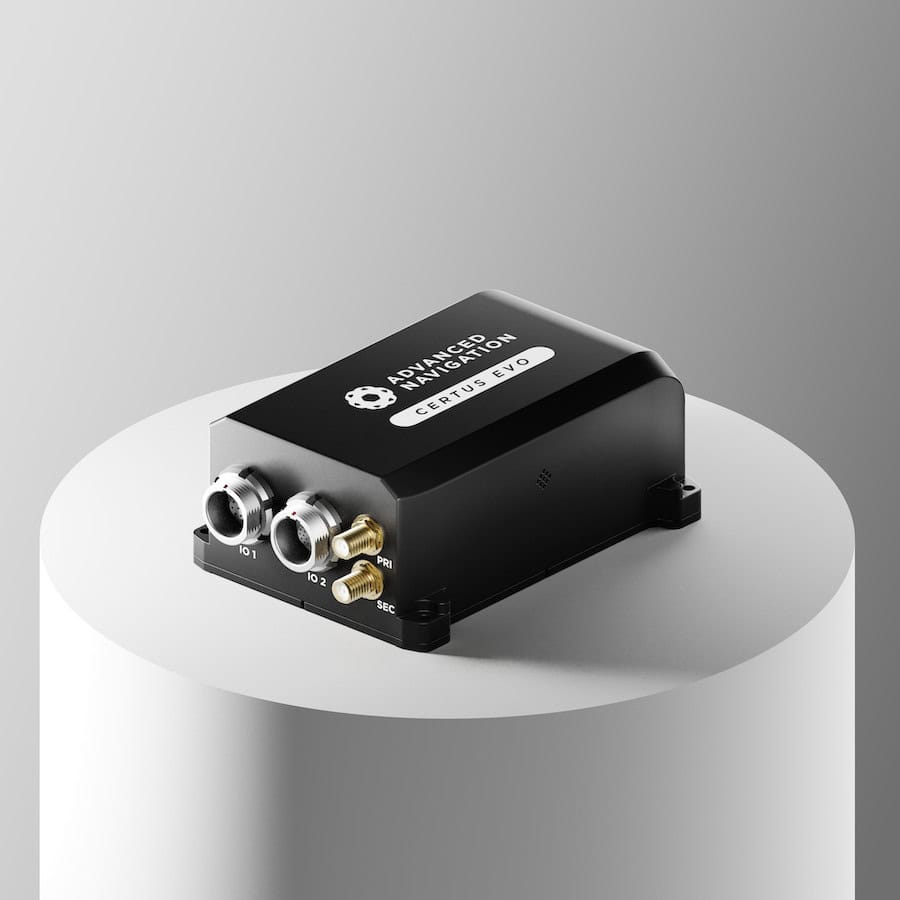
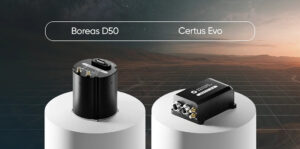
Advanced Navigation addresses these challenges with its Certus Evo INS and Boreas D50 Fiber-Optic Gyroscope (FOG) INS. These systems are designed to provide heading and positioning data during GNSS disruption.
The company states that its navigation solutions are capable of resisting RF jamming and retaining an accurate heading solution for the duration required to complete a mission under sustained GNSS denial.
Boreas D50 Inertial Navigation System
The Boreas D50 is outlined for applications where reliable heading is essential. The system uses FOG technology to determine orientation through Earth rotation sensing.
Unlike magnetometer-based solutions, it does not require GNSS or a clean magnetic environment to determine north. This enables a C-UAS platform to maintain a precise heading without reliance on external references, supporting operation during jamming conditions until heading drift affects tracking accuracy.
Certus Evo Inertial Navigation System
For platforms with tighter SWaP-C requirements, Advanced Navigation outlines the Certus Evo as a lower size, weight, and power solution. The system uses dual-antenna GNSS for initial alignment and incorporates AdNav Intelligence sensor fusion.
This allows it to retain positional and directional accuracy during GNSS disruption, supporting continued operation through interference events.
Scalable Navigation for Mission Requirements
Advanced Navigation describes a scalable hierarchy of inertial solutions that allows integrators to align navigation performance with specific mission requirements. This approach supports deployment across a range of C-UAS platforms while avoiding over-specified hardware.
Supporting C-UAS Operation in Contested Environments
C-UAS platforms deployed on commercial vehicles operate in environments where GNSS disruption is present. Advanced Navigation outlines how inertial navigation systems can provide the heading and positioning accuracy required for these platforms without dependence on continuous GNSS availability, while maintaining compatibility with commercial vehicle constraints.
For more information, visit the Advanced Navigation website.