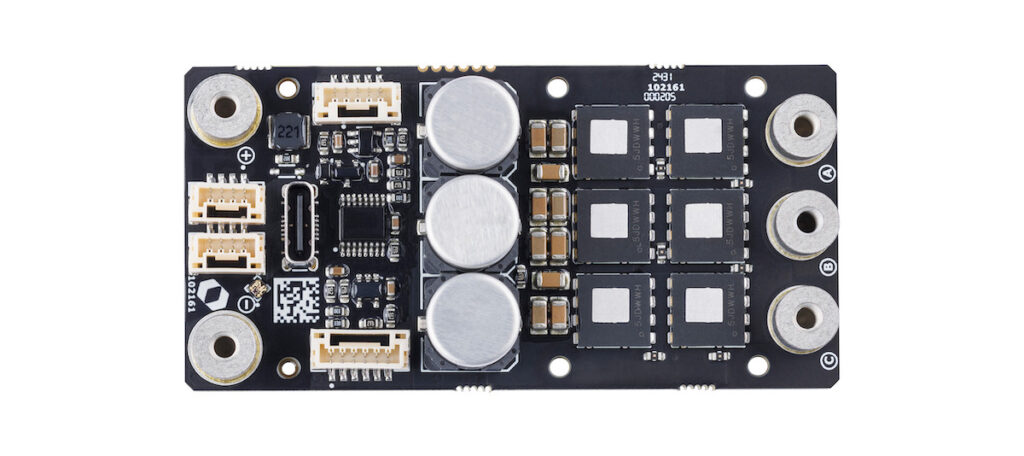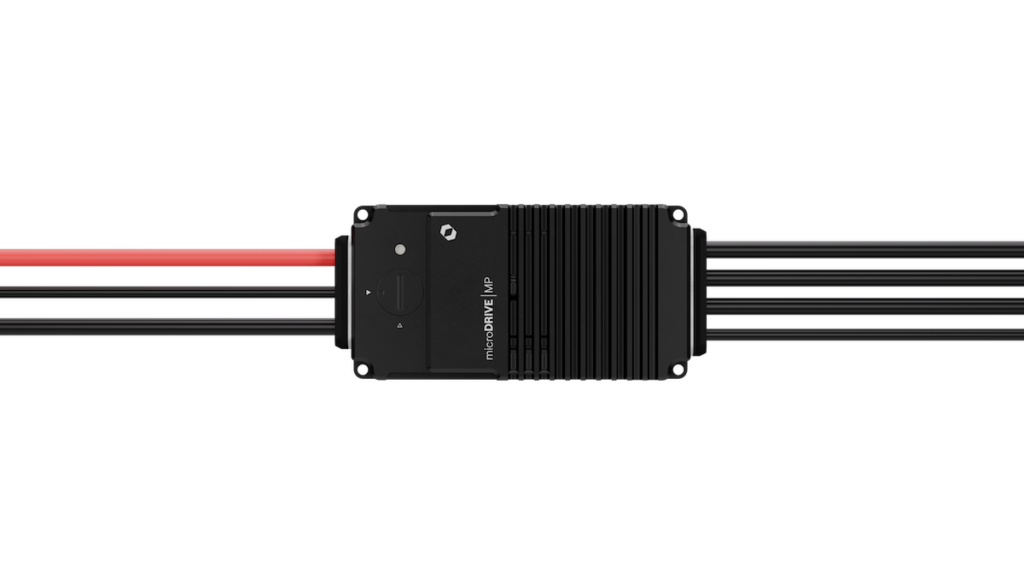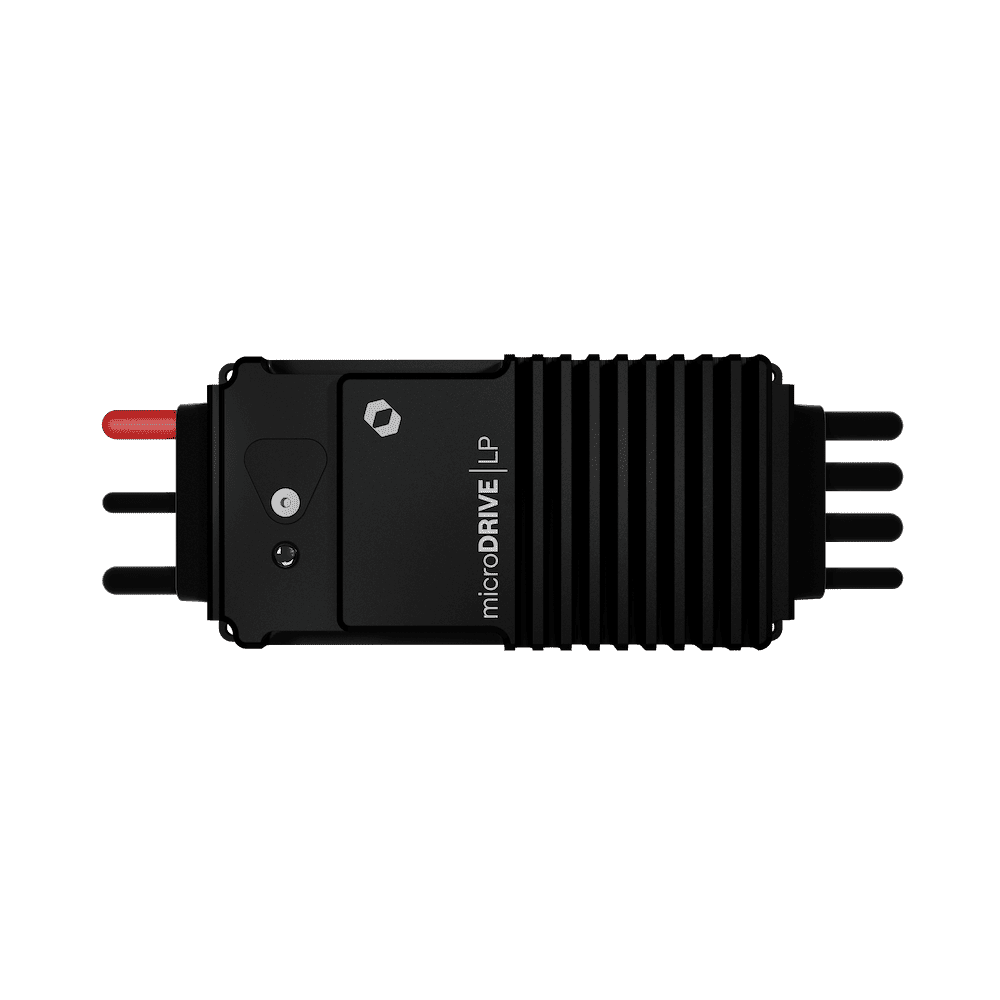


Hargrave Technologies presents a detailed technical examination of input voltage ripple measurement and characterization in Electronic Speed Controllers (ESCs), outlining how system parameters influence performance and reliability in sensorless motor control applications.
Hargrave ESCs typically rely on back electromotive force to determine rotor position and control phase switching. This method requires a stable input bus voltage, as ripple or electrical noise can distort position feedback, leading to inefficient operation, poor commutation, or motor stalling. External input capacitors are therefore essential to maintaining a clean and consistent supply.
Voltage ripple is primarily influenced by input lead length and motor inductance. Longer DC leads increase wiring inductance, generating voltage spikes during current changes. Keeping leads short and closely routed minimizes this effect. Additional capacitance for microDRIVE and nanoDRIVE units is extremely unlikely, but recommended maximum lead lengths in datasheets should be followed.
Motor inductance also affects ripple, with higher inductance reducing current ripple and associated voltage variation, while low-inductance motors, typically around 10–20 µH, produce greater ripple.
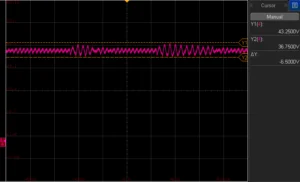
Measurement across an ESC’s power terminals with unacceptable ripple.
Measurement is performed using an oscilloscope under representative system conditions, including final wiring, motor, and load setup. Probing should be carried out close to the ESC terminals at maximum load in steady-state operation. Ripple should remain below 10% of the bus voltage, with an ideal target under 5%.
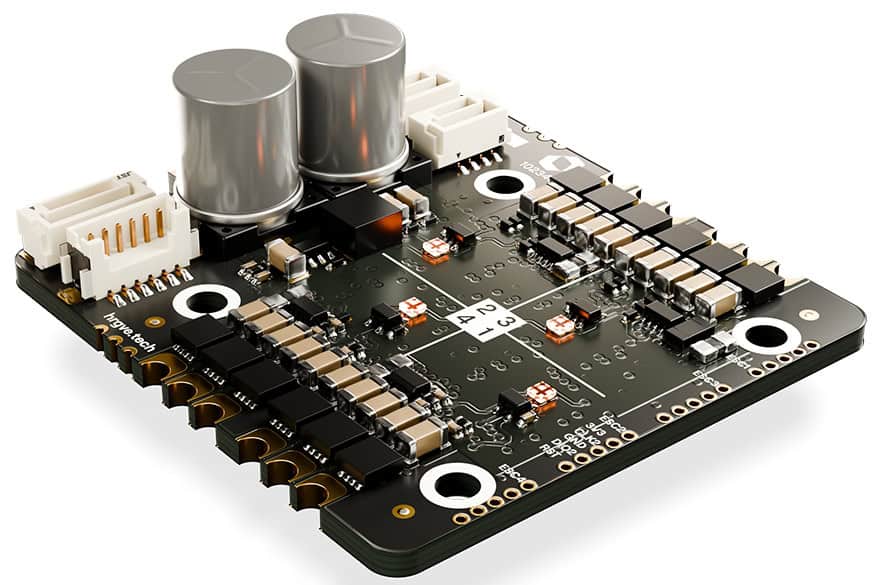
If ripple exceeds acceptable limits, additional low ESR capacitors should be installed. Suitable options include Panasonic FM or FS series and Rubycon ZLJ series, selected based on ripple current ratings of at least 2 A at 105°C. Capacitor ripple current and operating temperature should be considered when assessing lifetime relative to datasheet endurance values. Capacitors should be mounted close to the ESC input terminals with minimal lead length to reduce impedance and improve performance.
Accurate ripple measurement and appropriate capacitance selection are key to ensuring stable motor operation, reduced electrical stress, and extended system lifespan.
To read the full article and find out more, visit the Hargrave Technologies website.