



Inertial Labs, a VIAVI Solutions company, provides an in-depth overview of how its advanced Positioning, Navigation and Timing (PNT) and LiDAR technologies are being used to support disaster recovery and rebuilding efforts in Lahaina, Hawaii, following a devastating wildfire. Read more >>
The frequency and severity of floods and wildfires have increased significantly as a result of climate change, with PNT and reality capture technologies playing a vital role in disaster recovery and rebuilding efforts following earthquakes, tsunamis, floods, and wildfires.
The 2023 Lahaina fire on the island of Maui, Hawaii, the United States’ most deadly wildfire in over 100 years, claimed over 100 lives, destroyed more than 2,000 structures, and caused losses exceeding $6 billion USD.
In the aftermath, geospatial data and mapping consultancy Basemap Consulting implemented LiDAR, camera, and PNT data from VIAVI’s Inertial Labs division and Hexagon | NovAtel to help rebuild the affected communities.
Challenges in Post-Fire Recovery
Following the fire, logistical, regulatory, and practical challenges slowed the pace of recovery. Hawaii’s isolation created further constraints, as many resources, materials, and skilled labor needed to be imported.
Aerial and satellite imaging became foundational tools for disaster assessment, with LiDAR and Interferometric Synthetic Aperture Radar (InSAR) increasingly adopted for post-event analysis.
Because property boundaries in the hardest-hit areas were largely erased, fresh surveys were essential. Drone-based mapping offered a fast, efficient solution compared to traditional ground surveys, defining property boundaries and mapping terrain, structures, and utilities, as well as trees.
Drone-Based Capture Operations
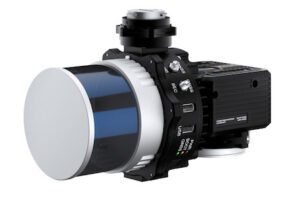
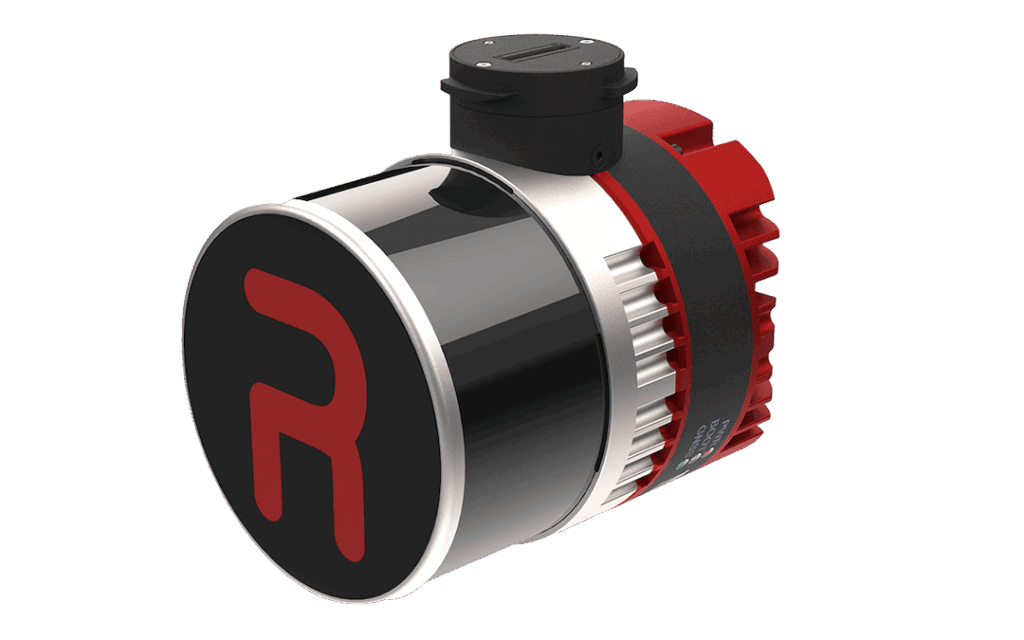
RESEPI XT-32M2X.
Capture operations began after debris removal and flight permitting were completed. The 1,500 acres (600 hectares) of the affected area were divided into five subsites through an imaging flight from a hill overlooking the site. Basemap set several aerial targets in each subsite, including newly repainted street monuments used as additional targets.
To ensure images were linked back to precise locations, GNSS data was collected from a new reference station, which was augmented with a portable GNSS base.
Observation files were processed using a Post-Processed Kinematic (PPK) workflow combined with Inertial Measurement Unit (IMU) data in VIAVI’s Inertial Labs PCMasterPro software. The software, which incorporates Hexagon | NovAtel’s Waypoint Inertial Explorer, delivers the spatial accuracy required for the images and LiDAR point clouds to meet surveying and engineering specifications.
Basemap utilized Inertial Labs’ RESEPI™ Lite (Remote Sensing Payload Instrument), incorporating a single-antenna GNSS-aided inertial navigation system, datalogger (via Hexagon | NovAtel’s OEM7 receiver), LiDAR, camera, and communications system. A Kalman filter was applied before synchronizing with GNSS data.
The integrated Waypoint IE software coupled GNSS information from up to 32 bases with inertial data to deliver precise positioning, even when using lower-grade inertial sensors. A Sony A5100 24MP OEM vision camera and XT32 LiDAR system were also deployed by Basemap.
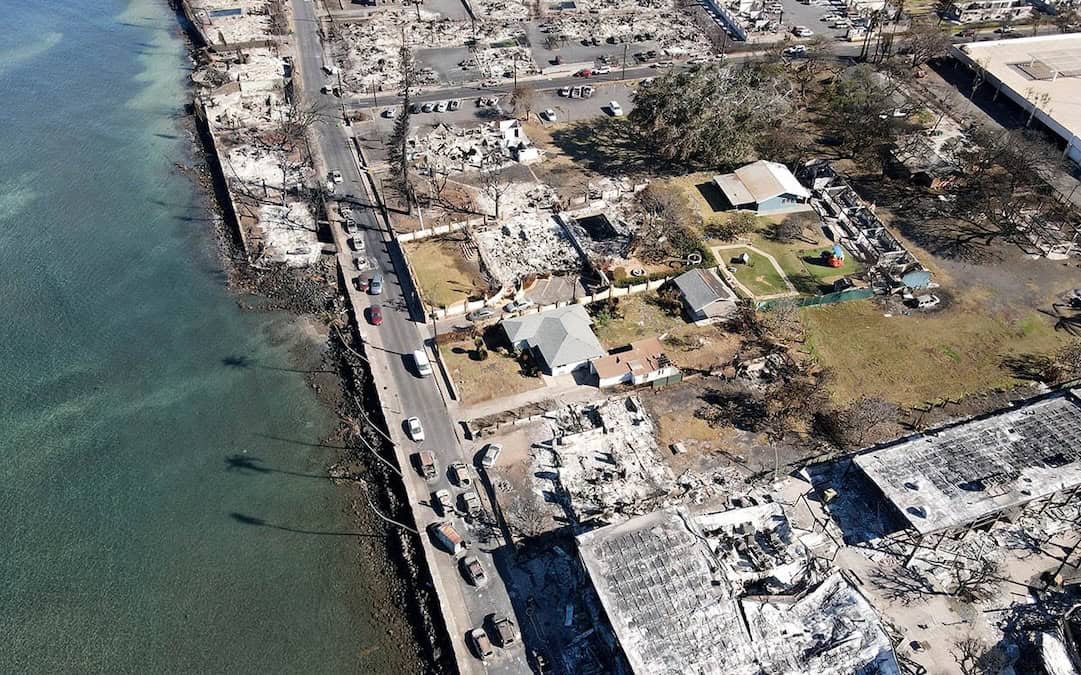
Views of Lahaina after the wildfires in Maui.
Technical Composition of the Drone System
A key element of any optimal drone reality capture system is the LiDAR sensor, with capabilities chosen to suit the specific requirements of the intended application.
The camera is also important, with many drone LiDAR systems, including those from VIAVI’s Inertial Labs, integrating an RGB camera to capture both LiDAR points and high-resolution imagery. These images can be used for photogrammetry and colorizing the LiDAR point cloud.
The system core is the most critical component, which includes onboard processing, algorithms, and PNT technology. High-quality PNT is vital for generating accurate laser point clouds and color images, as both rely on precise data about the system’s position and orientation.
To address these requirements, Inertial Labs’ RESEPI™ has been developed with a high-performance core and can be paired with a variety of sensors to suit different applications. The technology is available in multiple payload configurations and is optimized for scenarios where Size, Weight, and Power (SWaP) efficiency is crucial.
Accelerating Rebuilding Efforts
Lahaina faces the dual challenge of remoteness and limited resources in its rebuilding efforts. Basemap’s approach demonstrates how drone-based imaging and LiDAR, precisely mapped through PNT networks, can accelerate post-disaster reconstruction.
According to Daniel Windham, the CEO of Basemap Consulting, the combined photogrammetric and LiDAR workflows reduced project time by between 50% and 80% compared to traditional surveying. This has provided local surveyors and developers with a comprehensive spatial foundation and detailed terrain data for rebuilding the community.