
Showcase your capabilities
If you design, build or supply Radio over IP (ROIP), create a profile to showcase your capabilities and connect with visitors who have an active requirement for your solutions.




Radio over IP (RoIP) is a communication technology that enables radio transmissions to be extended over IP networks such as Ethernet, cellular, or satellite links. It digitizes radio voice traffic and control signals, allowing them to be transmitted over long distances using standard data infrastructure.
Read the Technology Overview
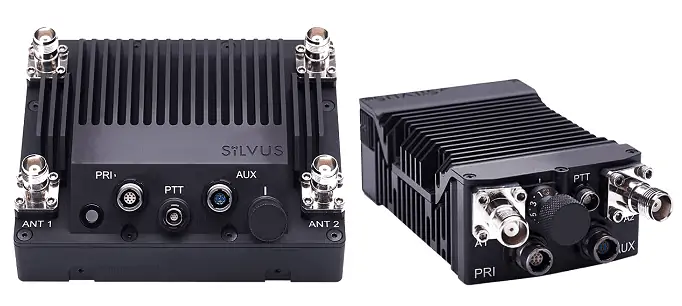
Ultra-Reliable Rugged Hardware Solutions for Mission-Critical UAVs & Unmanned Systems Operating in Extreme Environments

If you design, build or supply Radio over IP (ROIP), create a profile to showcase your capabilities and connect with visitors who have an active requirement for your solutions.

Unmanned platforms rely on consistent communication channels for command, control, coordination, and data sharing. RoIP enables these functions by bridging disparate radio systems and extending their reach beyond traditional limitations. Below, we explore how RoIP supports key unmanned system applications and operational requirements.
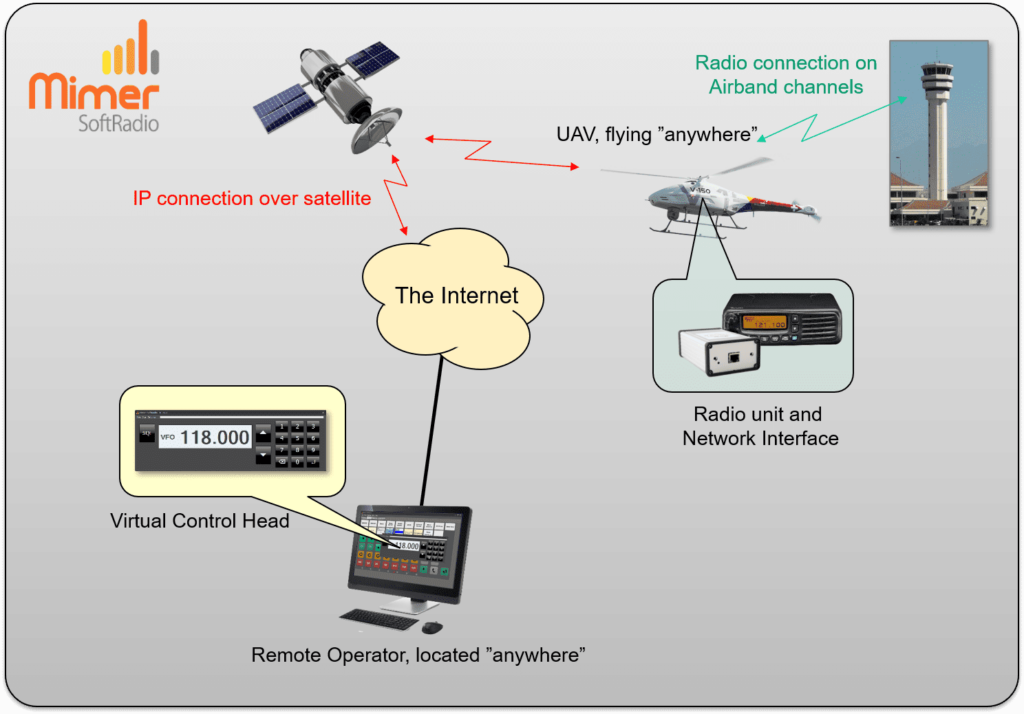
BVLOS is a fundamental capability for many unmanned systems, especially aerial platforms. Traditional radio systems typically operate within visual or radio line-of-sight, restricting range and flexibility. RoIP overcomes this limitation by enabling voice and control signals to traverse IP networks. A RoIP gateway on board a UAV, for example, can transmit radio traffic via cellular or satellite backhaul to a ground control station far beyond visual range. This approach maintains two-way voice communications, push-to-talk (PTT) functionality, and control channel continuity across extended distances. By enabling BVLOS, RoIP allows unmanned platforms to support long-duration surveillance, infrastructure inspection, search and rescue missions, and remote mapping operations.
Unmanned missions often involve coordination between multiple teams, systems, and agencies, each using different communication tools. RoIP provides a method to bridge these systems over IP. Using RoIP bridging devices, operators can connect legacy analog radios, modern digital systems, and IP-based communication endpoints into a single, interoperable network. This is particularly important for joint operations involving manned-unmanned teaming, emergency response coordination, or military deployments where various radio formats must coexist. For example, a ground control station operating a UGV can communicate seamlessly with an airborne drone and a field operator using a handheld radio, with RoIP acting as the interface between different technologies.
RoIP also serves as a practical line-extension tool, allowing operators to place radios in remote or mobile locations while maintaining centralized control and monitoring. A typical setup may involve a remote radio connected to a RoIP interface, transmitting audio and control over an IP connection to a central control room. This is useful for unmanned platforms that need to relay signals over challenging terrain, maritime environments, or through urban obstructions. Unmanned surface vessels (USVs), for instance, can act as mobile relay points, extending VHF or UHF communications by converting them to IP and forwarding the data over SATCOM or mesh radio links.
Security is a critical consideration in unmanned operations. RoIP solutions often incorporate robust encryption protocols and secure networking capabilities to protect data integrity and confidentiality. Many RoIP devices include support for:
These features help ensure that voice and control signals remain secure, even when transmitted over public networks like 4G/5G or satellite. RoIP solutions are often designed to meet MIL-STD and FIPS requirements for defense and government users.
As command-and-control systems for unmanned platforms evolve, they increasingly adopt IP-based architectures. RoIP fits naturally into this environment, offering compatibility with protocols such as SIP, RTP, and WebRTC. This allows voice communications to be integrated directly into control dashboards, situational awareness systems, or remote operations centers. Operators can manage unmanned systems and communicate across teams using a unified, software-defined interface. This convergence improves efficiency and supports centralized decision-making, especially in complex or high-tempo operations.
For field operations where infrastructure is limited or mobility is required, portable RoIP solutions provide flexibility. Compact RoIP gateways and bridging devices can be deployed alongside handheld radios or vehicle-mounted systems, enabling rapid establishment of communication networks. These setups are commonly used in disaster response, tactical reconnaissance, or expeditionary missions where unmanned systems must be integrated with existing comms channels quickly and securely.
Terrestrial communication infrastructure may be damaged or overloaded during natural disasters or large-scale emergencies. RoIP provides a way to restore or extend communication capabilities using unmanned systems. For example, a drone with a RoIP-enabled radio can serve as an airborne communication relay, connecting field responders’ radios to a remote command post. Similarly, unmanned ground vehicles can deploy RoIP repeaters in hard-to-reach areas. These capabilities improve situational awareness, coordination, and operational reach during critical incidents.
Unmanned platforms operating at sea or remote areas benefit from RoIP’s ability to use satellite and long-range data networks. USVs, autonomous buoys, and offshore inspection drones can maintain voice and control communications using RoIP over marine-grade IP links. These systems are designed for harsh environmental conditions, with ruggedized enclosures and support for redundant communication paths to ensure reliability. RoIP allows operators onshore or aboard support vessels to maintain consistent links with unmanned assets in coastal or deep-sea environments.
When implementing RoIP for unmanned systems, several performance factors must be addressed:
Selecting RoIP hardware designed for unmanned platforms helps address these challenges effectively.
RoIP solutions for unmanned systems typically include:
RoIP technology enables secure, scalable, and interoperable communication for unmanned systems. It supports critical capabilities such as BVLOS operations, cross-platform interoperability, and secure remote control in both civilian and military contexts. Whether extending the range of UAS communications, bridging radios for coordinated response, or integrating voice into IP-based command systems, RoIP offers a reliable solution for modern unmanned operations. As the use of autonomous and remotely operated platforms continues to expand, RoIP will remain a key enabler of flexible and mission-ready communications infrastructure.


 Searching Companies & Products