At Seawork 2026, UnmannedSystemsTechnology.com spoke exclusively with Jason Liu, Sales Director at OceanAlpha, responsible for global business development and strategic partnerships, about the company’s latest developments in Uncrewed Surface Vessel (USV) technology, including its growing focus on offshore subsea inspection and the V180 USV–ROV platform.
The conversation explored applications for USVs across survey, inspection and security operations, as well as OceanAlpha’s approach to offshore asset inspection, communications resilience and maritime safety technologies.
What is the significance of your presence at Seawork this year? Are there any new product launches or strategic partnerships you are highlighting at the show?
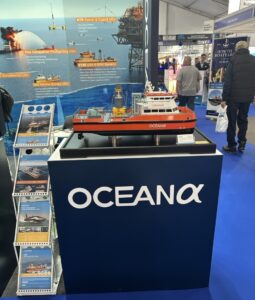 We have launched a new product line for offshore subsea inspections. We make USV solutions for offshore surveys, hydrography and geophysical applications, and we are planning to extend this product line.
We have received more and more requests for subsea inspection. We are currently working to offer solutions for these requirements using our USV technology. For subsea inspection, they call it Inspection, Maintenance and Repair (IMR).
The survey market is becoming more mature, and there are now many players in this market. Clients are requesting greater efficiency and more solutions for inspection activities, which is why we are developing these products and solutions.
We chose to attend Seawork because it is one of the biggest exhibitions for connecting with workboat and commercial vessel operators. It is an opportunity to show clients that these products are designed for day-to-day operations rather than simply demonstrations.
In March you released the V180 USV–ROV platform to support deepwater subsea IMR operations. Can you tell us about this and the integrated ROV deployment?
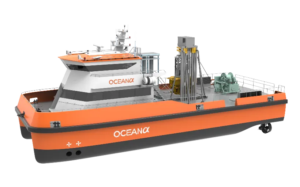
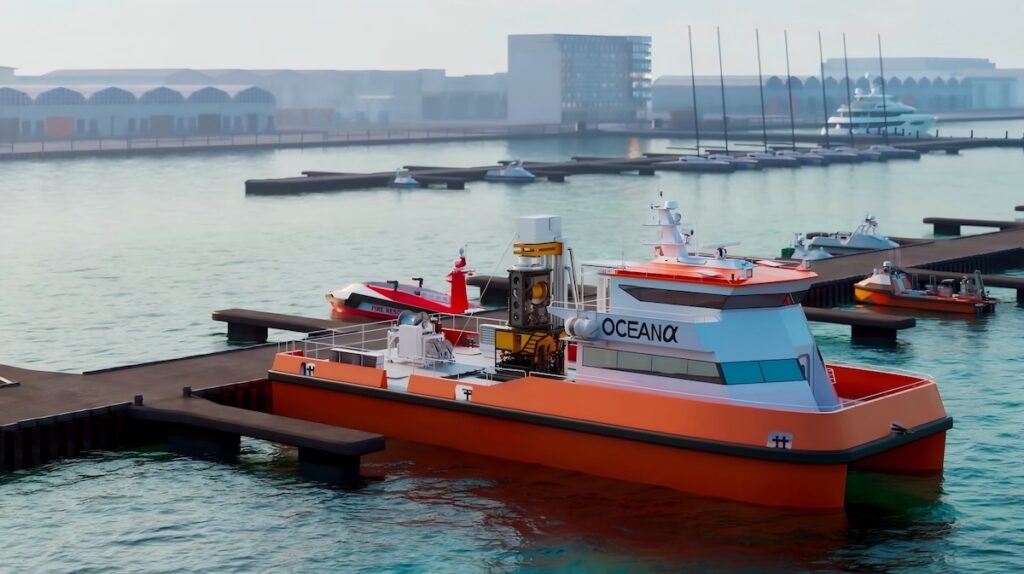
V180 USV
The platform was designed to meet offshore IMR requirements, especially maintenance and repair activities, due to increasing market demand.
The V180 is a 24-metre catamaran vessel with DP2 capabilities. It is equipped with onboard launch and recovery systems that can deploy and recover work-class Remotely Operated Vehicles (ROVs) operating at depths of up to 3,000 metres for inspection and maintenance work.
We have finished the design and are still in discussions with clients. We have received positive interest from clients regarding how to build the vessel.
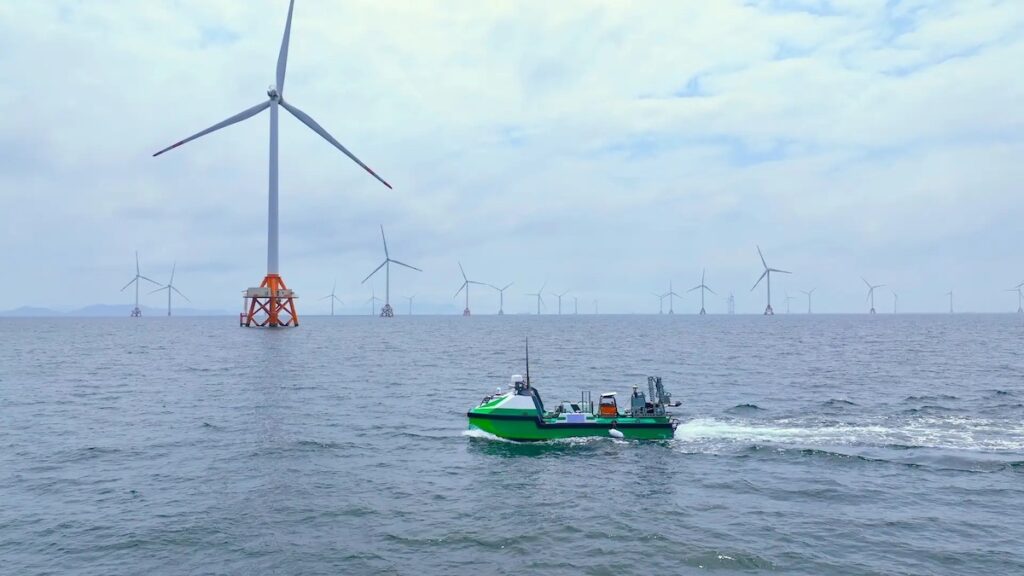
How do your vessels handle the complex task of asset inspection close to turbine foundations?
When a vessel is working close to offshore assets, environmental conditions such as waves and wind can create challenges and increase the risk of contact with the asset.
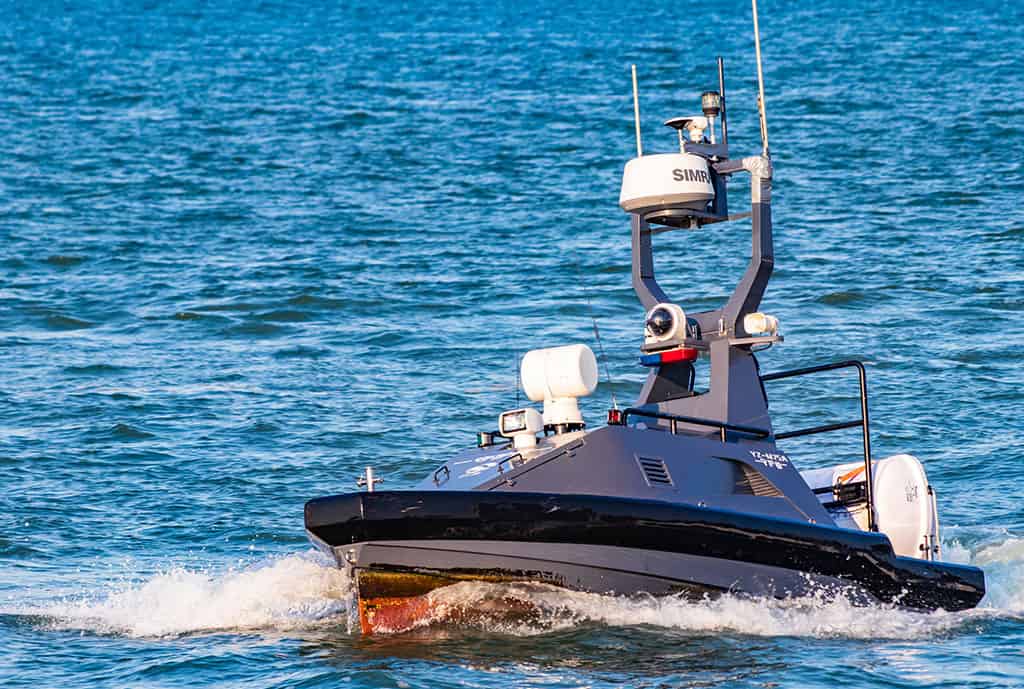
Our approach starts with a stable USV platform. We provide precise navigation, positioning and control capabilities, and our vessels are equipped with situational awareness systems that combine navigation data, radar, LiDAR and cameras.
Based on all of these inputs, the software and algorithms calculate safe operating distances and can respond quickly to ensure that the USV remains at a safe distance from the asset.
Where are you seeing the fastest adoption of your USVs right now for commercial applications? For example, hydrographic surveying, offshore wind inspection, or maritime security and patrol?
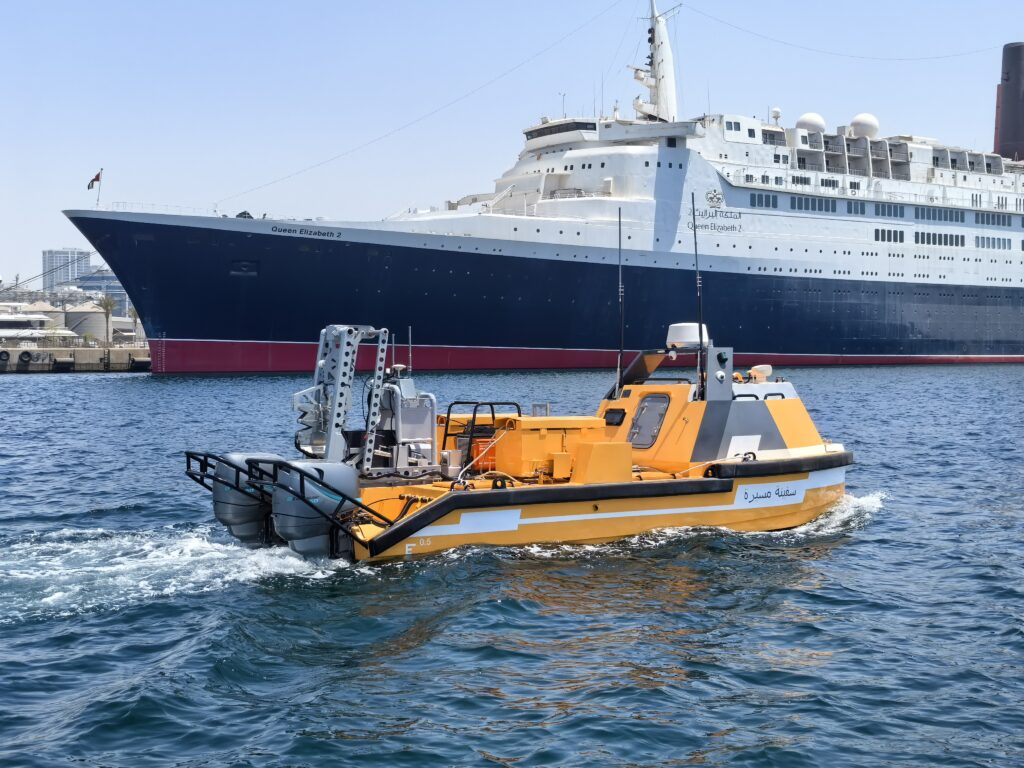
I would say the most mature market is hydrographic and geophysical surveying because the value proposition is very clear. Survey work is often repetitive, and the industry has broadly accepted hydrographic and geophysical survey as one of the most mature applications for USVs.
Secondly, I would say that subsea inspection is seeing growing demand. It is not the most mature market, but clients are showing more interest and requesting solutions for inspection applications.
We are also seeing demand for security patrol operations. Some clients place a strong emphasis on offshore asset security, and we have already delivered security patrol and logistics transport solutions between offshore oil platforms. Demand from the oil industry for these applications is increasing.
OceanAlpha has recently attended a series of international events. How has the Dolphin range of remote-controlled lifebuoys been received at these?
We have participated in international exhibitions and events, and our partners have also conducted live demonstrations in different countries.
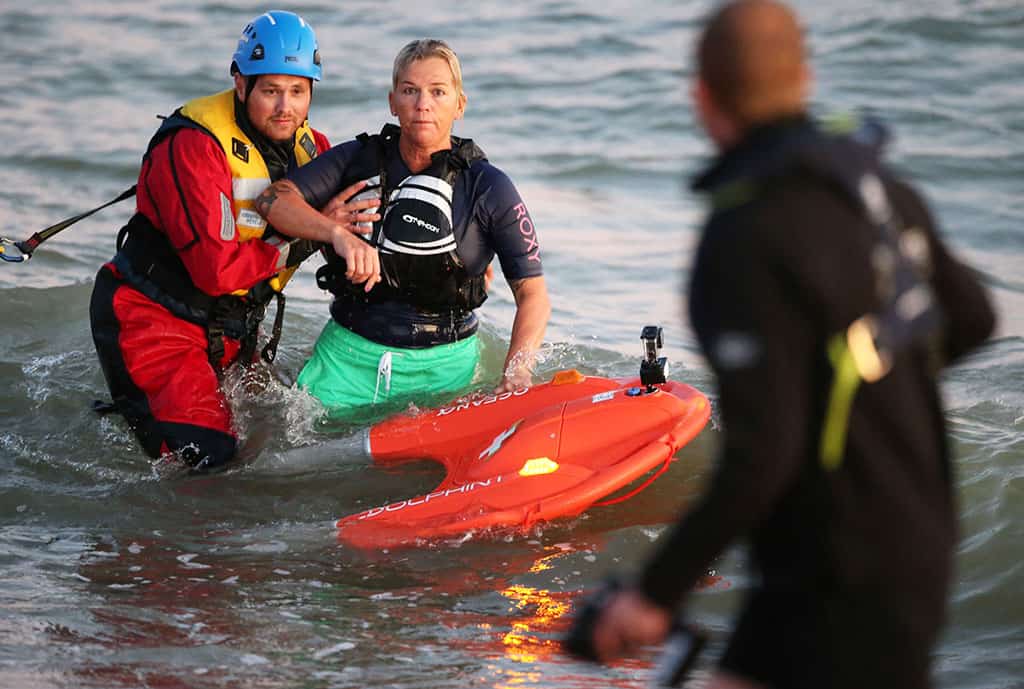
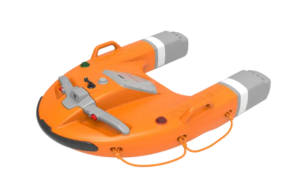 The value of the Dolphin is clear. In a drowning emergency, one of the biggest questions is how quickly and safely you can reach the person in the water. The Dolphin does not replace conventional lifesaving measures, but it complements them by helping to shorten response times.
The system can reach speeds of up to seven metres per second. We have received positive feedback from firefighting and rescue departments, beach lifesaving teams, port authorities, marinas and coast guard organizations.
With the industry pushing further offshore, communication stability is always a hurdle. Can you tell us about any fail-safes and redundancy protocols that your platforms use when satellite or mesh network connectivity drops?
We use redundant communications systems, including Starlink satellite communications, broadband connectivity, maritime radio, 4G and 5G networks, and emergency radio communications.
Even if all communications fail, we have predefined procedures to ensure the USV remains safe. The vessel can enter a standby state after communication loss, or it can return to a predefined home point.
For us, communication loss is not an unexpected scenario. We have established operational procedures and programmed responses for these situations.
It was a pleasure speaking with the OceanAlpha team at Seawork 2026, and we look forward to following the continued advancement of the V180 USV–ROV platform and OceanAlpha’s wider USV portfolio.