SBG Systems has developed a comprehensive approach to assessing Inertial Navigation System (INS) performance when GNSS signals are unavailable. Read more >>
With interference and spoofing presenting increasing challenges to reliable positioning, the company’s recent qualification-style airborne evaluation provides statistically representative data rather than isolated test results. By analyzing multiple GNSS outages across varied flight conditions, SBG Systems delivers an accurate view of real-world navigation performance.
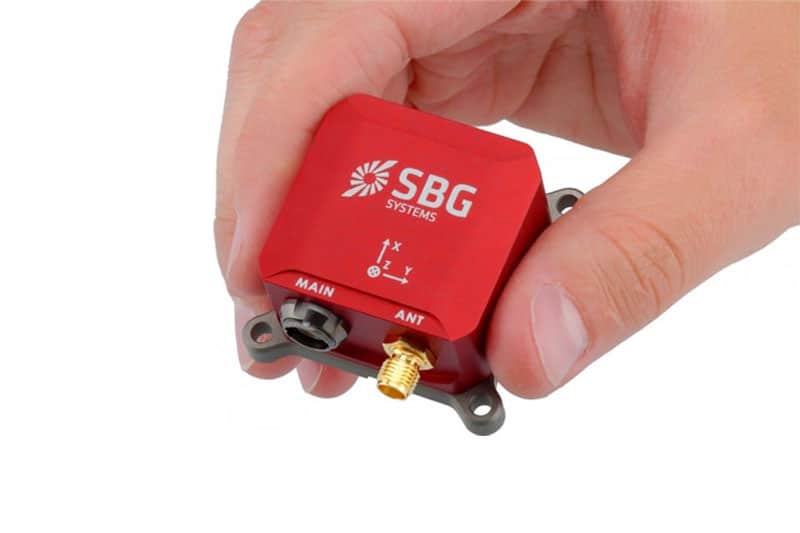
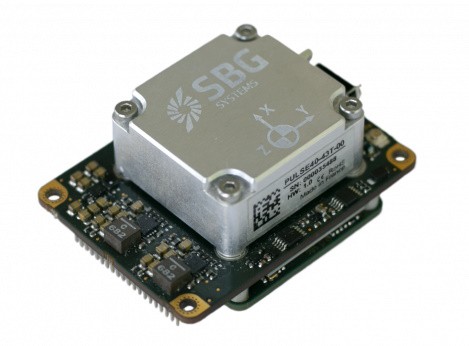
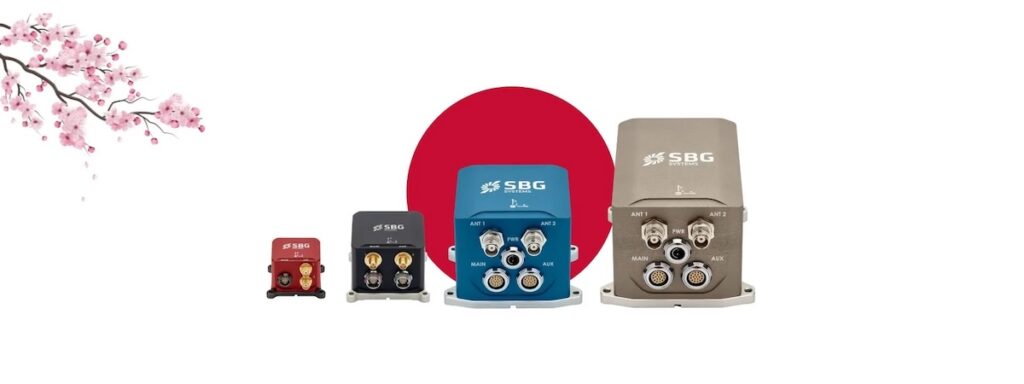
A single well-controlled test, conducted in stable airflow, with minimal vibration and steady temperature, can present an overly optimistic picture of performance. The full article explains how factors such as temperature variation, vibration, and airflow turbulence can significantly affect INS accuracy. By accounting for these influences, SBG Systems presents measured results for its Ellipse, Ekinox Micro, and Apogee systems. Under optimal conditions, these solutions achieved drift rates of approximately 0.56%, 0.13%, and 0.04% of distance travelled, equivalent to position errors down to 2 m over 5 km.
The report introduces a six-step guide for interpreting GNSS-denied performance tests. It advises checking the flight trajectory, number and duration of outages, reporting methodology, environmental parameters, and the shape of the error curve. This framework helps determine whether reported results reflect genuine field conditions or artificially simplified scenarios.
SBG Systems emphasizes transparency by publishing qualification-style performance results that represent realistic operational behavior rather than idealized demonstrations. This approach enables integrators and system developers to assess INS performance with confidence, supported by statistically meaningful airborne test data.
Read the full feature on SBG System’s website to explore their methodology for GNSS-denied evaluation and view the complete airborne performance results.