
Showcase your capabilities
If you design, build or supply Rugged Equipment Cases, create a profile to showcase your capabilities and connect with visitors who have an active requirement for your solutions.




Explore rugged equipment cases built to protect and deploy critical unmanned system components across demanding operational environments. Find solutions for UAVs, UGVs, USVs, and UUVs, supporting transport, storage, and rapid field deployment of airframes, payloads, ground control stations, and power systems.
Read the Technology Overview



If you design, build or supply Rugged Equipment Cases, create a profile to showcase your capabilities and connect with visitors who have an active requirement for your solutions.

Rugged equipment cases are foundational subsystems that ensure high-value airframes, payloads, and ground support equipment survive the transition from the laboratory to the field. For engineering professionals in defense, subsea, and industrial sectors, these enclosures represent the first line of defense against mechanical and environmental stressors.
A professional rugged equipment case is engineered with a clear operational role. These units must withstand repeated mechanical stress, exposure to harsh environmental conditions, and the logistical demands of global deployment. Increasingly, these cases serve as active parts of the system architecture, supporting rapid deployment, integrated power, and live operation from within the enclosure.

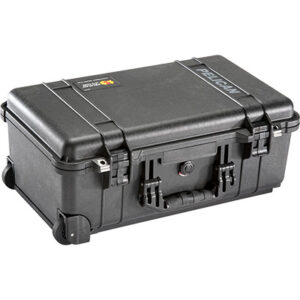
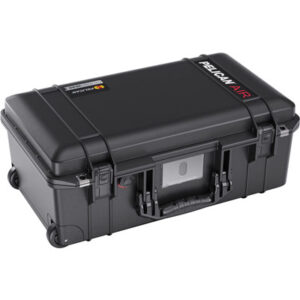
Air Cases, extra-lightweight protective cases for drones & equipment, from Pelican Products
Rugged drone cases are essential for transporting complete UAV systems, including airframes, propulsion components, and mission payloads. These cases ensure that all elements arrive ready for rapid deployment. Modern designs support efficient workflows, allowing operators to assemble or prepare aircraft directly from the case.
Internal layouts are optimized for component protection and accessibility, reducing setup time while minimizing the risk of damage. Particular attention is given to protecting sensitive payloads such as electro-optical systems and LiDAR units, where shock or misalignment can degrade performance. Battery transport is also a critical requirement, with dedicated compartments and safety considerations for lithium-based energy systems to comply with transit regulations.
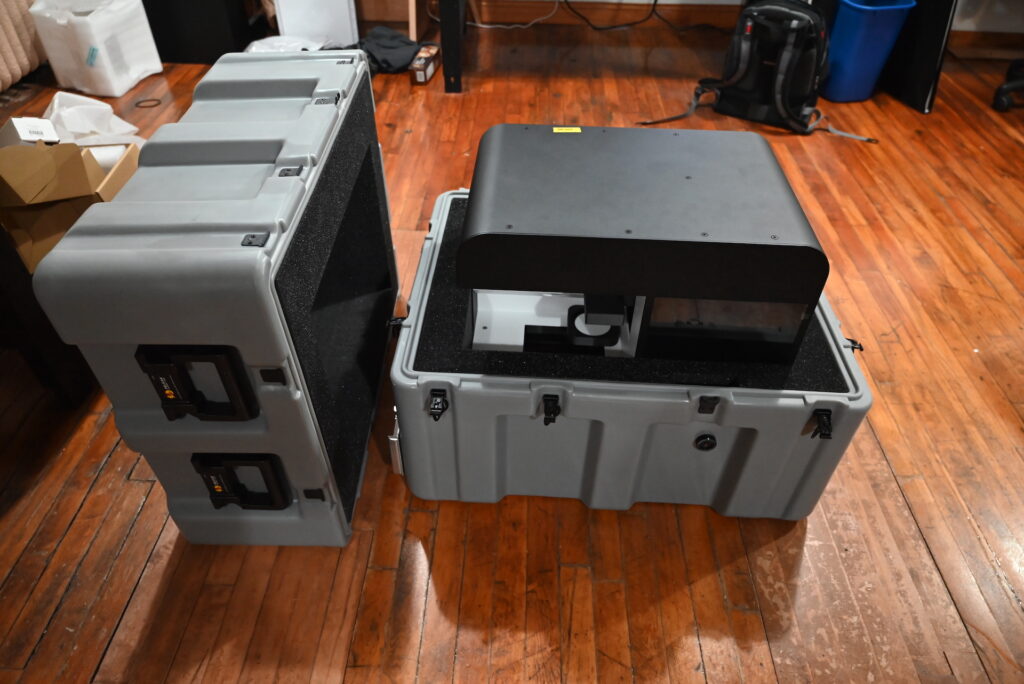
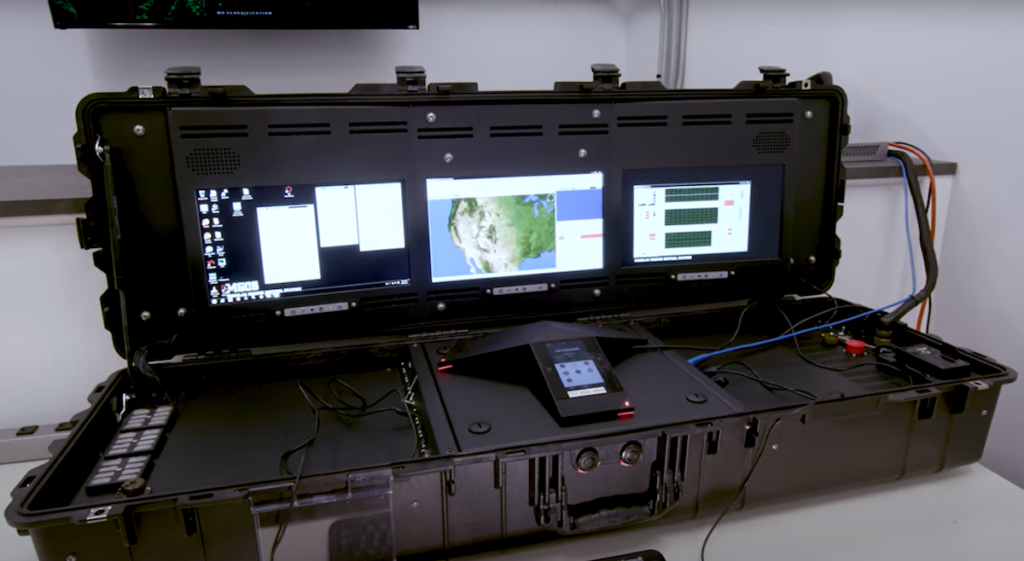
Rugged cases are commonly used to house deployable ground control stations, particularly in mobile or expeditionary operations. These cases function as both transport containers and operational units, typically integrating displays, mission computing hardware, communications systems, and power distribution within a single enclosure. Once opened, the system is ready for use with minimal setup, which simplifies logistics in time-critical scenarios. The concept of a self-contained GCS unit is standard practice for professional unmanned system operators.
High-value payloads and sensors require dedicated protection due to their sensitivity and high unit cost. Rugged cases in this category are designed to protect stabilized gimbals, ISR payloads, navigation systems, and other precision equipment. Internal configurations are often custom-engineered to immobilize components and isolate them from vibration, ensuring that calibration and alignment are maintained during transport. In many instances, these systems can be deployed directly from the case without additional setup or recalibration. Mission electronics such as processing units and RF systems are also commonly protected using these high-specification enclosures.
Unmanned ground and maritime systems introduce specialized environmental challenges. A UGV case must withstand significant mechanical stress and dust ingress over extended periods, while maritime applications require waterproof sealing and corrosion-resistant hardware for saltwater environments. For subsea systems, cases may also need to support the transport of pressure-tolerant systems and protect highly sensitive instrumentation from the humidity and salt air typical of offshore operations.

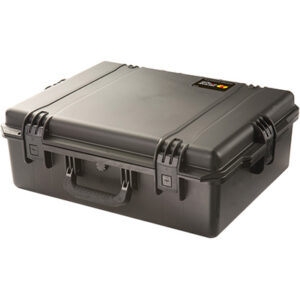
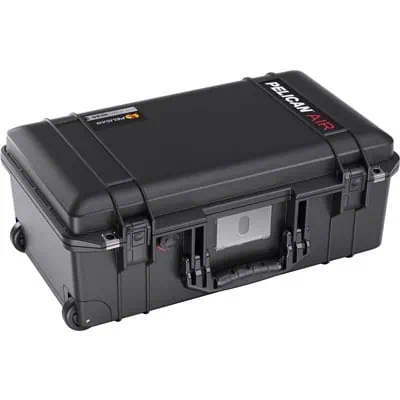
Storm Cases, rugged MIL-spec protective transport cases, from Pelican Products
In defense environments, rugged cases are often configured as complete mission kits. These systems may include ISR payloads, electronic warfare equipment, or counter-UAS technologies. Rather than transporting separate components, the case contains a fully integrated system that can be deployed immediately, reducing setup complexity and ensuring consistent performance. Modularity is often incorporated, allowing different mission configurations to be swapped as required by the tactical situation.
Unmanned systems rely on a range of supporting equipment beyond the core platform, including launch and recovery systems, ground support equipment, and diagnostic tools. Rugged cases used for these applications are typically larger and structurally reinforced to accommodate heavier or irregularly shaped components. They ensure that critical support equipment remains functional and ready for use in remote or challenging environments.
Field maintenance is essential for sustained unmanned operations. Rugged cases are used to store and transport tools, spare parts, and diagnostic equipment required for repair and servicing. These cases are organized for maximum efficiency, enabling technicians to quickly locate required components under pressure. Standardization across fleets supports consistent maintenance procedures and reduces operational downtime.
For large-scale operations, rugged cases play a central role in logistics and asset management. Standardized case systems allow efficient transport, storage, and deployment of multiple unmanned platforms. Stackable designs and compatibility with pallets or transport systems improve efficiency across supply chains. Many of these systems are now integrated with tracking technologies to support inventory management and operational visibility.
Rugged cases are also used to support training and demonstration activities, including portable simulators, demonstration payloads, or training versions of operational systems. In these applications, durability and repeatability are key. The case ensures that systems can be transported between locations without degradation while serving as a stable, professional platform for repeated use.
Unmanned systems rely heavily on communications infrastructure. Rugged cases are used to transport and deploy radios, networking equipment, antennas, and data processing units. In some configurations, these cases function as mobile communications hubs, supporting connectivity between platforms and command centers. Integration with power and cooling systems allows sustained operation in the field.
Power systems are a critical component of unmanned operations. Rugged cases are used to house batteries, charging systems, and power distribution units. These cases must address safety, thermal management, and regulatory compliance, particularly when transporting high-capacity lithium batteries. In many cases, they also support in-field charging and intelligent power management.
A growing trend is the development of hybrid cases that combine multiple functions within a single enclosure. These may integrate control systems, communications, and power into a unified platform. Such solutions are particularly valuable in space-constrained or rapidly deployable operations, where minimizing the number of separate components is a priority.
The construction of rugged equipment cases is driven by the need to balance strength, weight, and environmental resistance.
Structural performance is achieved through reinforced geometries that absorb and distribute impact forces. Sealing systems, typically based on high-performance gaskets, provide protection against water and dust ingress.
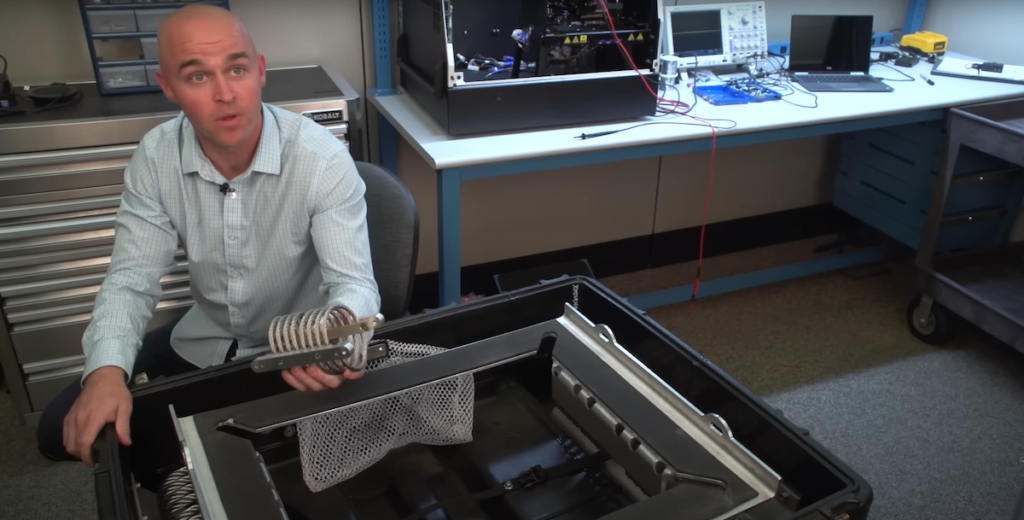
The internal design of a rugged case is critical to its performance. Foam inserts range from simple configurable layouts to precision-machined solutions tailored to specific components. For sensitive equipment, vibration isolation is essential, often achieved through suspended internal shock-mount frames or damping systems. Modular internal designs allow for rapid reconfiguration as mission needs change. Some cases also integrate power and data interfaces, allowing equipment to be operated or serviced without being removed from the case.
Rugged cases must perform reliably across extreme temperatures, mechanical shock, and contaminants. Engineering teams look to established standards for verification.
Commercial off-the-shelf solutions offer a fast and cost-effective option for many standard applications. Custom solutions provide greater optimization for specific systems but require additional development effort. Hybrid approaches are frequently used to balance flexibility, performance, and cost, ensuring the unmanned system is protected by a solution that matches its technical complexity.
Several key technological shifts are currently redefining how professional enclosures support the next generation of unmanned systems.


 Searching Companies & Products


 Subscribe to the Weekly eBrief
The latest engineering and technical developments straight to your inbox - join thousands of engineers who receive it.
Subscribe to the Weekly eBrief
The latest engineering and technical developments straight to your inbox - join thousands of engineers who receive it.