
Showcase your capabilities
If you design, build or supply Anti-Drone Net Guns, create a profile to showcase your capabilities and connect with visitors who have an active requirement for your solutions.




Anti-drone net guns are short-range C-UAS effectors that launch expanding mesh to entangle a drone’s propellers, rotors, or control surfaces. These systems provide localized physical interception where RF jamming, protocol takeover, or conventional kinetic responses may be unsuitable.
This category features anti-drone net gun manufacturers offering handheld and shoulder-fired net guns for drones, tripod-mounted launchers, and vehicle- and shipboard-mounted systems.
Read the Technology Overview
If you design, build or supply Anti-Drone Net Guns, create a profile to showcase your capabilities and connect with visitors who have an active requirement for your solutions.

Anti-drone net guns are specialized, short-range Counter-Unmanned Aircraft System (C-UAS) effectors engineered to physically disable or capture low-altitude targets. Rather than relying on radio-frequency jamming, protocol takeover, or explosive rounds, a net gun for drones works by launching an expanding mesh directly into the flight path of an incoming threat, wrapping around propellers, rotors, or control surfaces to cause an immediate loss of lift or control.
These physical effectors fulfill a critical role in security architectures where electronic countermeasures are restricted, ineffective, or hazardous to friendly spectrum operations. Some systems incorporate tethers or parachute recovery mechanisms to lower intercepted drones more safely, potentially preserving intact airframes for technical exploitation and forensics while serving as a terminal inner-tier defense within a multilayered C-UAS framework.
Handheld net guns for drones offer maximum mobility for foot patrols, security personnel, and rapid response units. These compact launchers allow an operator to aim and fire quickly without dedicated infrastructure. While highly flexible, manual net catchers depend heavily on operator judgment, target tracking, and marksmanship under stress.

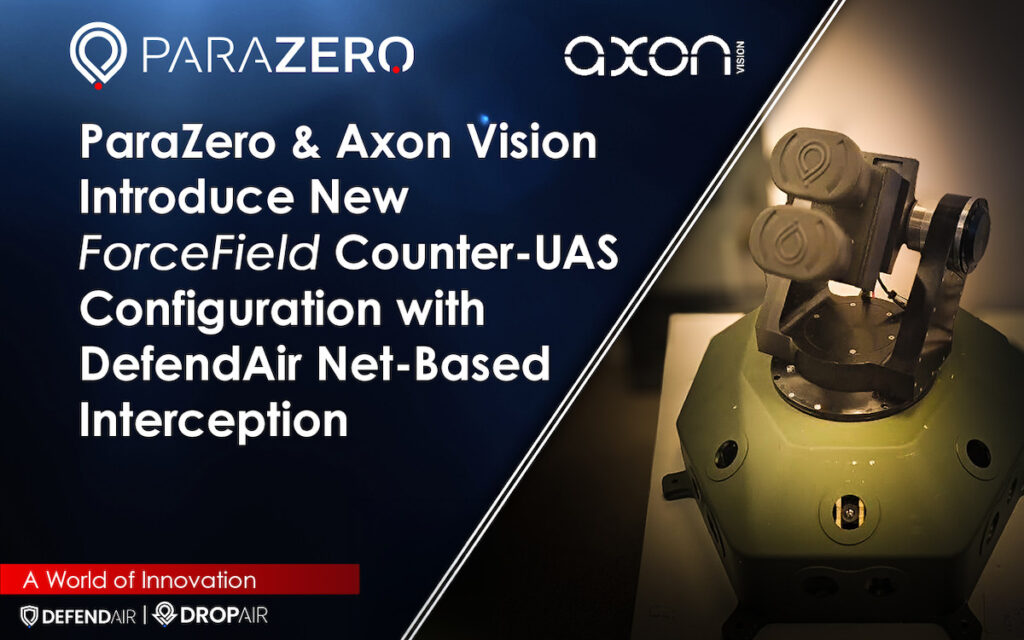
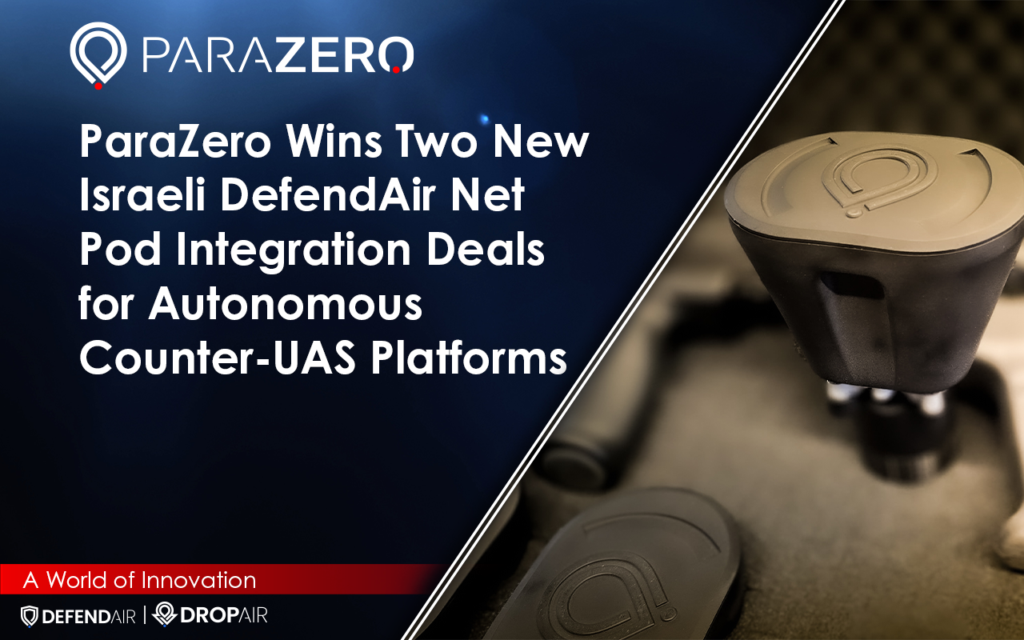
DefendAir Anti-Drone Net Launcher by ParaZero Technologies
Shoulder-fired launchers and man-portable net shooter systems trade some mobility for enhanced trajectory stability, increased propellant capacity, and potential fire-control support. Advanced models may incorporate electronic sights, optical tracking, and lead-computing reticles to indicate when a target enters an achievable engagement envelope.
Tripod-mounted net launchers provide stabilized point defense for fixed or semi-fixed locations. Electro-optical and infrared tracking sensors, combined with automatic cueing and remote operation, can reduce operator workload and allow personnel to engage threats from protected cover.
Vehicle-mounted counter-drone net launchers integrate elevated net shooter units with tracking mounts on patrol vehicles or mobile security platforms. These systems can receive target coordinates from external radar or RF detection networks, allowing security teams to patrol large perimeters and rapidly redeploy between vulnerable points.
Maritime anti-drone netting systems must be adapted for deck motion, high wind conditions, marine salt exposure, and restricted safe firing sectors. Shipboard integration must account for superstructure obstacles, antennas, helicopter flight operations, and the operational risk of a captured drone falling into deck machinery or open water.
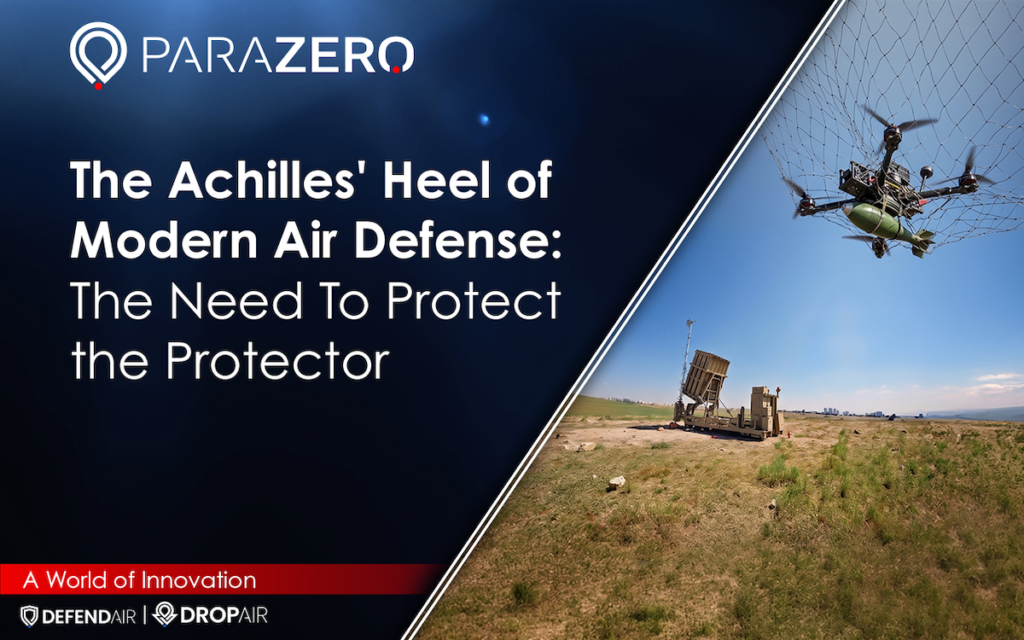
A drone-carried interceptor extends engagement reach beyond ground-based launchers. These purpose-built interceptor UAVs actively pursue moving targets using suspended nets or onboard drone capture net launchers. Autonomous drone catchers can use radar cueing and onboard guidance to execute pursuit geometry, capturing small multirotors in midair and, in some configurations, carrying them by tether to a designated recovery or disposal zone.
Static anti-drone netting and deployable capture screens provide passive perimeter defense around sensitive assets, approach corridors, or confined spaces. While passive rather than actively aimed, these static drone netting barriers create physical exclusion zones that prevent small multirotors from reaching personnel, critical machinery, or exposed infrastructure.
Engineers balance aerodynamics, deployment velocity, and structural strength across several specialized projectile and capture designs:
Selecting the optimal projectile architecture requires balancing target speed and size against the acceptable risk to surrounding ground assets.
The choice of propulsion mechanism influences engagement range, acoustic signature, rearm time, and operational logistics for the entire launcher assembly.
Matching propulsion technology to the mission environment helps ensure consistent ballistic accuracy without imposing unnecessary logistical burdens.
Military sites can deploy counter-UAS net guns to defend command posts, radar stations, ammunition depots, and communications infrastructure against low-altitude reconnaissance and attack drones. Physical capture avoids the additional projectile fragments associated with conventional kinetic interception, although hazardous payloads carried by the target drone may still present a risk. Capturing intact flight controllers, radio modules, and payloads can also provide technical intelligence regarding enemy flight routes and platform modifications.
Refineries, power stations, communications hubs, and government buildings can use fixed and mobile anti-drone netting systems to guard sensitive perimeter sectors. Physical nets avoid the intentional spectrum disruption associated with RF jamming, providing localized point defense around control rooms, storage tanks, and substations where electromagnetic interference could affect legitimate operational infrastructure.
Airports, public arenas, and high-profile international gatherings present challenging counter-drone environments where wide-area RF jamming or conventional kinetic rounds can introduce severe risks to commercial aviation and crowds. A net shooter offers a targeted, nonexplosive response that disables unauthorized multirotors without causing spectrum interference. Parachute-assisted recovery mechanisms can reduce descent speed, although safe engagement sectors and controlled recovery zones remain necessary.
Correctional facilities can deploy net catchers and static capture screens to stop low-altitude contraband deliveries over perimeter walls and fences. Capturing the drone intact may yield valuable physical and digital evidence, including stored video, serial numbers, and telemetry data, supporting law enforcement investigations while keeping unauthorized payloads out of secure yards.
C-UAS operators must evaluate physical capture mechanisms against other soft-kill and hard-kill technologies within their defense architecture.
Net effectors fill a distinct niche by delivering localized physical interception without causing electromagnetic interference or the wider collateral risks associated with conventional projectiles.
Ongoing research focuses on expanding engagement envelopes, increasing system automation, and improving lifecycle sustainability.
These technological advances can transform short-range net guns from isolated point-defense tools into more fully integrated C-UAS effectors.


 Searching Companies & Products


 Subscribe to the Weekly eBrief
The latest engineering and technical developments straight to your inbox - join thousands of engineers who receive it.
Subscribe to the Weekly eBrief
The latest engineering and technical developments straight to your inbox - join thousands of engineers who receive it.