Discover World-Leading Unmanned and Autonomous Technologies
Discover cutting-edge solutions from leading global suppliers
Despite global challenges 2021 has been a year of innovation and expansion within the world of unmanned and autonomous systems. Here’s our round-up of the ten most read articles on UnmannedSystemsTechnology.com. this year.
1. Prototype Hydrogen Fuel Cell Completes Operational Tests
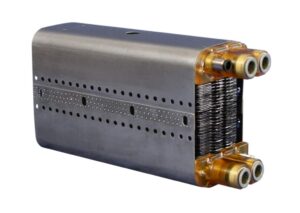 Northwest UAV (NWUAV) has completed a prototype hydrogen fuel cell developed in conjunction with the U.S. Naval Research Laboratory (NRL). The fuel cell was specifically designed to meet the high power-to-weight ratio and harsh operational requirements of UAVs.
Read more…
2. Remote ID & Tracking Module Introduced for UAS
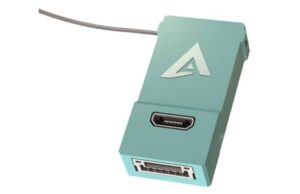 Aerobits has launched a new product that provides enhanced identification and tracking for UAS. The idME module has been developed in response to the publication of UAS Remote ID Standard – Specification for Remote ID and Tracking (F3411 − 19) by the standards organization ASTM International.
Read more…
3. Seahawk Autonomous Vessel Delivered to U.S. Navy
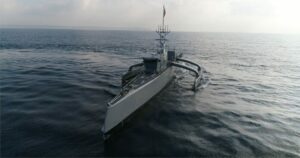 Leidos has completed delivery of the state-of-the-art Seahawk autonomous USV to the U.S. Navy. Seahawk is a long-range, high-availability autonomous medium-displacement unmanned surface vehicle (MDUSV) with a composite trimaran hull, designed to enhance capabilities for naval operations.
Read more…
4. Smallest MWIR Camera Introduced for UAVs
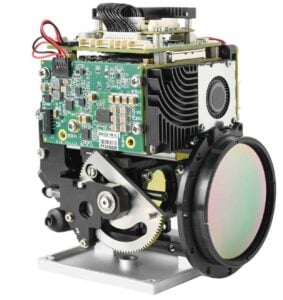 An innovative new micro camera system has been developed by Sierra-Olympic Technologies for low-SWaP applications. The project has been more than three years in the making; a new sensor and optic had to be custom developed to adhere to the strict size, weight and power constraints of the design.
Read more…
5. Hybrid Propulsion Fixed-Wing VTOL Drone Unveiled
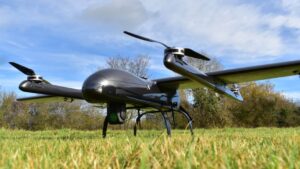 A new fixed-wing UAS platform with VTOL capabilities and a hybrid propulsion system has been developed by Plymouth Rock Technologies Inc. Featuring long-range data communications, the XV range is the first non-military commercial UAS in its class of both LOS and BVLOS UAS platforms to offer fully autonomous flight capabilities.
Read more…
6. Detect and Avoid Technology Integrated into Tandem-Rotor Helicopter Drone
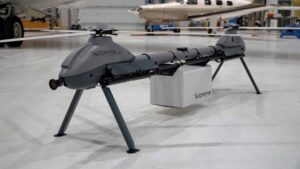 The Casia detect-and-avoid system by Iris Automation has been integrated into a unique helicopter UAV developed by the company’s partner Avidrone Aerospace. According to Avidrone Aerospace, the Avidrone 210TL is the world’s only commercialized tandem rotor, electric powered, fully automated helicopter UAV.
Read more…
7. Stabilized Platform Selected for UAV/USV Oil Spill Detection System
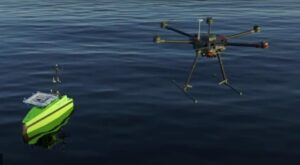 Stabilized drone platform technology by STABLE has been successfully incorporated into an integrated UAV/USV system that has been developed for continuous monitoring and detection of oil spills at sea. STABLE’s technology neutralizes the effects of the roll and pitch movements inflicted upon a vessel by dynamic marine environments.
Read more…
8. Development Continues on Manta Ray Long-Range UUV Project
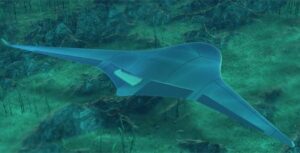 DARPA has continued development of its Manta Ray unmanned underwater vehicle (UUV) project with the award of three contracts to Northrop Grumman Systems Corporation, Martin Defense Group and Metron, Inc. The Manta Ray project seeks to develop innovative technologies that will allow payload-capable UUVs to undertake long-duration, long-range missions in ocean environments.
Read more…
9. Growing Demand for Drone Pilots in Agriculture
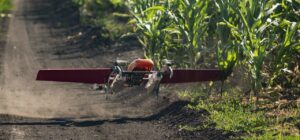 The team at Drone Digital explores the increasing use of drones in agriculture and the rising demand for qualified drone pilots. They also unveil their new online platform that connects farmers with pilots in their area, to help them find the right professionals for their project requirements.
Read more…
10. Ice Protection Developed for Drone Propellers
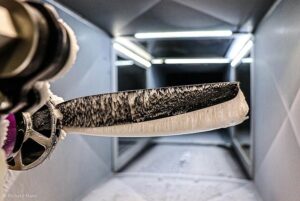 Mejzlik Propellers has entered into an agreement with UBIQ Aerospace to develop an ice protection solution for UAV propellers. In order to develop a solution for a wide variety of use cases in the UAS and UAM (urban air mobility) industries, focus must be placed on propellers and exposed sensors. The collaboration with Mejzlik, will see the adaptation of both existing and novel proprietary technological concepts to the propeller de-icing challenge.
Read more…