Discover World-Leading Unmanned and Autonomous Technologies
Discover cutting-edge solutions from leading global suppliers
SUPPLIER SPOTLIGHT
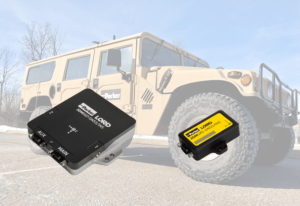 Parker LORD, MicroStrain Sensing has released a whitepaper highlighting four evolutionary improvements delivered by the new 3DMGQ7-GNSS/INS. Building on the success of the 3DMGX5-GNSS/INS, the 3DMGQ7-GNSS/INS resolves common challenges in specific use cases. Field Application Engineer Ian Moore, explores the following 4 test reports:
- Test 1: Dual-Antenna Stationary Heading
- Test 2: Magnetic Interference Immunity
- Test 3: Dual-Antenna + RTK vs Single-Antenna
- Test 4: Wheel Odometry Aiding during GNSS Attenuation
Test 3 looks specifically at Dual Antenna + RTK vs Single-Antenna
The GQ7, when paired with the 3DMRTK and SensorCloudRTK, increases positional accuracy by 100x by providing 1cm + 1ppm positional accuracy in most major urban areas and coverage is always expanding.
Target applications include:
- High positional accuracy (2 – 100cm) applications
- Applications utilizing public roads and sidewalks
- Delivery drones
- Urban robots
- Autonomous vehicles
- Legged robots
- UAS
- UAV
Read the full article on the Parker LORD, MicroStrain Sensing website.