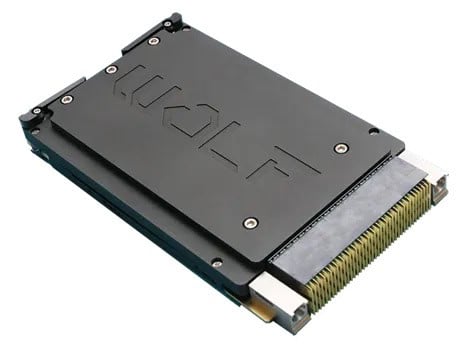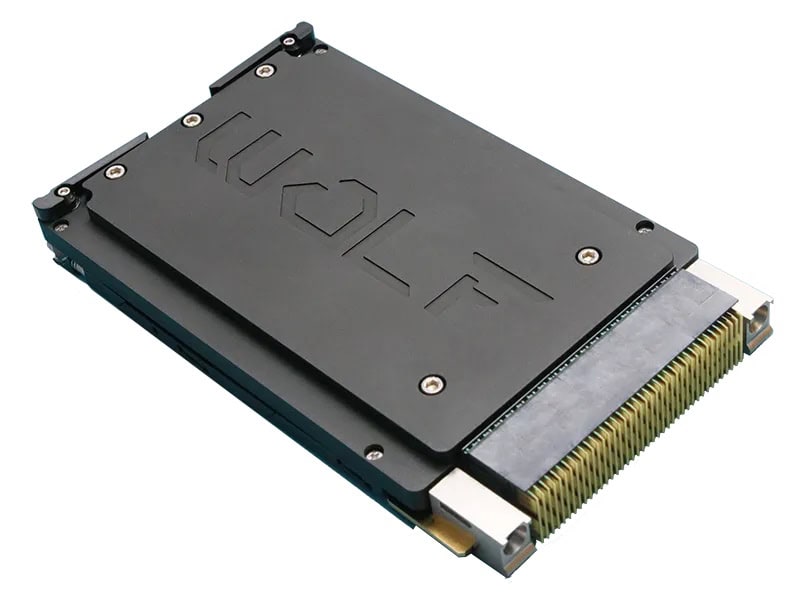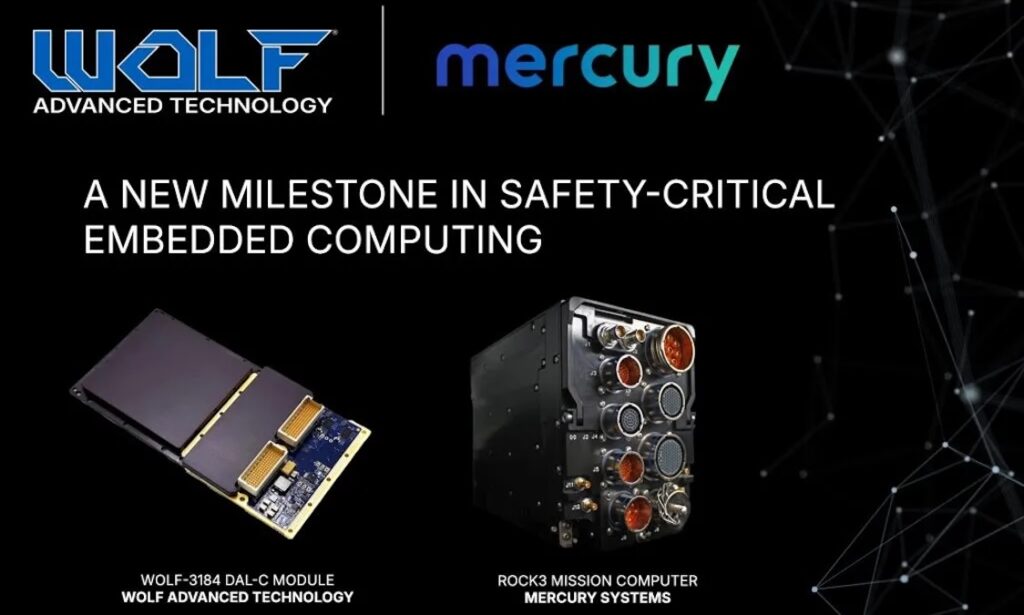
Wolf Advanced Technology has released a detailed overview on the use of GPU-accelerated processing to enhance radar capabilities across defense, aerospace, and surveillance missions. Read more >>
 The whitepaper outlines how combining NVIDIA GPUs with VPX and XMC solutions supports both traditional radar processing and emerging AI-enhanced architectures.
GPU and FPGA-GPU Architectures for Modern Radar
Modern radar systems demand flexible signal interpretation, rapid algorithm updates, and AI-enhanced analytics. WOLF solutions employ GPUs either as standalone accelerators or within FPGA-GPU hybrid configurations. This pairing allows FPGA components to handle real-time RF front-end control while GPUs perform parallel processing and AI-driven analysis. The result is improved adaptability and reduced development complexity compared to FPGA-only systems.
Developers can take advantage of familiar programming environments such as CUDA, TensorFlow, and PyTorch, enabling faster prototyping and deployment. Additionally, these solutions are designed for scalability, allowing hardware and software upgrades without full system redesign.
Mission-Specific Radar Applications
The whitepaper details optimal radar configurations for various mission profiles:
- Airborne Surveillance (AWACS, UAV ISR): AESA + SAR radars utilize FPGA for beam steering and tracking, with GPUs handling SAR image formation and object classification.
- Missile Defense: Pulse-Doppler radars rely on FPGA for low-latency signal processing, while GPUs support offline analysis for pattern recognition.
- Spaceborne ISR: Onboard FPGAs manage data compression and preprocessing, with ground-based GPU clusters executing SAR image reconstruction and AI analytics.
- Border and Ground Surveillance: Hybrid systems combine FPGA for MTI detection with GPUs for terrain imaging and AI-based classification.
- Electronic Warfare: Passive and multistatic radar systems benefit from GPU-accelerated correlation processing and machine learning-driven threat detection.
- Naval Targeting: FPGA supports the real-time processing of 3D AESA radars, with GPUs assisting in backend data fusion and threat prediction.
WOLF Hardware Solutions
The company’s radar processing portfolio includes several ruggedized products:
- WOLF-153L: Incorporates an Ada RTX5000 GPU and ConnectX-7 smartNIC, offering high-speed networking and modular scalability.
- WOLF-1538: Optimized for offline GPU processing, compatible with SOSA and OpenVPX profiles.
- WOLF-163S: A high-bandwidth networking board with a Blackwell RTX5000 GPU and 200 Gbps Ethernet support, suitable for time-sensitive networking environments.
- WOLF-1570: Combines Ada RTX2000 GPU with Xilinx FGX2 FPGA, featuring multi-channel video input/output for radar applications requiring both real-time and AI processing.
Expanding AI Integration in Radar
WOLF emphasizes the growing use of AI to improve radar functions including target recognition, anomaly detection, clutter suppression, and spectrum monitoring. GPU-accelerated AI models support diverse tasks such as spectrogram analysis, emitter identification, noise profile learning, and adaptive filtering.
In tactical RF environments like those using RF10 radios, data is first processed on embedded DSP/FPGAs before being sent to GPU-equipped backend units for AI inference. This workflow enables accurate classification of RF signals, detection of spoofing or jamming, and identification of unknown transmissions.
Addressing Operational Considerations
The whitepaper highlights challenges such as power consumption, heat dissipation, and the need for real-time responsiveness. WOLF addresses these through conduction- and liquid-cooled designs and by using hybrid FPGA-GPU architectures where ultra-low latency is critical.
Future Radar Trends
The report forecasts greater adoption of GPU-based edge computing for real-time radar analytics. It also highlights the anticipated role of GPUs in quantum radar and sensing technologies, where they will be essential for processing the complex data involved. Additionally, integration with 5G networks and IoT sensors is expected to improve situational awareness and data fusion capabilities.
Conclusion
WOLF’s GPU-accelerated VPX and XMC modules provide a scalable and efficient platform for AI-enhanced radar operations. By simplifying development while supporting advanced processing workloads, these solutions help defense and aerospace organizations meet the evolving requirements of modern radar missions.