UAV Propulsion Tech, as a North American supplier of advanced UAV technologies, provides access to flight control solutions that support a wide range of unmanned and advanced air mobility programs. Among the technologies available through the company is Embention’s Veronte family of autopilots, a portfolio developed for applications ranging from compact UAVs to certification-focused eVTOL platforms. Read more >>
Selecting an autopilot is one of the most consequential decisions in the development of an unmanned aircraft system. The flight controller influences vehicle performance, certification strategy, integration complexity, and long-term operational support. As regulatory expectations continue to evolve and the autonomous aviation sector expands, organizations evaluating autopilot platforms should consider several critical factors before making a procurement decision.
Certification Readiness Should Be Evaluated Early
As unmanned aircraft operations become more common in commercial and defense environments, regulators are applying increasingly stringent requirements to flight-critical systems. Programs expected to operate within regulated airspace benefit from selecting autopilot technology developed in accordance with recognized aviation standards.
DO-178C for airborne software, DO-254 for airborne electronic hardware, and DO-160G for environmental testing and qualification form an important part of the certification landscape. Compliance with these standards can significantly influence the path toward airworthiness approval.
Embention’s Veronte product family has been developed in accordance with all three standards. The Veronte Autopilot became the first guidance and flight control system for UAS and eVTOL applications to enter an ETSO-C198 certification process with EASA. Embention also maintains Production Organisation Approval (POA) and Alternative Procedures to Design Organisation Approval (APDOA), demonstrating that its manufacturing and design processes align with established aviation industry requirements.
Working with an established supplier such as UAV Propulsion Tech provides access to technologies backed by existing certification credentials, helping reduce development risk and regulatory complexity.
Redundancy Requirements Should Reflect the Mission
Different operational environments require different levels of fault tolerance. A research platform operating in remote areas faces a different risk profile than an urban delivery UAV or a passenger-carrying eVTOL aircraft.
Defining redundancy requirements before procurement helps ensure the selected system aligns with operational and certification objectives.
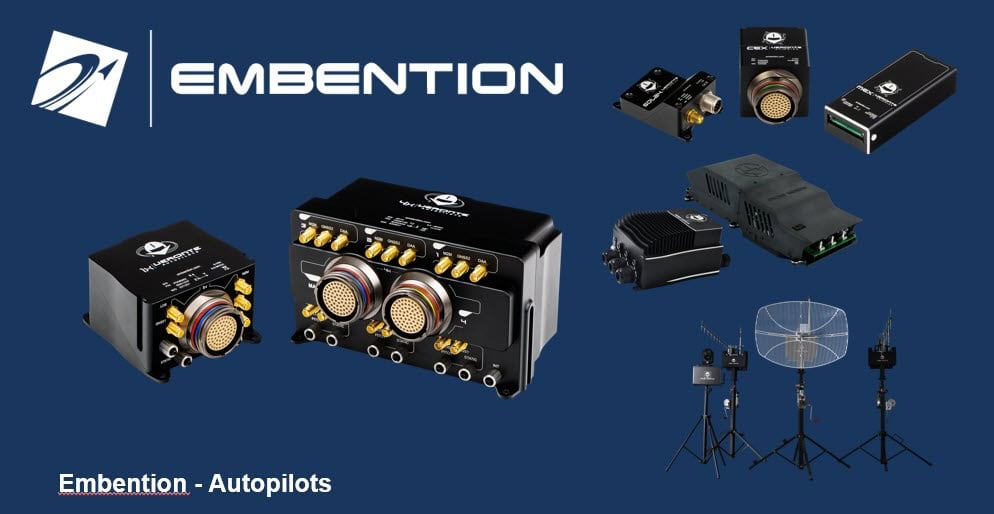
Embention offers multiple levels of redundancy across its autopilot portfolio. The Autopilot 1x incorporates sensor redundancy within a compact footprint suited to advanced UAV applications where size and weight remain important considerations. The Autopilot 4x provides a fully redundant, fail-operational architecture designed for larger UAVs and certification-oriented eVTOL platforms, eliminating single points of failure. For more demanding use cases, the DRx distributed redundant autopilot supports fly-by-wire and autonomous operations across complex multi-rotor aircraft while addressing eVTOL certification requirements.
Selecting an autopilot with an appropriate redundancy level can help avoid costly redesign efforts caused by under-specification, while also preventing unnecessary expenditure on capabilities that exceed program requirements.
Integration Resources Can Influence Program Success
The autopilot serves as the central element connecting propulsion systems, sensors, datalinks, payloads, ground control stations, and the airframe itself. As a result, integration support can be just as important as the hardware platform.
Embention provides Product Development and Integration (PDI) engineering services that assist customers with system architecture planning, component selection, simulation activities, and flight-test preparation. The Veronte Ecosystem also includes avionics expansion modules, motor controllers, communications systems, and tracking antennas designed to operate within a unified architecture.
Access to coordinated integration support can help streamline development schedules and reduce technical challenges during deployment.
Vehicle Compatibility Should Be Verified from the Outset
Autopilot capabilities can vary significantly depending on vehicle type. While some systems are intended exclusively for fixed-wing aircraft or multicopters, others are designed to support a broader range of autonomous platforms.
The Veronte family has been deployed across fixed-wing UAVs, multicopters, VTOL aircraft, helicopters, unmanned ground vehicles, and unmanned surface vessels. This flexibility can be particularly valuable for organizations operating diverse fleets or planning to expand into additional vehicle categories in the future.
A common control architecture across multiple platform types can also simplify operator training, maintenance procedures, and support infrastructure requirements.
Long-Term Supplier Stability Deserves Consideration
Autopilot systems typically remain in service for many years, making long-term vendor support an important consideration during the sourcing process.
Organizations should evaluate whether a supplier can provide continued firmware development, spare parts availability, and technical assistance throughout the operational life of a program.
Founded in 2007, Embention has established a presence across commercial aviation, defense, and advanced air mobility sectors. The company is publicly traded on Euronext and has worked with organizations including Amazon Prime Air, Airbus, Rheinmetall, and Kawasaki. Such long-standing industry relationships reflect a history of sustained program support and technology development.
Evaluate the Broader Ecosystem, Not Just the Autopilot
One of the most common procurement mistakes is evaluating an autopilot as an isolated component. Successful autonomous operations depend on the interaction of flight control software, communications systems, simulation tools, avionics, and ground control infrastructure.
The Veronte Ecosystem incorporates Hardware-in-the-Loop (HIL) and Software-in-the-Loop (SIL) simulation environments that allow development teams to assess system performance before flight testing begins. Ground control stations and communication systems are designed for native integration with Veronte flight controllers. The ecosystem also supports vision-based navigation technologies for operation in GNSS-denied environments, an increasingly important capability for defense missions and infrastructure inspection applications.
Considering the complete ecosystem during procurement can help improve interoperability while reducing integration challenges later in the development cycle.
Choosing the Right Technology Partner
Autopilot selection influences certification planning, integration schedules, operational risk management, and long-term platform sustainability. Because the flight control system sits at the center of the aircraft architecture, sourcing decisions can affect every stage of a program’s lifecycle.
Embention brings more than 17 years of experience in the development of safety-critical avionics for autonomous aircraft and advanced air mobility platforms. Through UAV Propulsion Tech, North American customers gain access to this technology alongside localized technical support and streamlined hardware procurement. Together, the two companies provide a pathway for organizations seeking to advance UAV and eVTOL programs from development through operational deployment.
Read “Six Things to Know Before Sourcing Autopilots“ on the UAV Propulsion Tech website.