



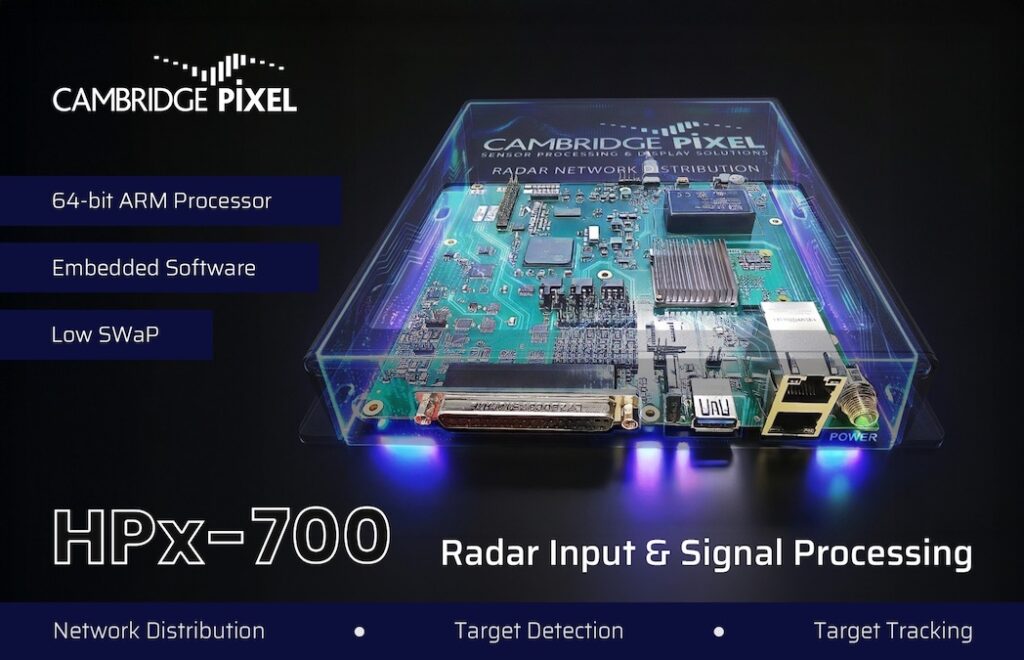
Cambridge Pixel has introduced the HPx-700, a new ARM-based Radar Input & Signal Processor that enables system integrators to upgrade analogue radars with advanced digital processing at the edge.
The HPx-700 performs radar signal processing locally within the device, removing the dependency on host PCs and enabling more compact and reliable deployments.
Powered by a 64-bit ARM processor, the unit is capable of carrying out complex radar signal processing tasks while converting raw analogue radar inputs into network-ready radar data. Its fanless architecture and low Size, Weight and Power (SWaP) profile make it suitable for applications where reliability, power efficiency and compact form factors are essential, including installations in constrained or remote environments.
The HPx-700 represents a significant architectural step change compared with the widely used HPx-346, enabling radar processing to take place at the edge while incorporating Cambridge Pixel’s established software technology.
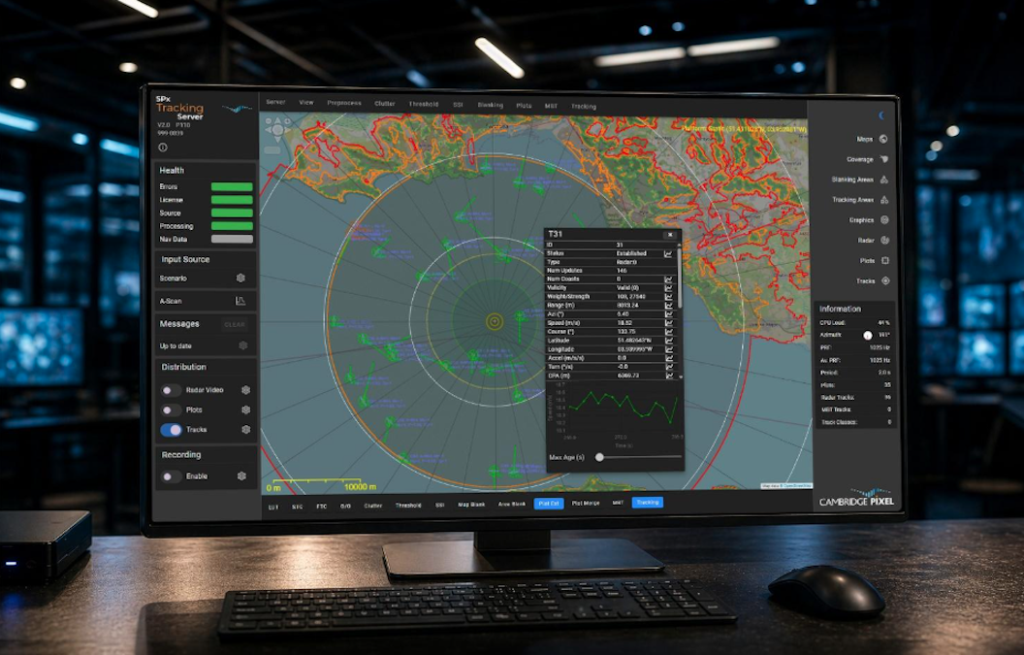
The platform is available in three core configurations that provide different levels of functionality. The Distribution option supports the capture and network distribution of radar video data. The Target Detection configuration adds plot extraction capabilities to generate detection lists from raw radar video, while the Target Tracking option incorporates advanced algorithms to establish and maintain confirmed target tracks, including correlation and filtering.
Additional optional modules further extend the system’s capabilities, supporting features such as multi-sensor fusion and high-reliability data recording. These options allow system architects to introduce advanced functionality without the need to redesign their existing radar systems.
The HPx-700 will be offered in stand-alone, rack-mount and board-level form factors. It also includes integrated signal analysis and radar visualization tools that enable engineers to verify system performance during commissioning.
Designed to support long-term operational use, the platform incorporates components with a guaranteed future supply, providing confidence in maintaining upgraded radar systems over extended service lifetimes.
Full technical specifications will be released at the official launch, with orders for the system expected to open in April 2026.