Discover World-Leading Unmanned and Autonomous Technologies
Discover cutting-edge solutions from leading global suppliers
January 2026 drew significant reader interest to uncrewed systems operating within clearly defined regulatory, operational, and mission-driven contexts. The most-read UST articles of the month examined enforcement of U.S. drone policy, the fielding of a hydrogen-powered UAV in active military service, and the practical application of heavy-lift cargo drones in demanding alpine terrain, alongside new international selections of VTOL uncrewed aircraft systems.
January’s most read article focused on Red Cat Holdings’ response to the Federal Communications Commission’s enforcement of Section 1709 of the FY25 National Defense Authorization Act, which adds foreign-manufactured drones and critical components to the FCC’s Covered List. The decision followed a national security determination by an Executive Branch interagency body convened by the White House, citing risks to U.S. safety and security.
Red Cat welcomed the move, noting that effective enforcement must coincide with the availability of trusted, U.S.-made alternatives. The company highlighted the need for capable and cost-effective domestic platforms to meet operational requirements, reaffirming its commitment to supporting a secure and scalable U.S. drone ecosystem through its NDAA-compliant Family of Systems, including the Black Widow™.
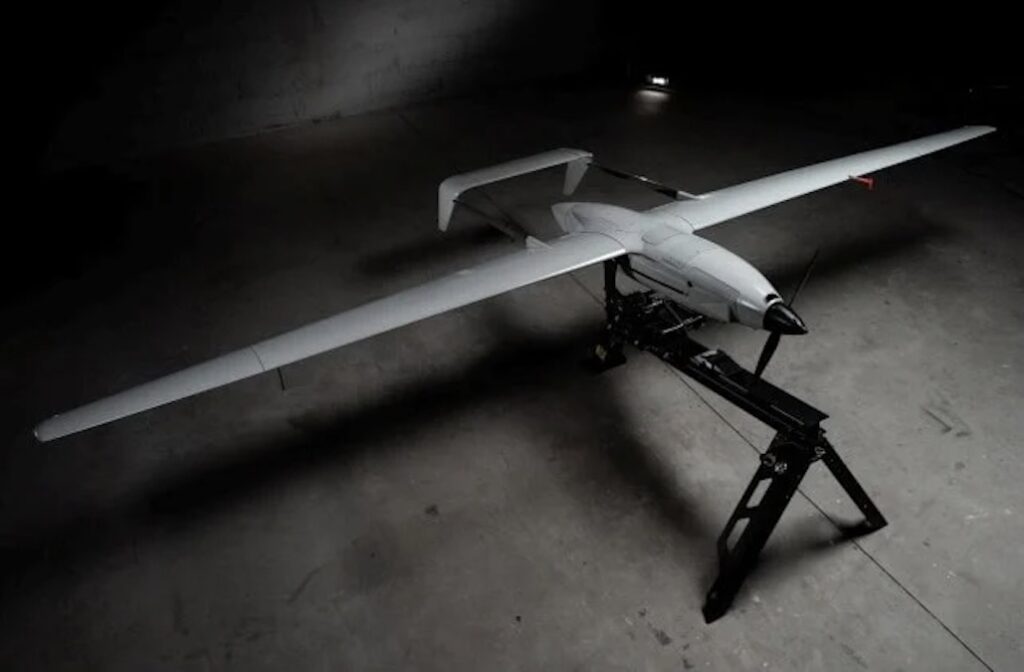
Building on domestic policy developments, focus shifted to Skyeton’s hybrid variant of the Raybird Unmanned Aerial Vehicle, which has entered full-scale combat duty with the Ukrainian Defense Forces following successful interagency testing. The platform pairs an electric motor with a hydrogen fuel cell and features a reengineered airframe designed for optimal weight distribution, internal volume, and scalable production.
The hydrogen-electric Raybird currently achieves around 12 hours of flight, with plans to extend endurance to 20 hours. Its operational profile includes near-silent performance, reduced thermal signature, and resilience across a wide temperature range. The system is undergoing codification to support broader adoption, with potential applications beyond current military deployment.
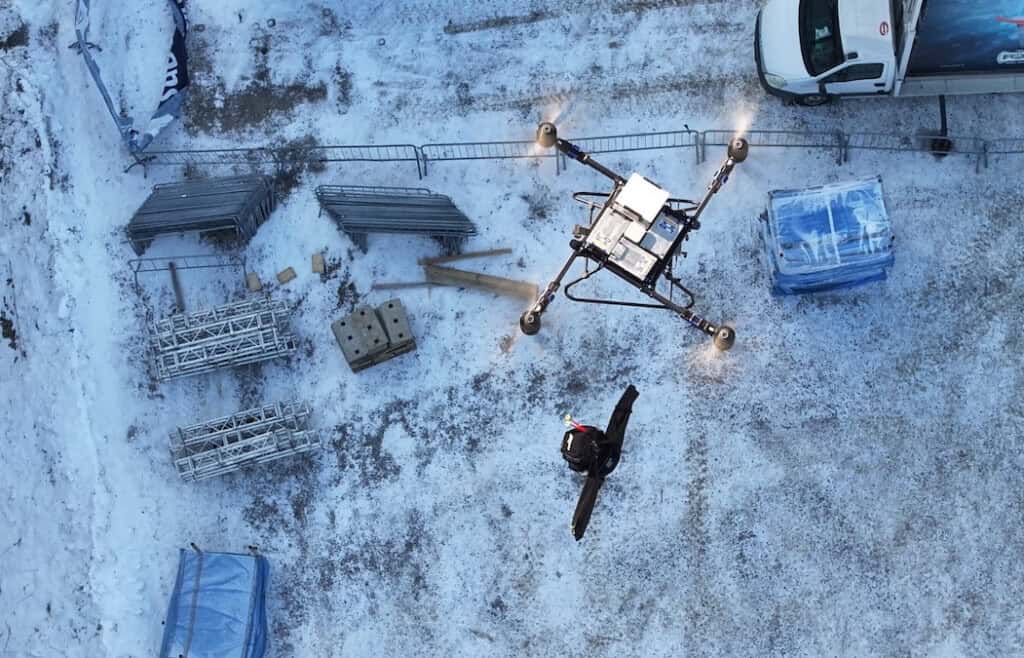
The deployment of uncrewed platforms in high-altitude operations continued to expand, with FlyingBasket using its FB3 heavy-lift cargo drones to support the FIS Ski World Cup in Val Gardena. The autonomous drones transported television production equipment and technical materials to locations that would otherwise require heavy vehicles or extensive manual labor.
Each FB3 carried up to 100 kilograms and completed flights of up to five kilometers, climbing roughly 650 meters in elevation. Over ten flights, the drones maintained an average speed of 31 kilometers per hour, completing the operation in just over three hours with only two operators. Internet and satellite communications ensured stable control despite limited visibility between departure and delivery points.
FlyingBasket emphasized that these missions provide a sustainable, safe alternative to traditional ground logistics, reducing environmental impact and operator risk. The Val Gardena operation builds on prior deliveries in the Autonomous Province of Bolzano, where the company completed 21 flights carrying over a ton of materials to remote mountain huts, demonstrating the viability of heavy-lift drones in high-altitude logistics and complex operational settings.
International expansion of uncrewed systems also featured prominently, with Airbus Helicopters securing a contract to deliver its Flexrotor VTOL uncrewed systems to Uzbekistan through state enterprise Uztechtrade. The selection makes Uzbekistan the first customer for the Flexrotor in Central Asia, with plans to integrate the platform for crewed-uncrewed teaming and advanced Intelligence, Surveillance, Target Acquisition, and Reconnaissance (ISTAR) operations.
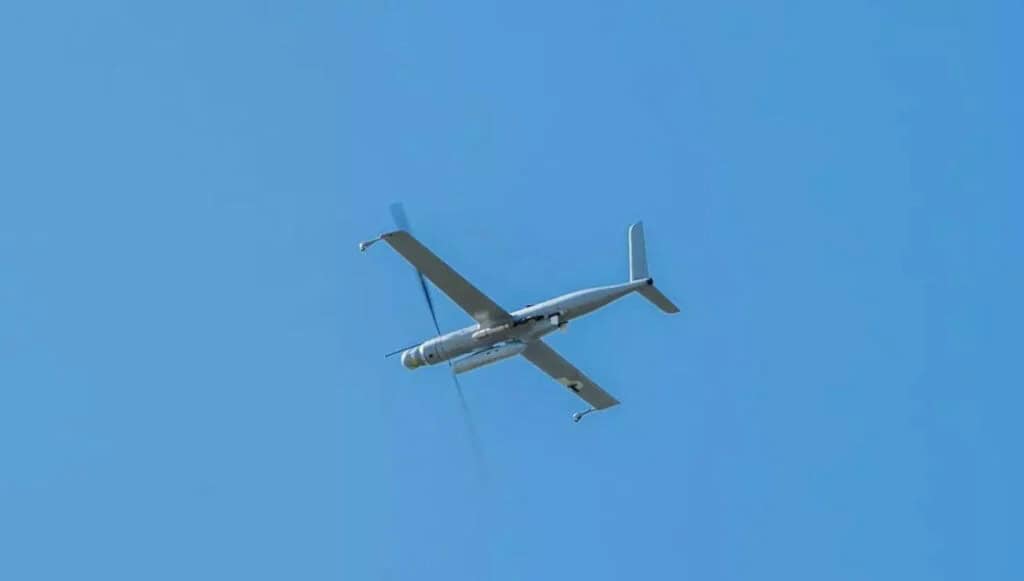
The Flexrotor is designed for expeditionary use, requiring just a 3.7 by 3.7 meter launch and recovery area and capable of remaining airborne for 12 to 14 hours in typical configurations. Payload options include electro-optical sensors and advanced systems tailored to mission requirements. Airbus highlighted that the platform supports both land- and sea-based operations, underscoring Uzbekistan’s commitment to modernizing its uncrewed capabilities and expanding operational flexibility for military and dual-use missions.
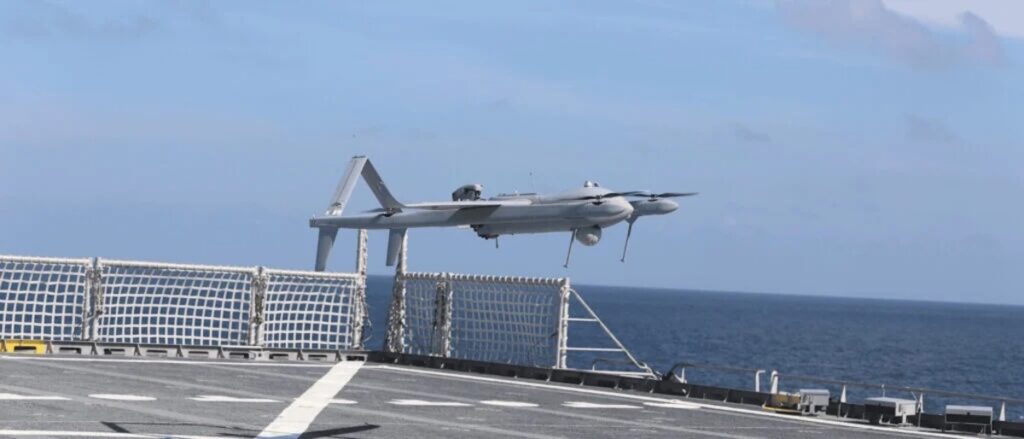
Wrapping up January’s most-read articles, attention turned to Textron Systems securing a contract to supply three Aerosonde Mk. 4.7 VTOL UAS to Nigerian security provider Tantita Security Services for the protection of critical oil and gas infrastructure. The aircraft are configured with Hybrid Quadrotor technology, enabling runway-independent operations in challenging environments, and are being delivered in a fully ITAR-Free configuration to facilitate export.
The agreement includes options for specialized training and additional aircraft to support planned capability expansion. Textron highlighted the Aerosonde Mk. 4.7’s multi-mission versatility, proven reliability, and operational history, which includes over 700,000 flight hours globally and deployment on more than ten U.S. Navy ships. The selection by Tantita Security Services reflects the requirement for adaptable uncrewed systems capable of monitoring high-risk sectors effectively.
Together, these articles highlight an uncrewed systems sector advancing in reliability, adaptability, and operational maturity across defense, security, and logistics. January’s most-read stories spanned domestic security policy, innovative propulsion, high-altitude logistics, and international deployments, illustrating how platforms are being applied to meet real-world operational and infrastructure needs.