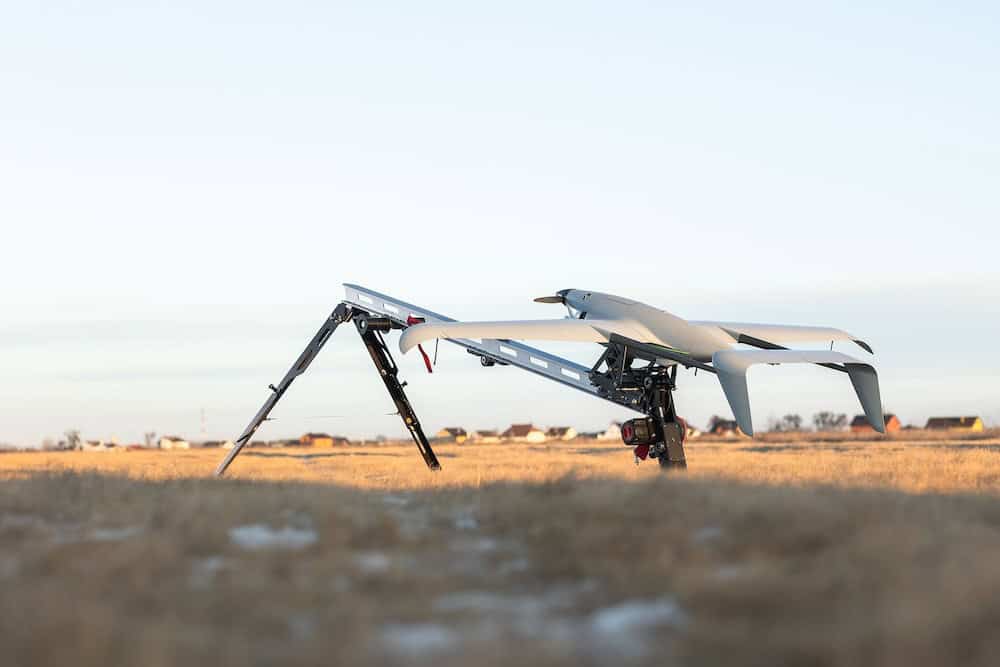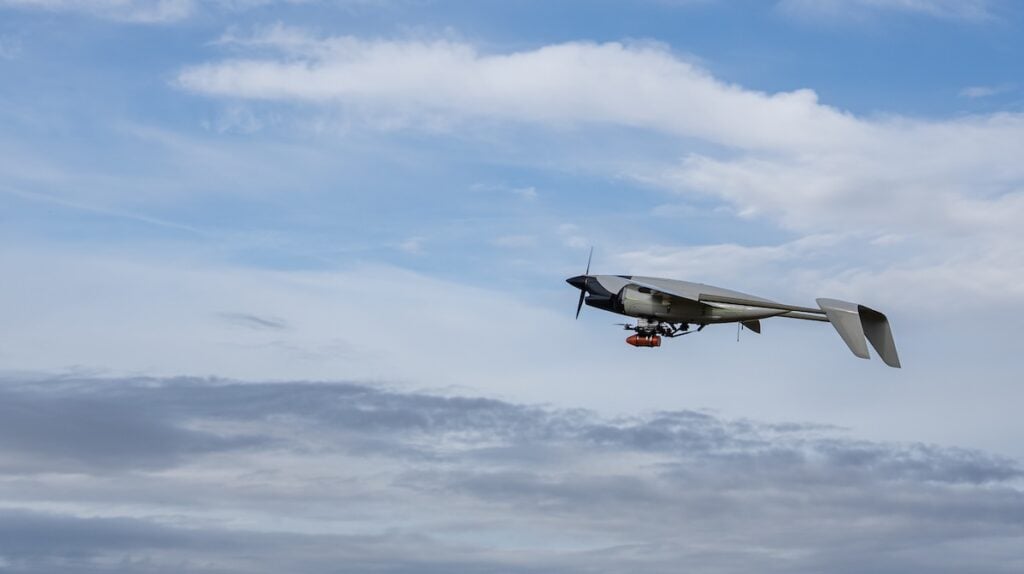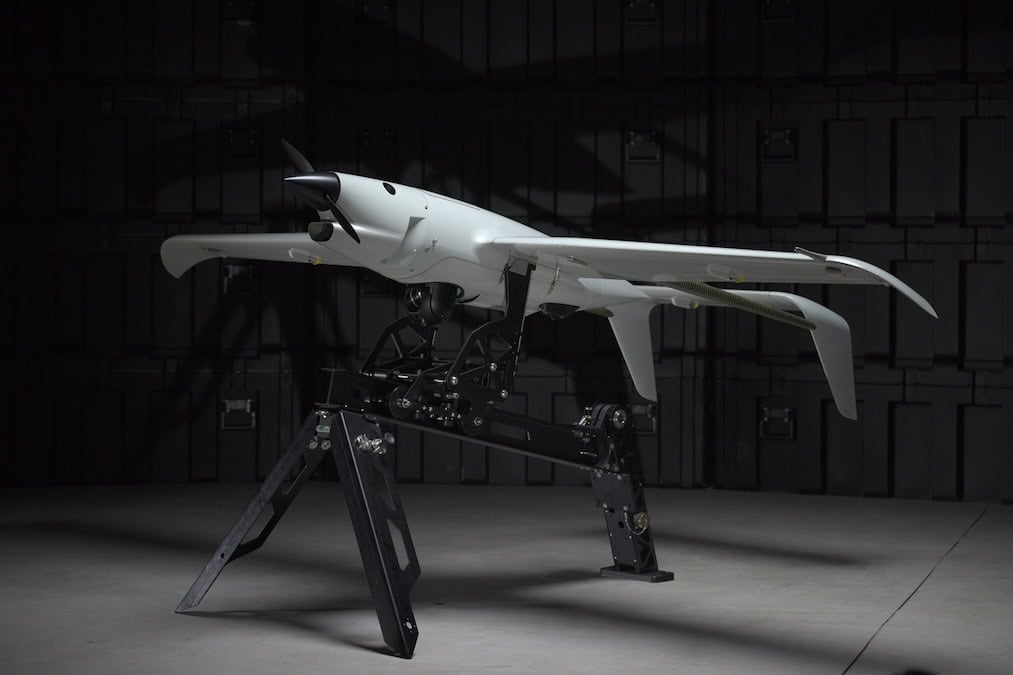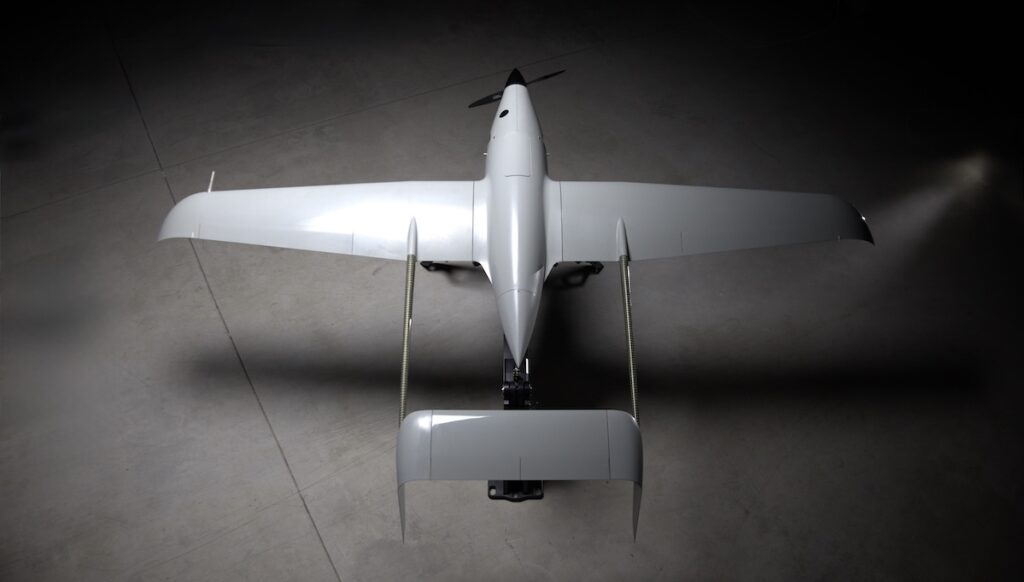
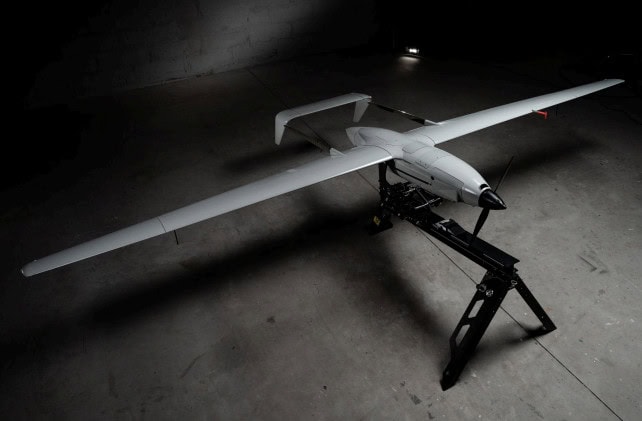
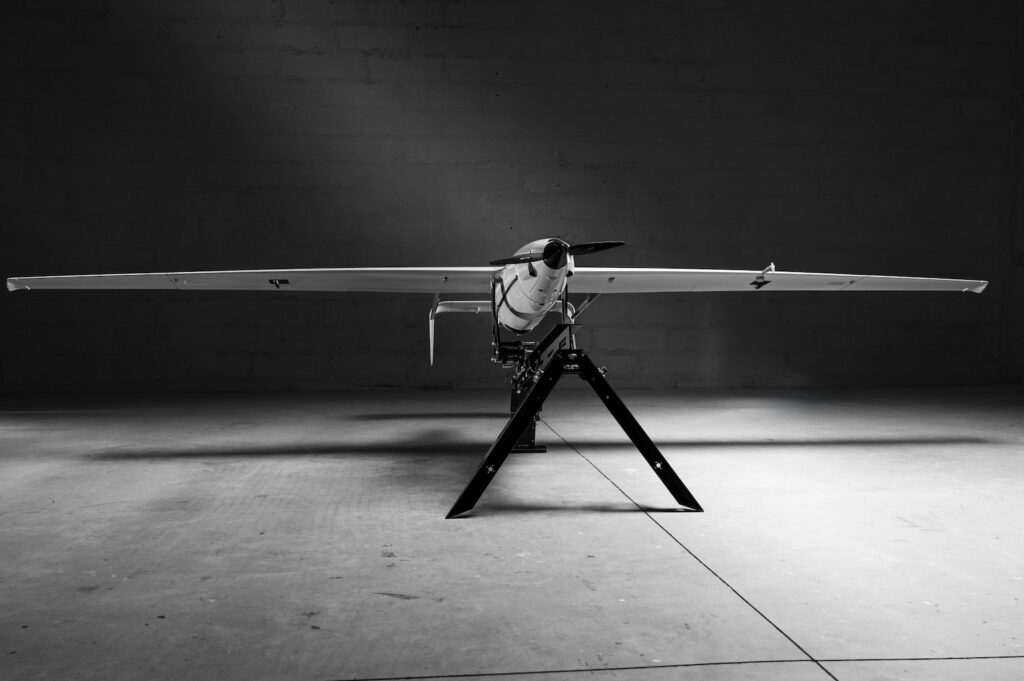
A hybrid version of Skyeton‘s Raybird Unmanned Aerial Vehicle (UAV) has officially entered full-scale combat duty with the Ukrainian Defense Forces following successful interagency testing.
The new platform utilizes an electric motor powered by a hydrogen fuel cell. To accommodate this propulsion system, engineers developed a specialized airframe architecture designed to optimize weight distribution and space. This design has been further refined to support the mass production of the hydrogen-powered variant.
While the standard internal combustion engine version of the Raybird is capable of flights exceeding 28 hours, the hybrid version currently offers approximately 12 hours of endurance. Development is already underway to increase this flight time to 20 hours. The shift to hydrogen-electric power provides several tactical advantages, including a negligible thermal signature, a higher operational altitude range, and significantly quieter performance compared to traditional engines.

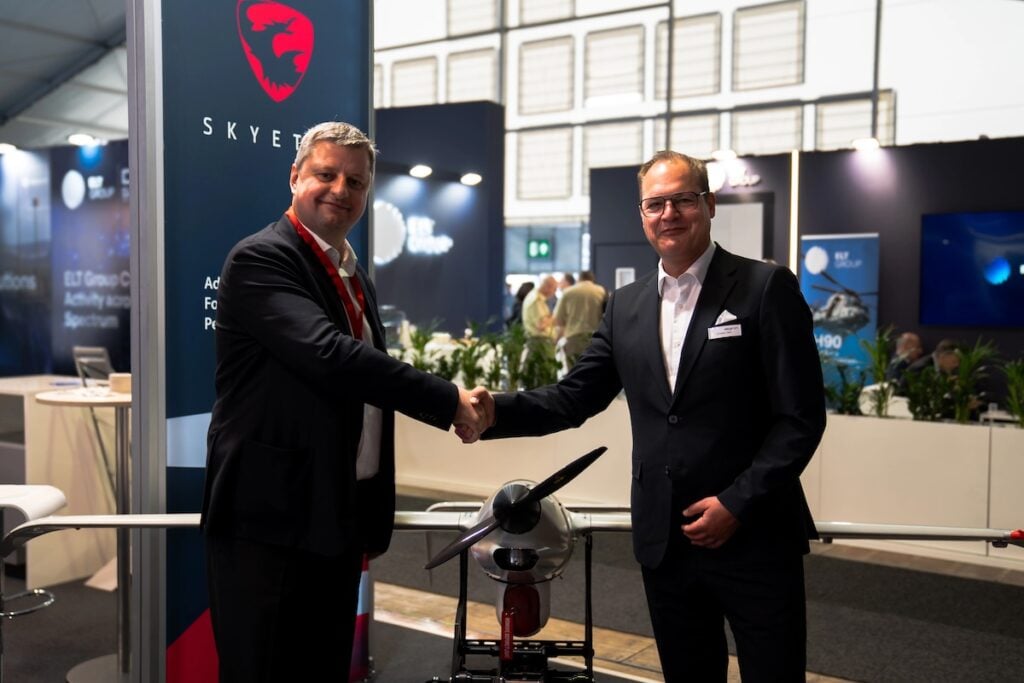
Roman Knyazhenko, CEO of Skyeton, said, “We have converted two years of laboratory testing into a new aircraft concept: it is the same class and weight, but a completely redesigned concept based on electric propulsion. Hydrogen fuel is a solution that allows us to combine all the advantages of an electric motor – high reliability, power, and ease of maintenance – with the long-duration continuous flight that is a hallmark of our UAV. Maintaining a balance of these characteristics is vital for us, as the Raybird performs complex deep reconnaissance tasks using high-tech payloads, and the average duration of such missions exceeds 10 hours.”
Technical challenges regarding hydrogen permeability and climate resilience were addressed during the research and development phase. The hybrid system is engineered to operate in temperatures ranging from -35°C to +55°C, matching the environmental flexibility of the original model. Furthermore, Skyeton has streamlined the logistical requirements by offering two refueling scenarios: a cartridge-style tank swap system or a compact mobile unit capable of producing hydrogen on-site.
The hydrogen-powered Raybird is currently undergoing the codification process to facilitate broader adoption across defense units. Beyond its current military application, the platform is intended for future use in civilian sectors where long-endurance, environmentally efficient aerial reconnaissance is required.