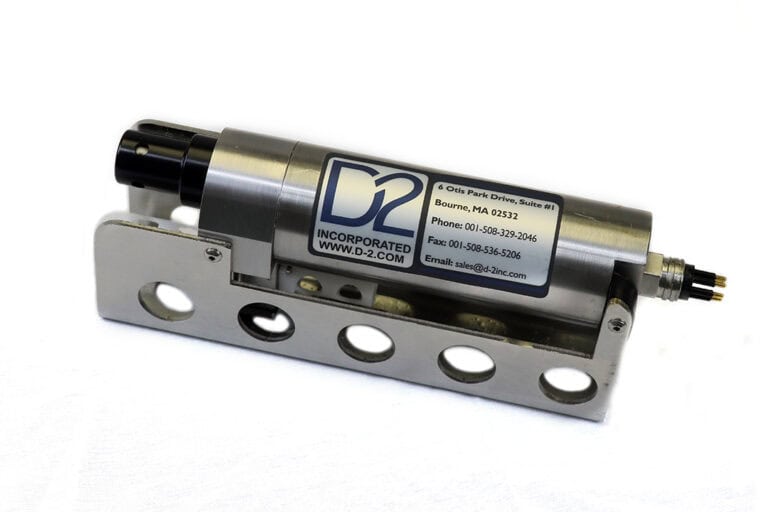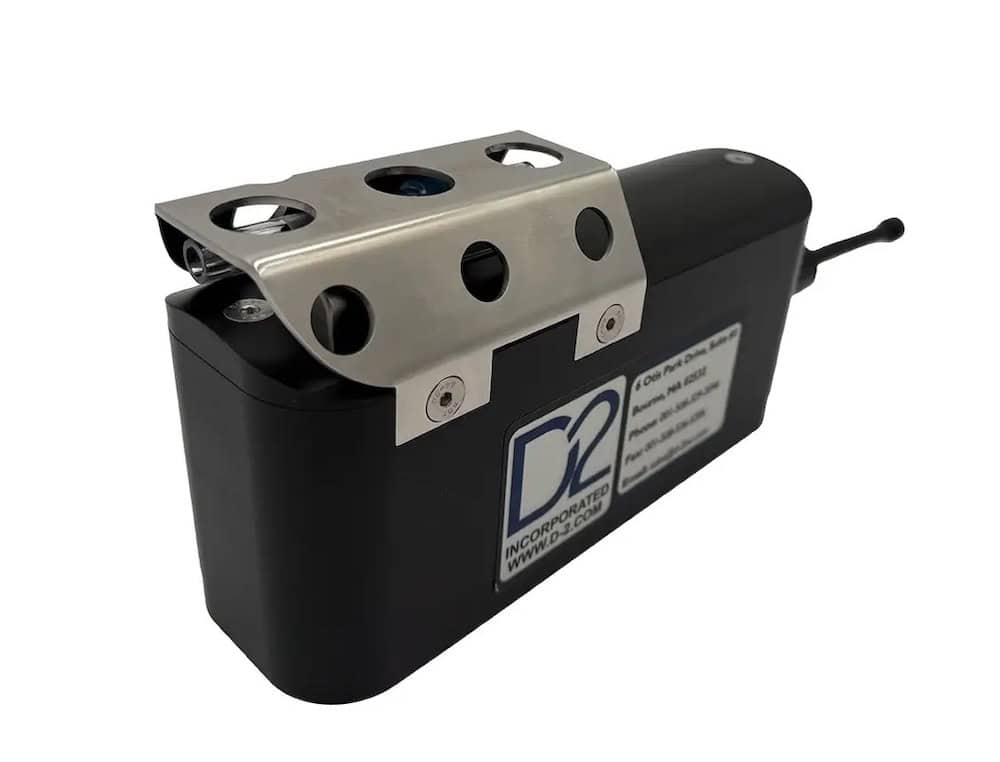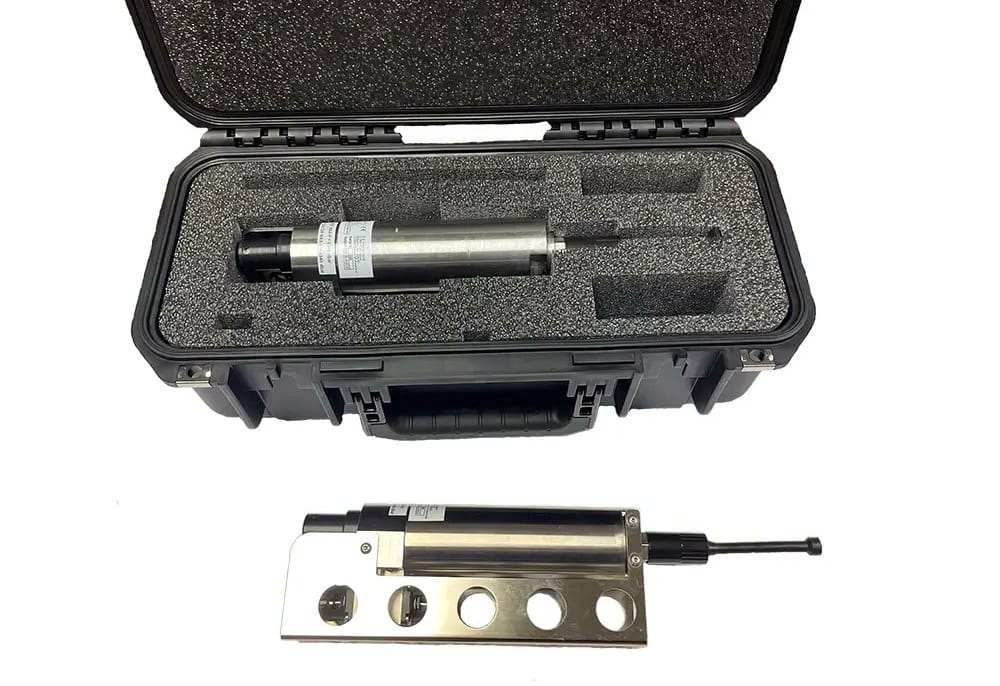

The new AUV-CTD from D-2 Inc. introduces a hybrid two-electrode conductivity sensor with inductive drive, designed to deliver accurate real-time oceanographic measurements for Unmanned Underwater Vehicles (UUVs), Autonomous Underwater Vehicles (AUVs), Gliders, Floats, and Profilers.
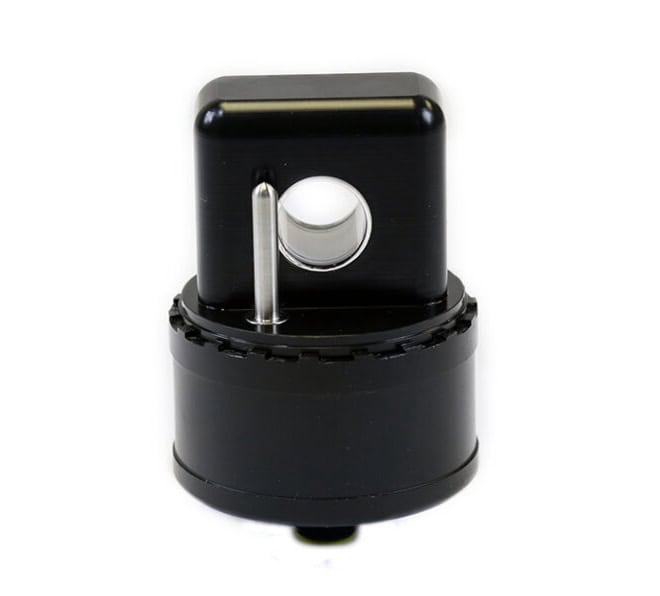
The AUV-CTD is built around a new Hybrid Conductivity Sensor that combines elements of electrode and inductive conductivity measurement. Its two-electrode, inductively driven design eliminates the external electric field associated with traditional sensors and removes the need for additional measurement electrodes. This results in a compact, fully enclosed sensor less than half the length of a traditional three-electrode cell, with a large central diameter that allows water to pass freely through the cell without a pump in most conditions. A pump can be added for applications such as biological control without affecting calibration.
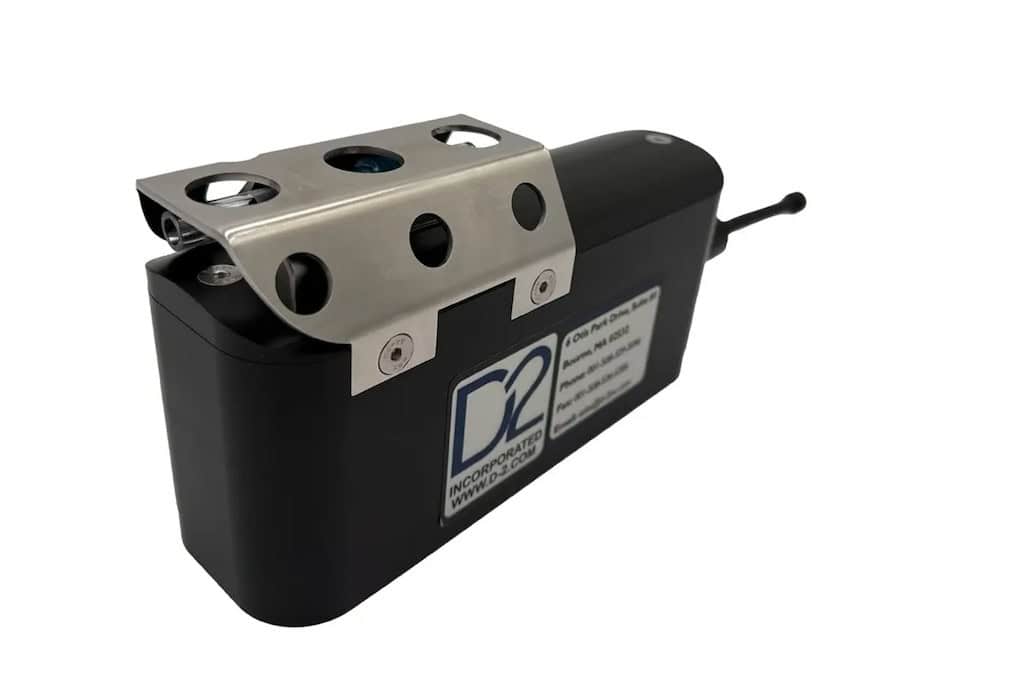
The AUV-CTD features a high-speed sheathed resistance temperature detector (RTD) with an integral temperature reference and an industry-standard silicon pressure sensor. The system is fully thermally compensated. Sampling rates are programmable from 2 to 32 Hz for the standard CTD and 1 to 2 Hz for the Ultra Low Power (ULP) CTD. Power consumption is 140 mW (20 mA at 7 to 13 VDC) for the standard CTD and 40 mW (4 mA at 10 VDC) for the ULP option. The free-flow conductivity sensor aspirates effectively even at vehicle speeds as low as 5 cm/s. The unit is housed in Delrin, has a conductivity range of 0 to 7 S/m, a temperature range of –5 to 35 °C, and a maximum depth rating of 1,000 meters.
Real-time CTD data is transmitted via RS-232 in ASCII format, either logged in internal SRAM memory or telemetered directly to the host vehicle. The data string can include salinity and sound velocity in user-selected units. The CTD also supports numerous auxiliary sensors through eight A/D channels and one RS-232 data channel, enabling integration with oxygen, pH, turbidity, and other sensor packages. Its ASCII data output configuration aligns with industry-standard formats, allowing interchangeability with existing fielded sensors from other manufacturers.
The integrated D-2 Depth Sensor employs a high-accuracy, high-resolution strain-gauge pressure sensor, available in full-scale values up to 11,500 decibars. Pressure outputs are internally compensated for temperature using advanced numerical techniques. The full-length temperature probe is based on a platinum resistance thermometer, simplifying calibration. D-2 Incorporated reports that its CTD sensors can be deployed for up to three years, with recalibration completed within two weeks at its ISO-certified calibration laboratory.
Field data collected by the Bermuda Institute for Ocean Sciences (BIOS) showed that the D-2 CTD obtained results comparable to operational sensors currently used by the ocean observing community. Additional testing at the Woods Hole Oceanographic Institution (WHOI) demonstrated a uniform response regardless of lowering rate, simplifying salinity data processing and reducing spiking.