In this Q&A, Ultra Motion discusses how its latest servo actuator technologies are supporting the evolving demands of unmanned systems across air, space, defense, and subsea domains.
Ultra Motion explores high-speed, high-precision control for next-generation UAVs, advanced telemetry and health monitoring for remote operations, and the key industries driving future growth for Ultra Motion’s rugged, high-performance actuators.
How well does the T-Series support high-speed, high-precision control requirements in UAVs and other unmanned vehicles?
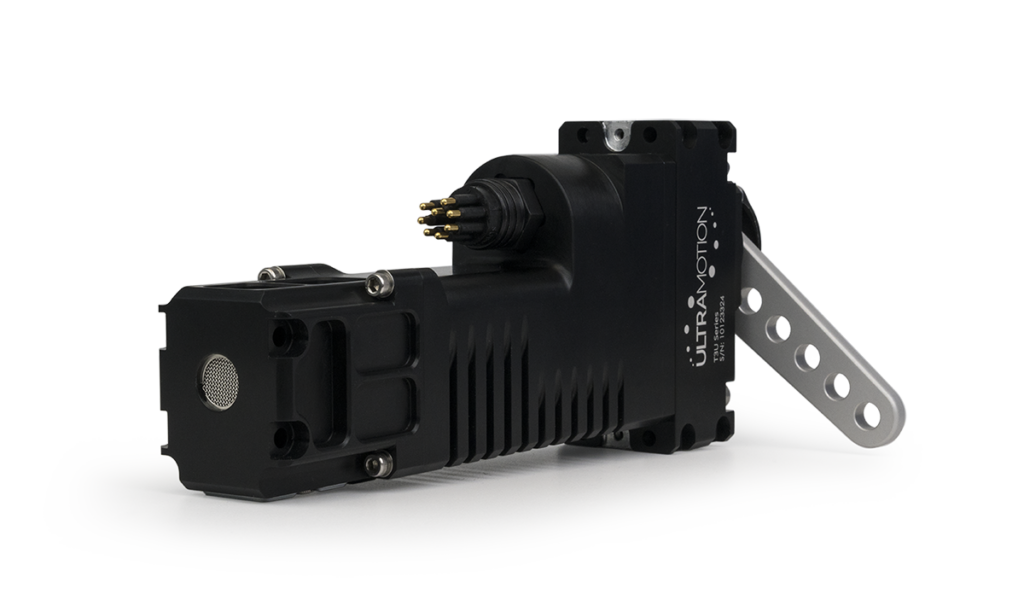
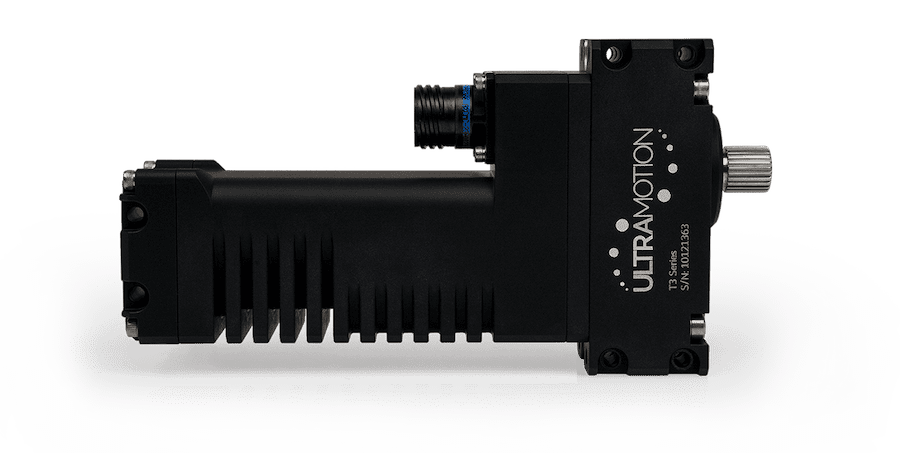
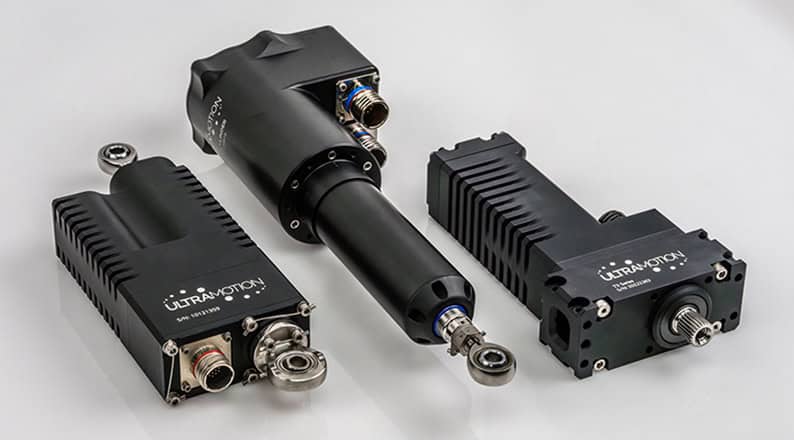
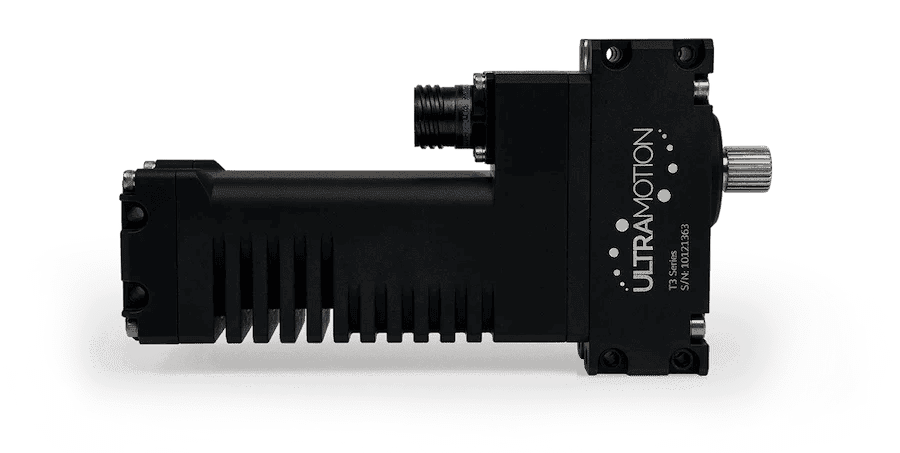
Ultra Motion’s T-Series rotary actuators are engineered specifically to meet the increasing demands of modern unmanned systems that require both high-speed responsiveness and precision control in dynamic environments. At the core of the T-Series is an extremely high power-density slotless brushless DC (BLDC) motor paired with integrated control electronics and contactless absolute position feedback, a combination that enables extremely fast, precise motion control with minimal backlash and excellent torque-to-mass ratio. This design supports quick transient responses and high-bandwidth control loops, which are essential for advanced UAV flight control surfaces and articulated actuation systems where rapid, accurate positioning directly impacts vehicle performance.
Compared to traditional actuators, the T-Series offers dynamic performance across a wide range of operating speeds, allowing UAVs and other unmanned platforms to execute fine-motion adjustments at high frequency without sacrificing reliability. This performance is further enhanced by robust mechanical design features, such as a gearing approach optimized for handling transient loads while maintaining structural integrity. With IP-rated sealing and options for subsea pressure-compensated configurations, the T-Series is suitable not only for aerial vehicles but also for unmanned ground, surface, and underwater systems operating in harsh conditions.
In essence, the T-Series supports high-speed, high-precision control by combining high power density, integrated closed-loop feedback, and rugged construction, enabling UAV and unmanned vehicle designers to pursue more aggressive performance envelopes with confidence.
What telemetry and health-monitoring data does the L-Series provide for remote unmanned operations?
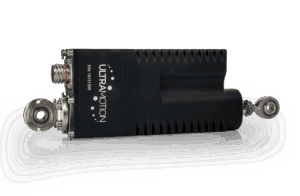
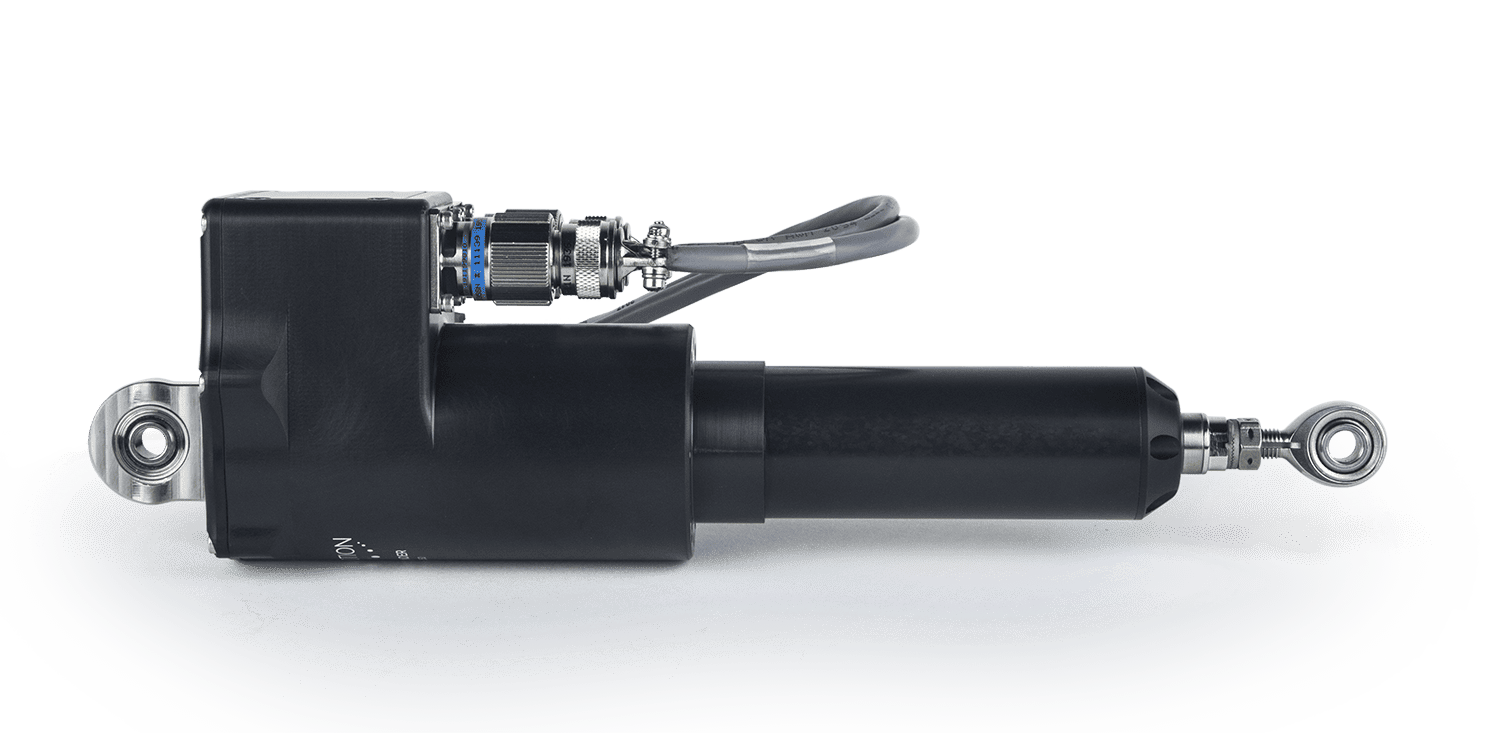
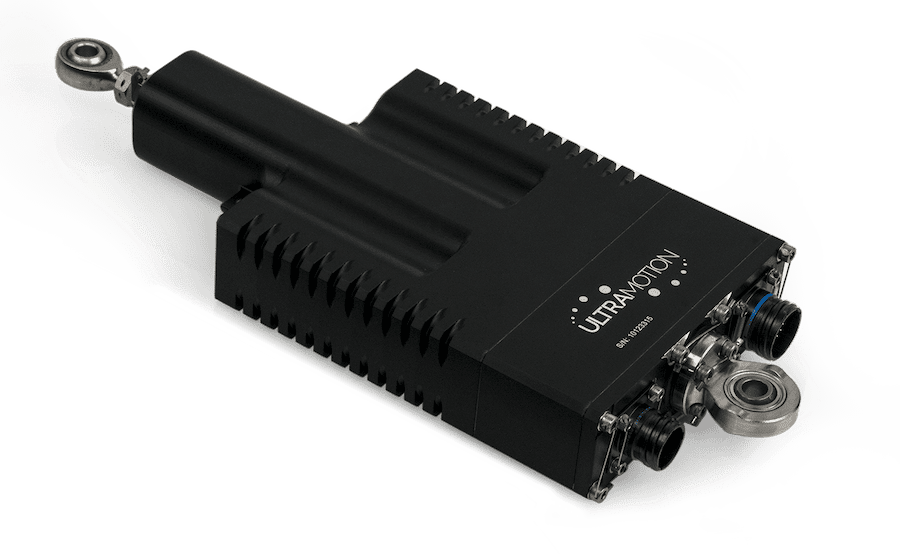
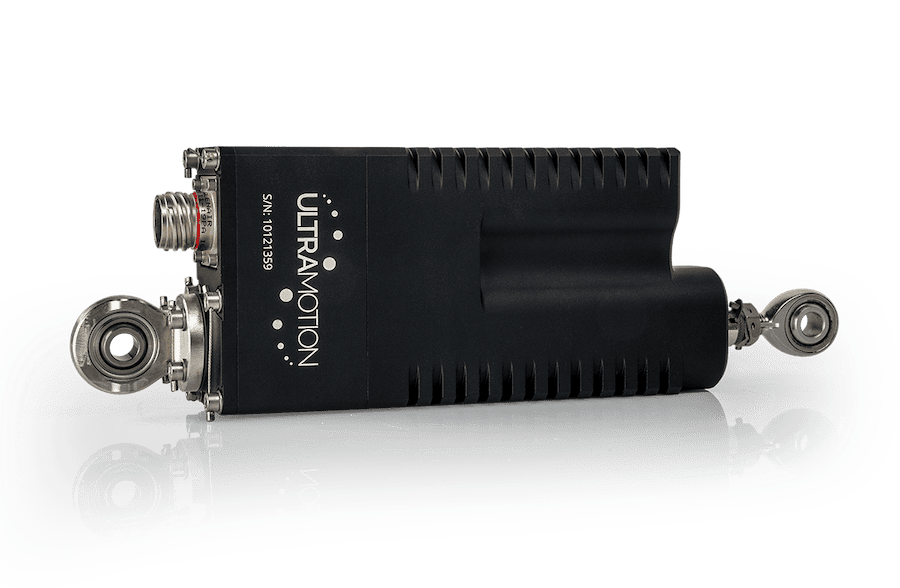
L-Series linear actuator from Ultra Motion.
Ultra Motion’s L-Series actuators deliver an extensive suite of real-time telemetry and health-monitoring data that is invaluable for unmanned operations, whether in aerial, ground, surface, or subsea environments. All L-Series (and broader Ultra Motion servo) actuators continuously capture and report a comprehensive set of internal sensors, including:
- Absolute position feedback through contactless sensors for precise motion status
- Motor phase current to understand torque and loading conditions
- Actuator temperature and internal humidity to monitor environmental stress
- Bus voltage to verify electrical system health and power integrity
- Detailed status registers that convey diagnostics and potential fault conditions
This rich telemetry can be broadcast at a configurable rate over CAN (up to 1 kHz), or accessed via serial interfaces like RS-485/RS-422, and in some cases via additional control protocols supported by the actuator.
In practice, this data stream supports multiple mission-critical use cases:
- Real-time flight control — feeding accurate actuator state and health into autopilots or flight computers
- Live diagnostics — alerting operators or vehicle compute systems to abnormal conditions
- Predictive maintenance — enabling trends in temperature, current, or humidity to inform preemptive servicing
- Post-mission analysis — logging actuator behavior to optimize future designs or identify mechanical wear patterns
This telemetry and monitoring capability ensures unmanned platforms can maintain situational awareness at both system and component levels, increasing reliability and reducing unscheduled downtime across the operational lifecycle.
Which industries or application sectors do you expect to see the fastest growth in demand for your actuators, and how is Ultra Motion preparing (e.g., via partnerships, scaling, custom solutions)?
Ultra Motion’s actuators are purpose-built for unmanned vehicles across multiple domains, and several key sectors are poised for particularly rapid growth:
- New Space and Aerospace: Ultra Motion has deep heritage in space applications, having delivered actuators for crew escape systems, thrust vector control in upper-stage and orbital vehicles, and payload mechanisms, including hardware on the lunar surface. The expanding commercial and government new-space market continues to drive demand for actuators that can deliver precision motion control under extreme thermal, vacuum, and shock environments.
- Unmanned Aerial Vehicles (UAVs): High-performance drones for defense, logistics, inspection, mapping, and autonomous operations increasingly require actuators that can handle rapid dynamics, environmental stress, and complex control loops. The integration of Ultra Motion’s servo actuators with autopilots like Embention’s Veronte demonstrates ongoing work to seamlessly pair high-fidelity actuation with advanced guidance systems.
- Defense: Platforms such as UGVs, USVs, UUVs, and UAVs in defense applications benefit from actuators that resist shock, vibration, moisture, and EMI, with many designs manufactured in the USA to satisfy strict procurement requirements. Ultra Motion supports this sector with custom integration engineering, lifecycle support, and redundancy options that meet mission-critical needs.
- Subsea and Maritime Robotics: The subsea market is rapidly expanding as autonomy in underwater vehicles and surface vessels advances. Ultra Motion’s subsea-rated actuators, including pressure-balanced, oil-filled designs capable of operating to great depths, position the company to capture growth in subsea inspection, intervention, and exploration applications.
To prepare for these growth areas, Ultra Motion is investing in product diversification, such as redundant and more compact actuator variants, expanding communication and control protocols for greater interoperability, and offering custom engineering solutions to meet unique form-factor and performance requirements. Strategic partnerships, like those with autopilot and autonomy vendors, also help ensure that Ultra Motion products remain deeply compatible with evolving unmanned system architectures and workflows.