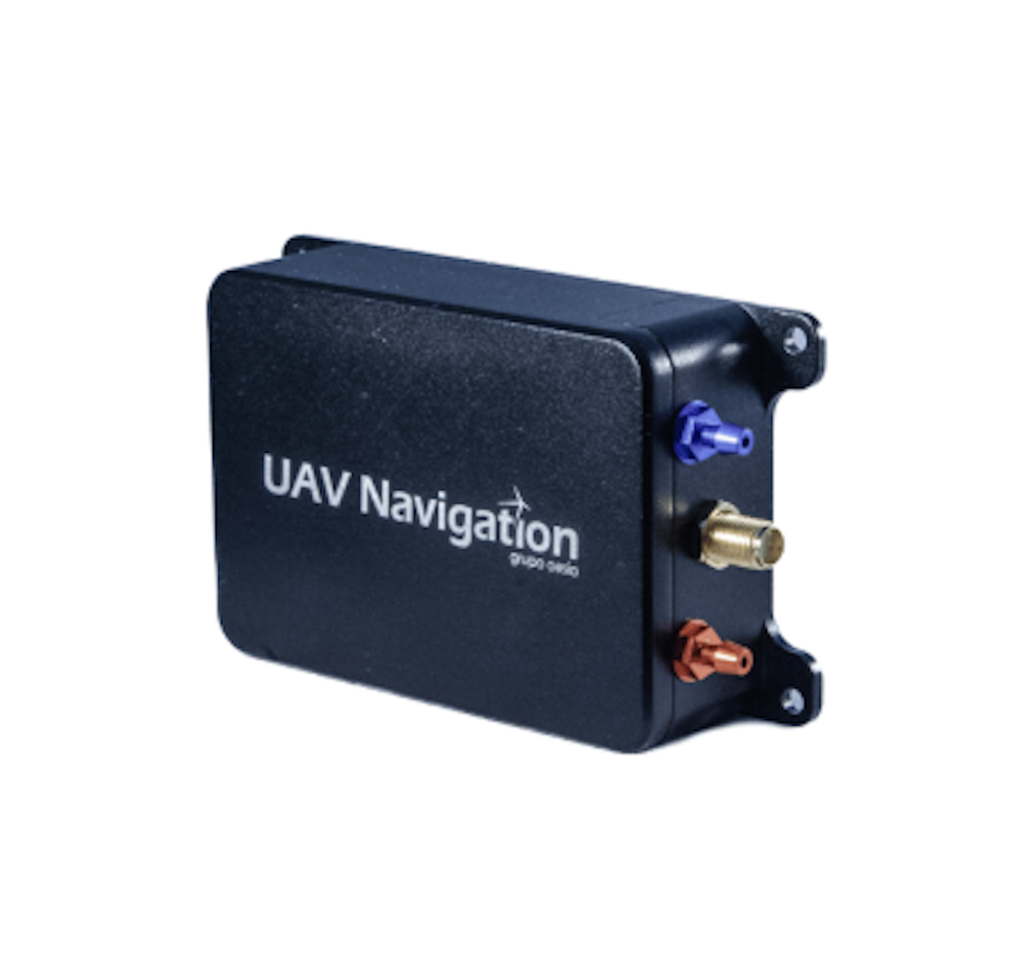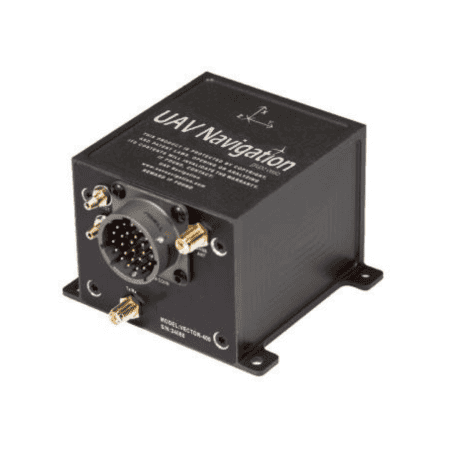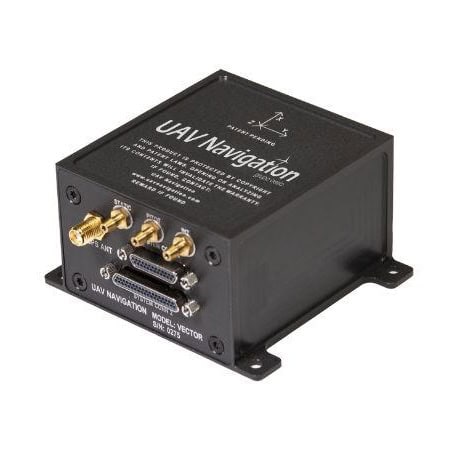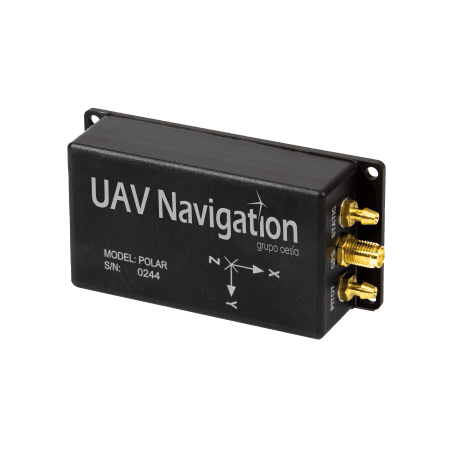
UAV Navigation-Grupo Oesía examines the growing role of decoy Unmanned Aerial Systems (UAS) in air defense, focusing on the guidance, navigation, and control requirements needed to enable these platforms to replicate high-value targets and operate effectively in contested environments.
The company highlights how such systems must support coordinated swarm behavior, autonomous mission execution without reliance on continuous communication links or GNSS signals, and deployment from airborne platforms to enhance the protection of manned aircraft and surveillance assets.
Unmanned Aerial Systems have evolved into essential tools not only for surveillance and reconnaissance but also for defensive applications. In this context, they can act as countermeasures, including intercepting other UAS or functioning as decoys to protect higher-value assets. Decoy UAS are designed to reproduce the radar and electronic signatures of manned aircraft or advanced unmanned platforms, creating ambiguity within the operational environment.
Their effectiveness extends beyond simulation. The presence of decoy systems introduces uncertainty, requiring adversaries to identify and respond to potential threats without clear distinction. This process forces the allocation of time and defensive resources, increasing operational burden and reducing overall system efficiency. As a result, protected aircraft and surveillance platforms can operate with reduced risk and improved mission effectiveness.
This approach also introduces a broader strategic effect. By compelling adversaries to engage with targets that may represent low-cost decoys, it creates sustained economic and psychological pressure. Defensive systems must continuously respond to uncertain threats, contributing to resource depletion and reduced operational capacity. In some scenarios, equipping decoy UAS with small explosive payloads can further increase disruption and attrition effects.
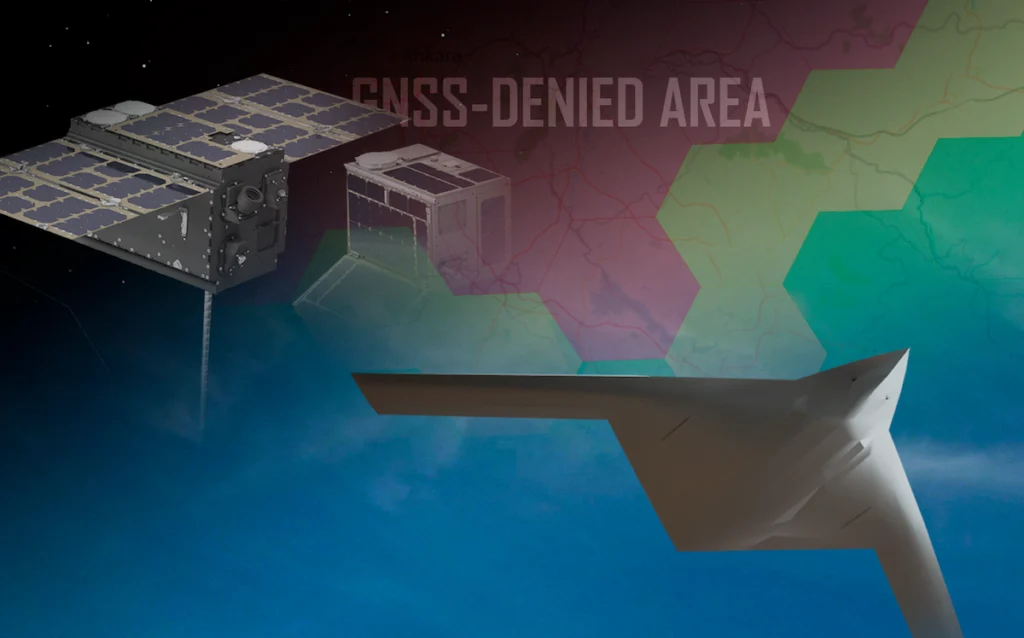
Effective execution of these missions depends on flight control systems specifically designed to meet demanding operational requirements. These systems must enable complex maneuvers such as deployment from airborne mother ships, coordinated multi-UAS operations, and autonomous mission execution in environments where communication links or GNSS signals may be unavailable or degraded.
Decoy platforms require optimized guidance, navigation, and control architectures capable of managing multiple UAS simultaneously. These systems must ensure accurate coordination, maintain tactical formations, and support safe operation in dynamic conditions. At the same time, their design must reflect the balance between limited operational lifespan and cost-efficient production. This necessitates robust, streamlined solutions that maximize effectiveness without the added complexity associated with long-endurance platforms.
Coordinated Flight and Swarm Operations
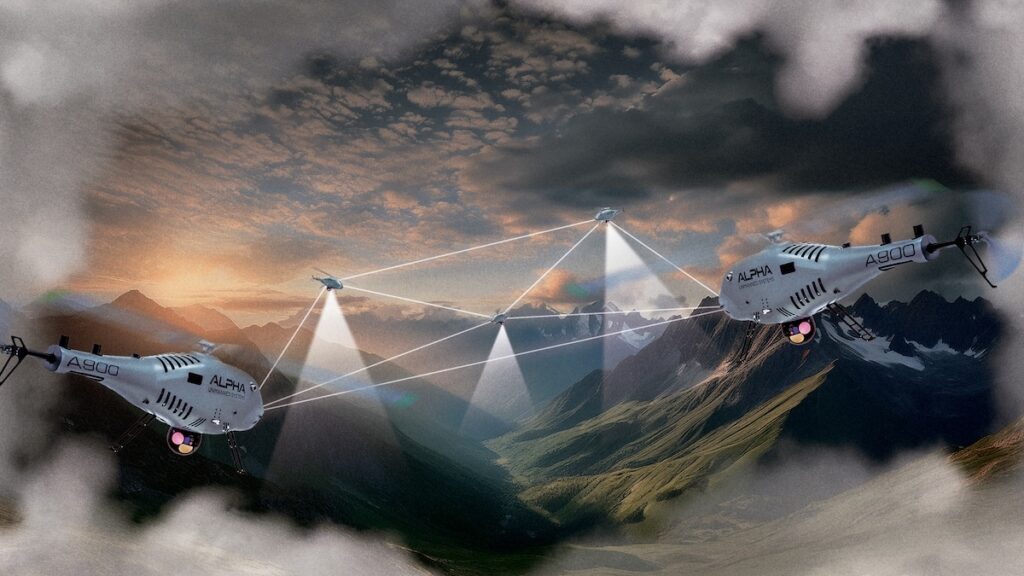
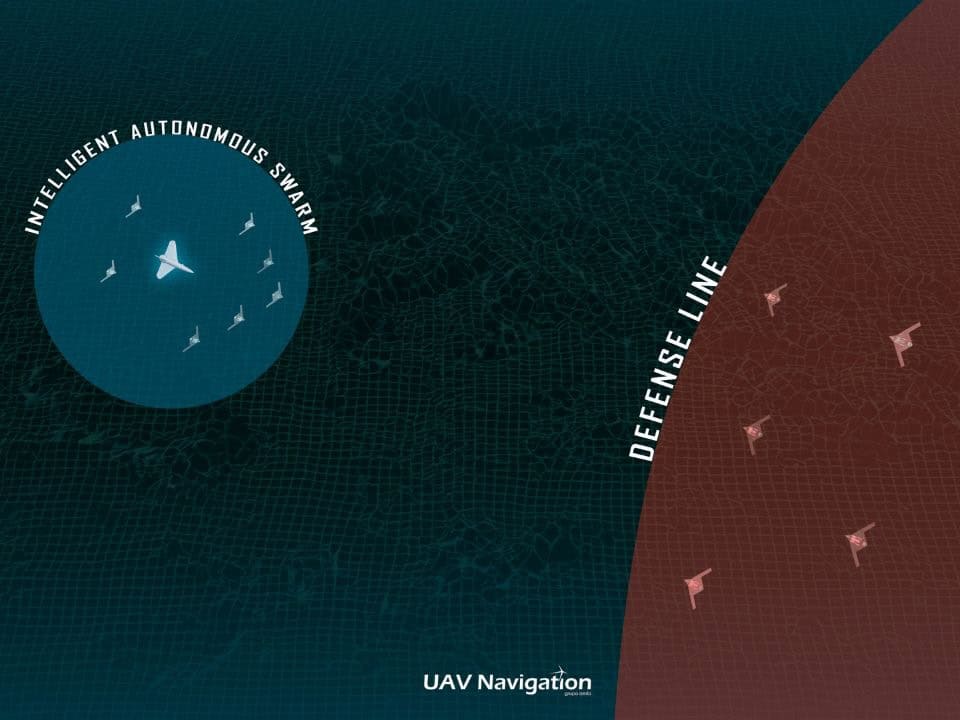
Swarm flight enables multiple UAS to operate in a synchronized and adaptive manner, adjusting their configuration to achieve specific mission objectives. Through coordinated grouping and separation maneuvers, decoy systems can generate radar signatures that resemble larger aircraft or disrupt tracking systems by continuously altering their spatial arrangement. These dynamic patterns can cause signals to intermittently appear and disappear, complicating detection and tracking processes.
Such behavior can place significant pressure on defensive systems, forcing rapid decision-making under uncertain conditions. This increases the likelihood of identification errors and inefficient responses. Additionally, activation of adversary defense systems in response to these perceived threats may reveal information about their location, coverage, and operational capabilities, supporting the planning of subsequent missions.
Deployment from Airborne Platforms
A key characteristic of decoy UAS is their ability to be deployed from manned airborne platforms using air-launch methods. This capability enables rapid insertion into operational areas without reliance on runways or ground-based infrastructure. Flight control systems must therefore be capable of managing deployment under a range of conditions while ensuring safe separation from the host aircraft.
Mission initiation and deployment algorithms play a central role in this process. These systems must enable immediate activation and transition into mission profiles following release, while adapting to varying operational scenarios. Autonomous navigation capabilities are also essential, allowing continued operation in the event of communication loss with the mother ship.
Conclusion
Decoy UAS represent an effective and cost-conscious approach to air defense, supporting the protection of manned aircraft and surveillance platforms while introducing operational challenges for adversaries. In addition to diverting attention and increasing defensive workload, these systems can contribute to intelligence gathering by prompting responses that expose adversary capabilities.
Their effectiveness depends on achieving a balance between operational functionality and economic viability. This requires guidance, navigation, and control systems that support autonomous operation, coordinated swarm behavior, and flexible deployment methods, including air-launch from manned platforms. By meeting these requirements, decoy UAS can be produced and deployed at scale while maintaining their intended operational impact.
Within this framework, decoy unmanned systems serve not only as protective measures for high-value assets but also as tools for degrading adversary effectiveness and supporting mission planning in complex air defense environments.