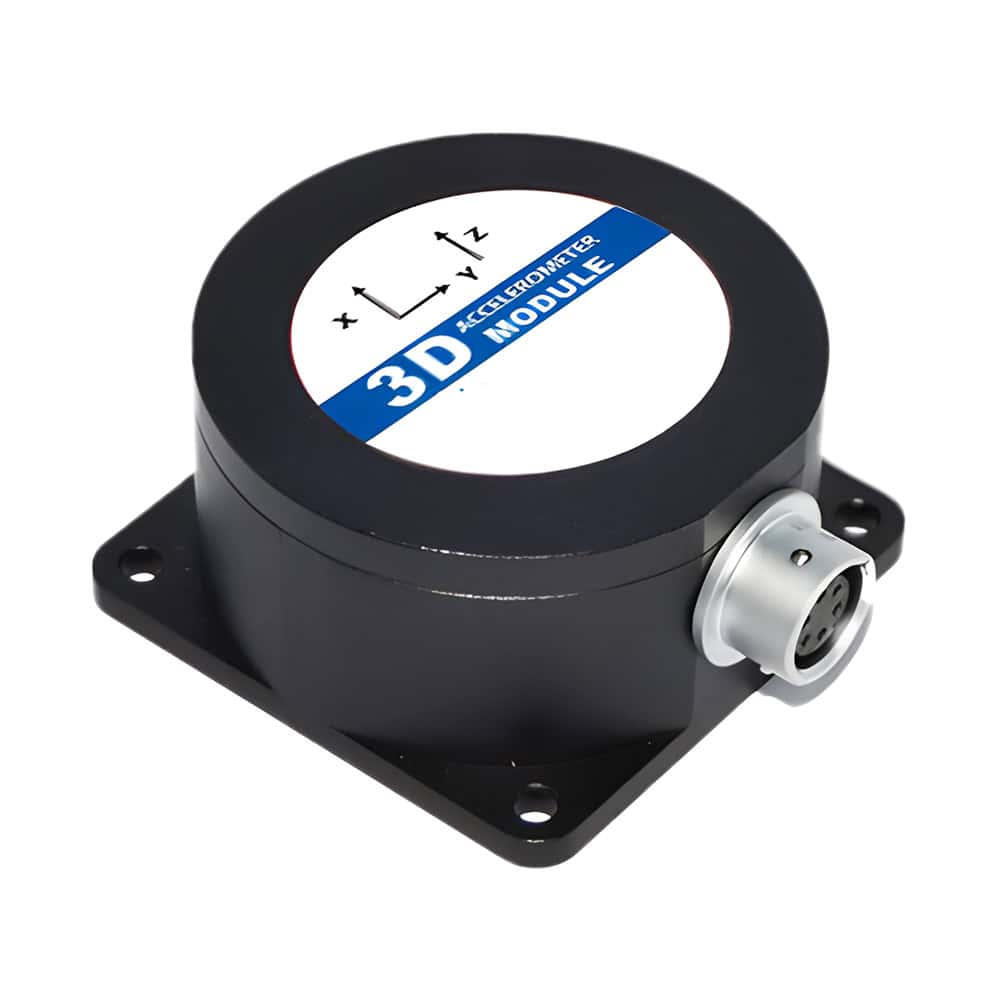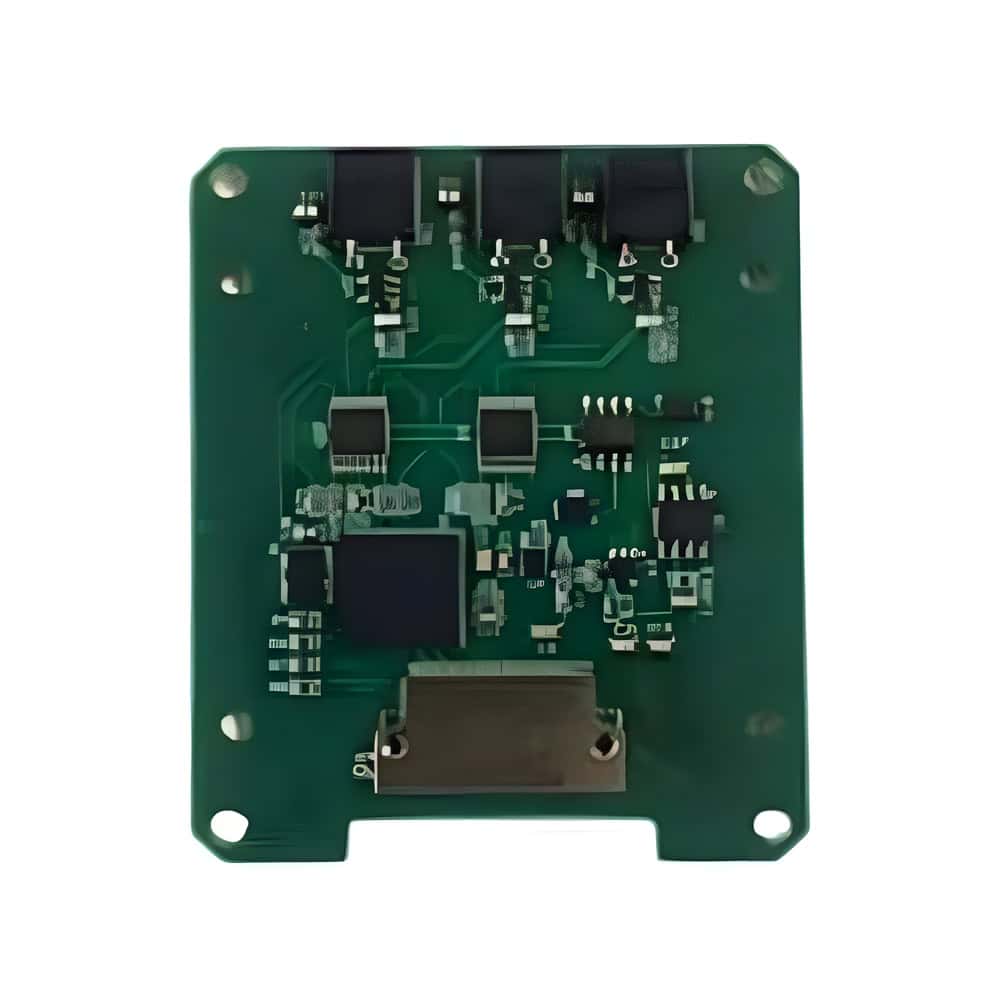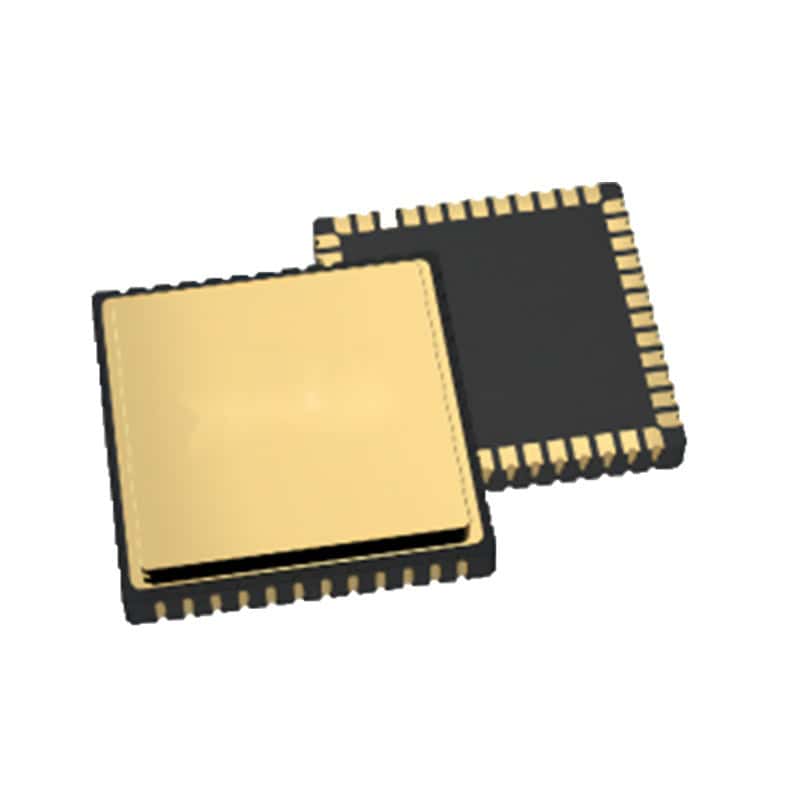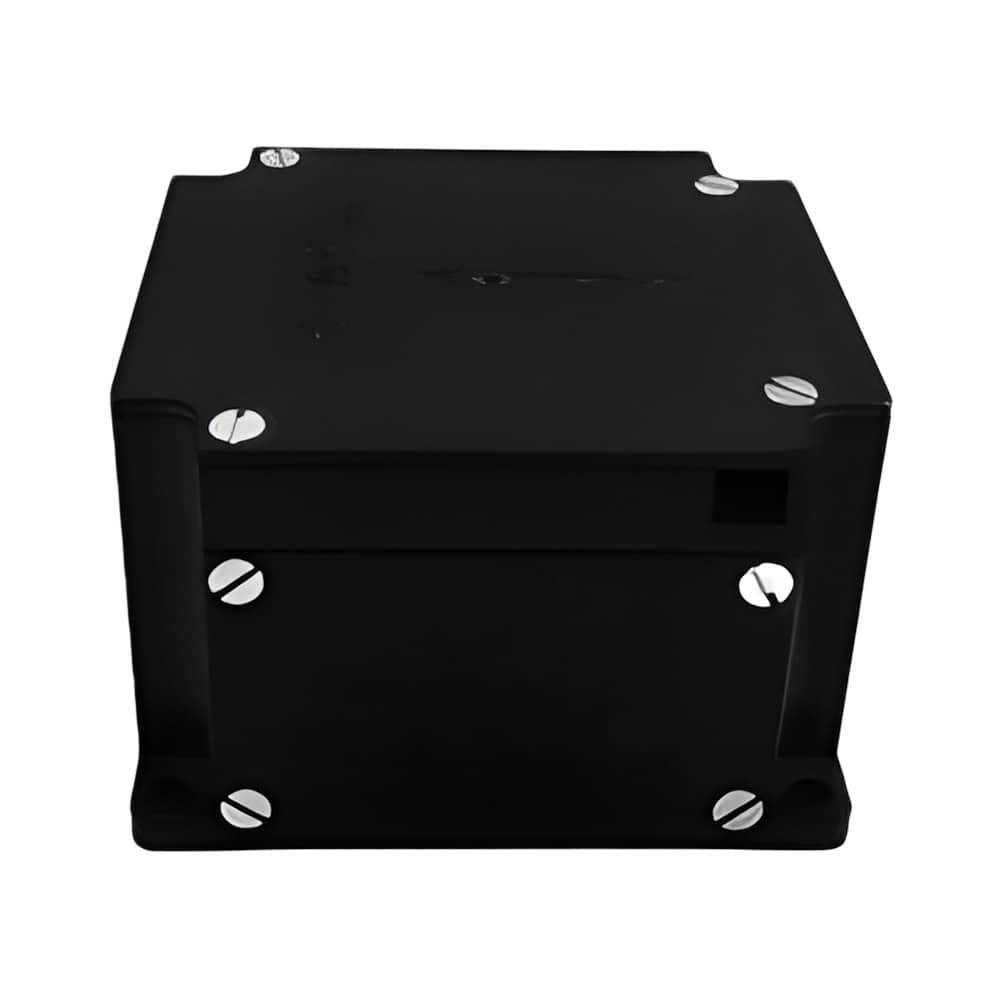
Micro-Magic’s U5000 is a six-axis MEMS Inertial Measurement Unit (IMU) that provides tactical-level inertial sensing performance for autonomous and unmanned platforms operating in demanding environments.

The module combines low-noise operation, vibration resistance, full-temperature stability, and high-rate data acquisition to support navigation, stabilization, and sensor fusion applications in Unmanned Aerial Vehicles (UAVs), Unmanned Ground Vehicles (UGVs), and unmanned marine systems.
The U5000 supports state estimation, inertial navigation, and visual-inertial fusion in environments where GNSS signals may be degraded or unavailable.
Gyroscope Performance
The U5000 gyroscope features a measurement range of ±400°/s, enabling the module to capture rapid angular motion during high-dynamic maneuvers. Bias stability is specified at better than 3°/h using 10-second smoothing, corresponding to an approximate drift rate of 0.00083°/s.
During 300 seconds of pure inertial operation, the resulting attitude integration error remains near 0.25°, an important characteristic for underground, underwater, and other GNSS-denied operating environments.
Angular random walk is rated at 0.15°/√h, supporting smooth short-term attitude estimation and reducing instability caused by measurement noise. Scale factor nonlinearity remains within 150 ppm, maintaining measurement accuracy during high angular-rate motion.
The gyroscope bandwidth reaches 250 Hz, allowing the module to capture rotor-induced vibration and vehicle resonances within the 100 to 300 Hz range. This bandwidth also enables filtering strategies that suppress disturbances while preserving motion data required for stabilization and navigation.
Under vibration conditions of 6.06 g RMS, in-operation bias variation does not exceed 30°/h. This characteristic supports stable performance in platforms exposed to broadband vibration generated by propulsion systems, suspension systems, or marine motion. The repeatability of the bias response also reduces the need for compensation procedures during deployment.
Accelerometer Performance
The accelerometer subsystem provides a measurement range of ±10 g with a full-temperature bias error of no more than 3 mg. Bias stability is specified at 0.15 mg, supporting inclination measurement accuracy near 0.0086°.
These specifications improve horizontal stabilization and slope estimation accuracy. Scale factor nonlinearity remains below 500 ppm under 1 g conditions, while non-orthogonality compensation improves three-axis vector synthesis accuracy. As a result, the static gravity vector modulus error can be maintained within 1 mg.
The combination of low bias drift and compensated alignment errors contributes to reduced navigation drift during extended operation. In inertial navigation systems, even small tilt errors can significantly affect positional accuracy. A tilt error of 1° can generate approximately 1.7 meters of drift within 10 seconds, while errors closer to 0.01° have minimal impact on navigation performance.
High-Rate Data Acquisition
The U5000 internally samples at 1 kHz and supports output rates up to 1 kHz, with a default output configuration of 500 Hz. Full-temperature calibration compensates for bias, scale factor variation, non-orthogonality, and acceleration-dependent effects, improving measurement fidelity across changing operating conditions.
Communication is handled through an RS-422 interface operating at 460800 bps. The communication protocol includes CRC32 error checking together with a microsecond-level latency field for timing compensation.
Precise timing synchronization is particularly relevant for high-speed unmanned platforms. At velocities near 30 m/s, a timing error of 1 ms can introduce position deviations of approximately 3 cm. Microsecond-level latency compensation helps reduce this source of error during sensor fusion and motion estimation.
The module also supports synchronization trigger signals and frame counters that simplify hardware-level synchronization with LiDAR systems and cameras. This capability supports visual-inertial odometry, dynamic obstacle avoidance, and motion compensation.
Environmental Stability
Broadband vibration generated by drone propulsion systems, vehicle tires, and marine equipment can reduce inertial sensor accuracy. The U5000’s controlled bias variation under vibration supports direct integration without requiring complex vibration reduction measures.
The module is calibrated across a temperature range of -45°C to 80°C, maintaining stable operation in environments ranging from desert conditions to high-altitude deployments. This thermal stability supports long-duration field operation without recalibration.
Operation in GNSS-Denied Environments
When satellite navigation becomes unavailable, inertial performance becomes critical for maintaining platform awareness and control. With gyroscope bias stability rated at 3°/h, horizontal position error divergence can remain within approximately 0.5 m/s. This results in drift near 5 meters over 10 seconds and approximately 30 meters over 60 seconds, supporting short-duration autonomous operation and local perception correction until external references are restored.
Compact Integration for Unmanned Platforms
The U5000 supports integration into size- and power-constrained autonomous systems. The module consumes approximately 1.5 W, weighs 55 g, and reaches operational readiness within 2 seconds of startup.
Its RS-422 interface supports reliable long-distance data transmission, making the module suitable for installation in larger unmanned ground vehicles and marine systems where extended cable routing may be required.
Inertial Sensing for Autonomous Navigation
Micro-Magic’s U5000 combines low-noise inertial sensing, vibration resistance, full-temperature calibration, and high-rate data output in a compact MEMS-based module for unmanned platforms. With gyroscope bias stability of 3°/h, accelerometer bias stability of 0.15 mg, and output rates up to 1 kHz, the IMU supports navigation, stabilization, and sensor fusion functions in environments where external positioning references may be limited or unavailable.