


Micro-Magic Inc has examined the multiple challenges facing autonomous navigation of rotorcraft UAVs in GNSS-denied environments, including high dynamics, strong vibrations, signal loss, and size, weight, and power (SWaP) constraints.
When a UAV enters a canyon, encounters urban buildings, or experiences interference, the GNSS signal is lost, causing the system to degrade to pure inertial navigation. Relying solely on IMU integration causes navigation errors to diverge quickly over time.
In pure inertial navigation, gyro bias causes attitude errors to grow linearly, which subsequently leads to position errors diverging cubically. Micro-Magic Inc has noted that IMUs with a bias of 1°~10°/h can usually support interruptions on the order of seconds, 0.1°~1°/h can maintain for several minutes, and those better than 0.05°/h can generally support over ten minutes. However, specifications in data sheets are mostly measured under ideal conditions, and actual flight performance may degrade by several times due to vibration and temperature changes. Angle Random Walk (ARW) is even more critical in high-frequency control, as high ARW can cause flight control oscillations, creating a positive feedback loop of vibration and noise. Products with full-temperature scale factor variations of 100~500 ppm and 2000~5000 ppm can show performance differences of orders of magnitude in cross-regional missions.
High-frequency rotor vibrations can severely degrade attitude estimation, and the core issue often lies in signal aliasing caused by insufficient IMU raw sampling rates. If the sampling rate is high enough to meet the Nyquist criterion, digital low-pass filtering can first be used to remove high-frequency vibration components, followed by downsampling, which suppresses vibrations without introducing aliasing. If the sampling rate is too low, high-frequency vibrations mix into low-frequency measurements, potentially causing the integrated navigation system to fail. Therefore, the raw sampling rate is an often overlooked but extremely important parameter in selection.
Algorithm-level compensation strategies range from Kalman filtering to deep learning. The Extended Kalman Filter (EKF) is a classical multi-source fusion framework that estimates biases in real-time when GNSS is available and relies on the last estimated value when interrupted, but under long-term outages, the EKF linearization assumption struggles to handle nonlinear noise. Visual-Inertial Navigation (VINS) tightly couples visual feature points extracted from cameras with the IMU, providing stable velocity corrections in texture-rich areas. Cutting-edge methods use recurrent neural networks such as LSTM to learn the temporal patterns of errors, effectively compensating for biases even when satellite and visual signals degrade.
When selecting a MEMS IMU, it is important to focus on the raw sampling rate to avoid vibration aliasing, angular random walk which affects flight control noise, full temperature scale factor stability which impacts velocity accuracy in varying temperature environments, and the guarantee of actual performance under vibration conditions. Micro-Magic Inc has provided a specific analysis using its own pure MEMS IMU products as examples.
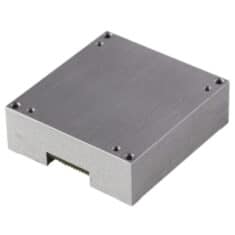
U6488 MEMS IMU.
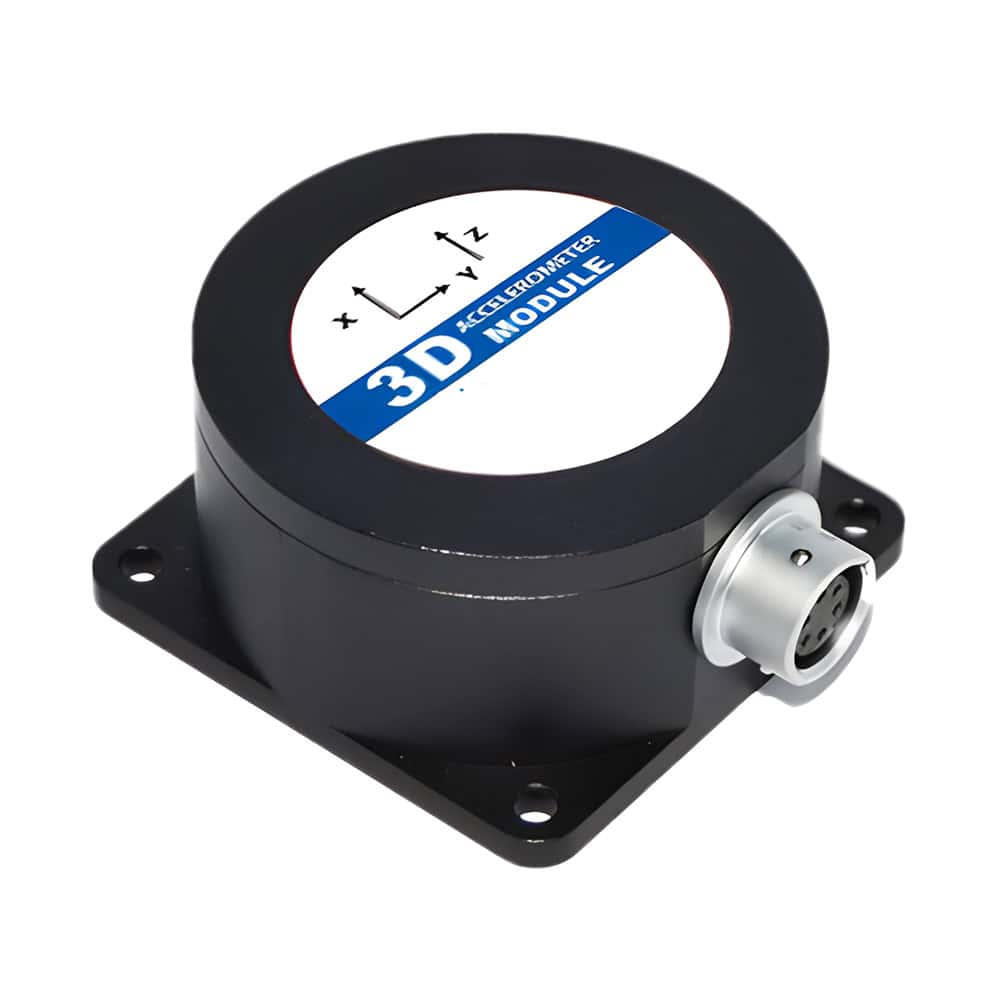
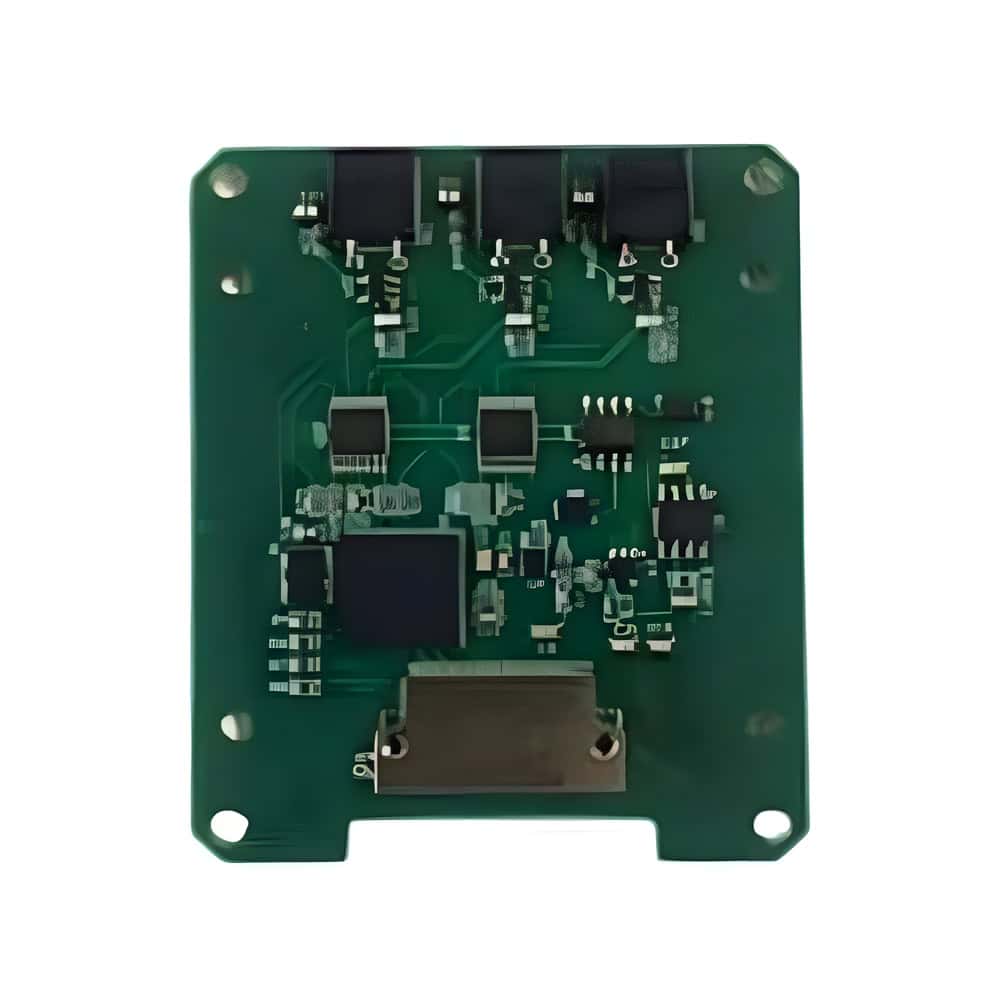
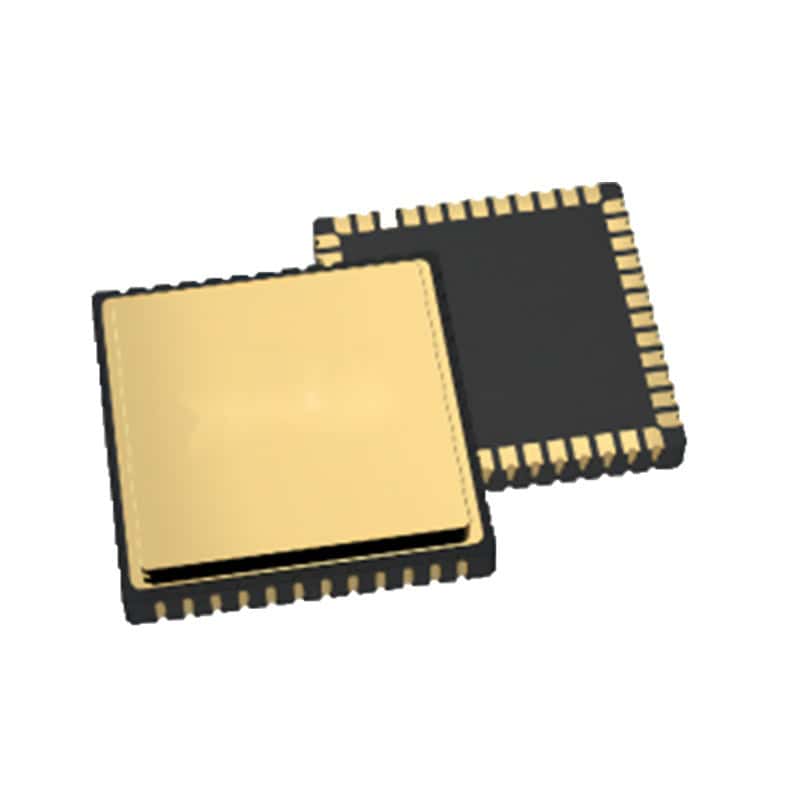
The U6488 High-Precision MEMS IMU features a gyroscope bias stability of 1°/h (Allan variance), angle random walk of 0.065°/√h, accelerometer bias stability of 30μg, and a velocity random walk of 0.01 m/s/√h. It offers an SPI output rate up to 2000Hz, dimensions of 47×44×14mm, and a weight of 50g. Its advantages lie in the 2000Hz high sampling rate which can effectively avoid vibration aliasing, the extremely light weight of 50g suitable for small UAV platforms, and a bias of 1°/h combined with a low ARW of 0.065°/√h sufficient to support minute-level pure inertial navigation.
The U6300 High-Precision MEMS IMU features a gyroscope bias stability of 0.1°/h and accelerometer bias stability of 10μg. It supports 1000Hz high-frequency data output, compensation across the full temperature range of -40~85℃, dimensions of 38.6×44.8×10mm, and a weight of 50g. Its gyroscope accuracy is an order of magnitude higher than the U6488, and the 0.1°/h bias stability can significantly reduce position estimation errors during GNSS interruptions, enabling longer autonomous navigation time.
From this comparison, the U6488, with a core advantage of an ultra-high 2000Hz sampling rate and extreme lightweight design, is suitable for small unmanned aerial platforms with high vibration and extreme SWaP constraints. The U6300, on the other hand, features a high-precision gyroscope with 0.1°/h accuracy, making it suitable for missions with longer GNSS denial times (several minutes to around ten minutes) and lower tolerance for drift. The selection should be made based on a comprehensive consideration of autonomy duration, payload capacity, and vibration environment.
The solution for drone navigation in GNSS-denied environments is driven by both device performance and intelligent algorithms. The U6488 represents the MEMS route of high sampling rate and extreme lightness, while the U6300 represents the MEMS route of high precision and long pure inertial endurance. Both are pure MEMS solutions, each suited to specific application scenarios. Understanding error mechanisms, mastering product differences, and conducting practical verification are the keys to making optimal decisions between performance and cost. Readers are encouraged to visit the website to learn more.
Read more about Micro Magic’s industrial and automotive-grade inertial sensing systems for UAVs.