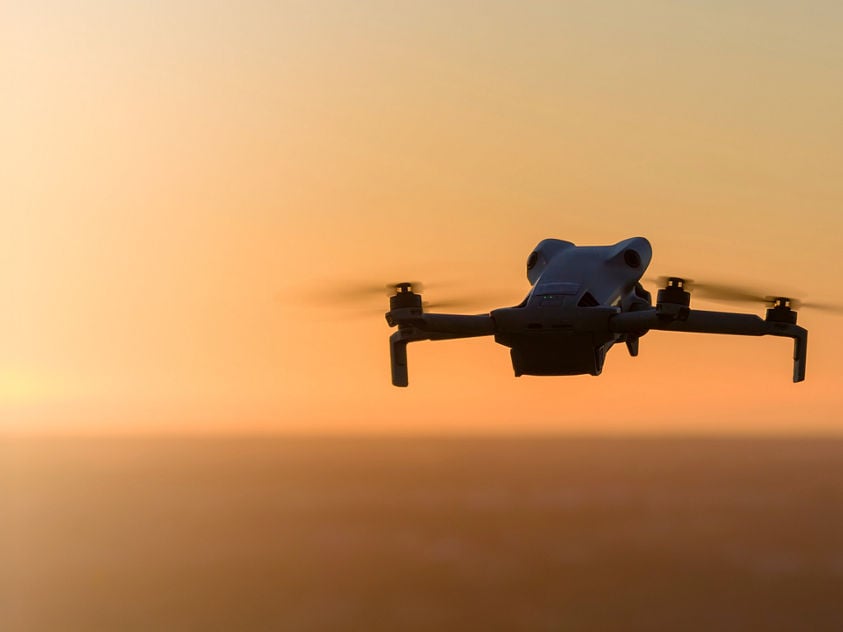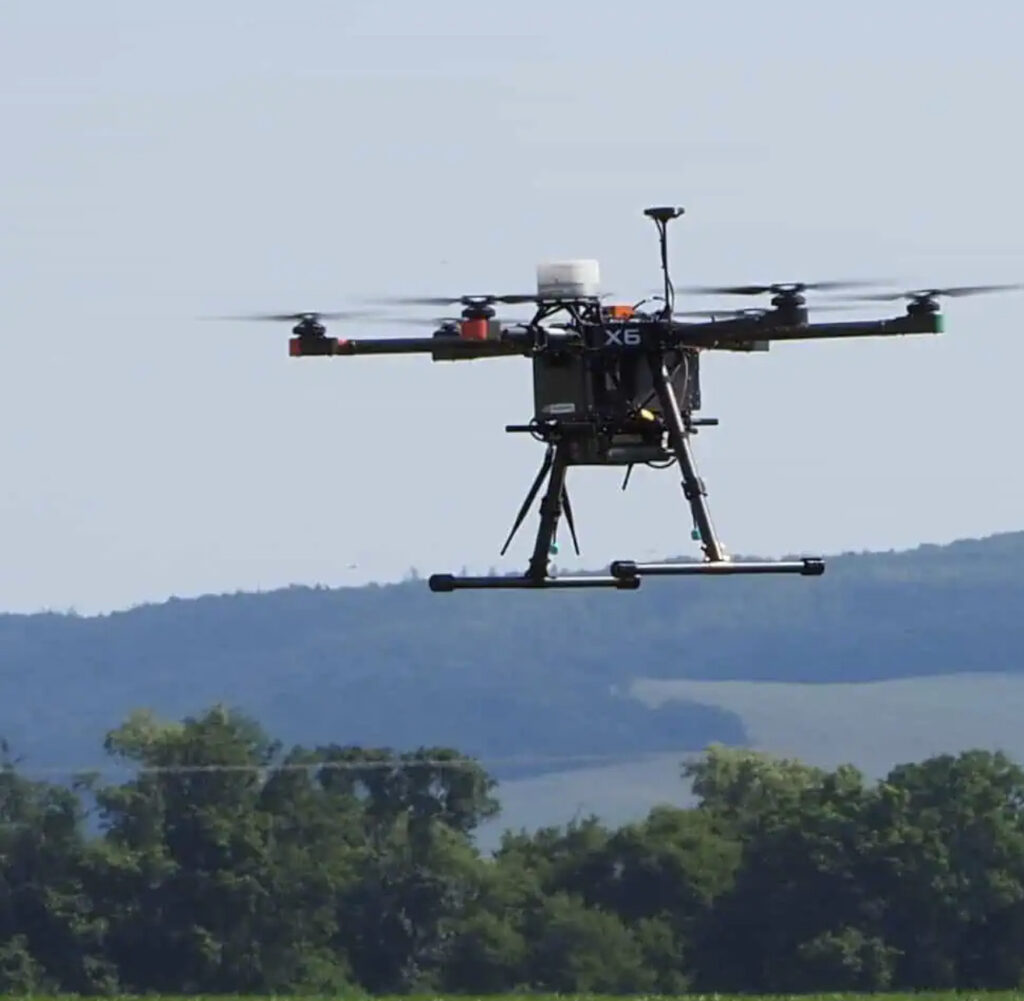
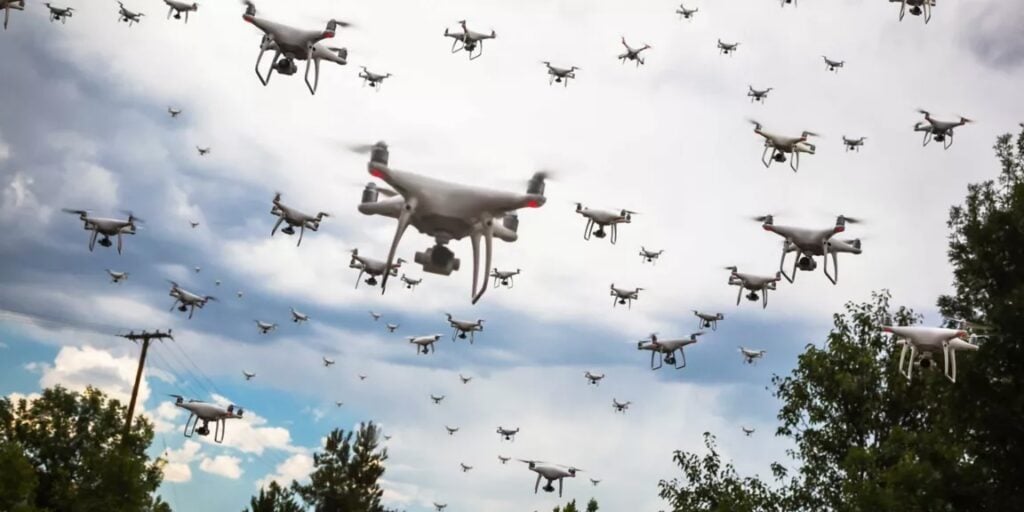
Swarming drones represent one of the most complex and fast-evolving challenges in the unmanned systems domain.
The ability of multiple small UAS to coordinate, overwhelm defenses, and threaten high-value assets demands solutions that go beyond traditional point-defense countermeasures.
Honeywell Aerospace’ Stationary and Mobile UAS Reveal and Intercept system is designed around this reality. The system was first introduced in a 2024, outlining a vision for multi-layered defense that integrates detection, tracking, and countermeasures in a modular architecture.
At its core, the system combines:
- RF detection for long-range situational awareness
- Electro-optical and infrared sensors for precision classification
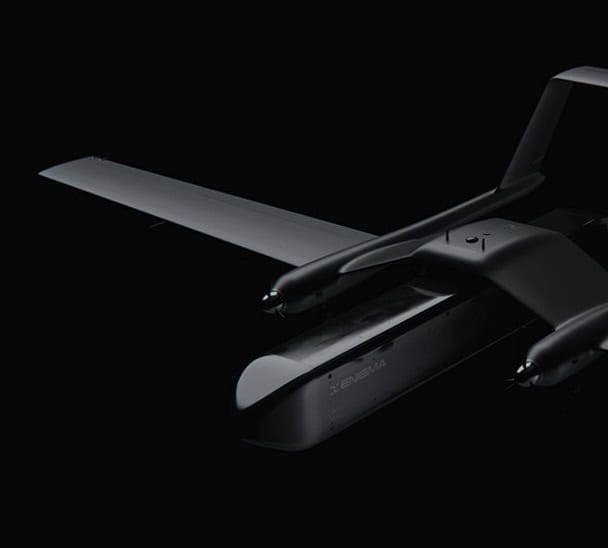
- Offensive drone interceptors that actively neutralize threats in flight
- Mobile and fixed deployment options, from vehicle-mounted units to high-altitude aerostats
The system’s MOSA-compliant architecture allows new sensors or effectors to be added as swarm tactics evolve. Honeywell Aerospace’s use of Model-Based Systems Engineering (MBSE) ensures that each configuration is validated, reducing risk during upgrades.
In 2025, Honeywell Aerospace conducted live demonstrations for U.S. military personnel, showing the system neutralizing coordinated drone swarms from both a ground vehicle and a 1,000-foot aerostat platform. These trials validated the system’s design philosophy: that swarm defense must be scalable, adaptive, and multi-domain.
For the unmanned systems community, the Reveal and Intercept system offers a clear case study in how traditional aerospace primes are integrating offensive UAS into defensive ecosystems, not just detecting swarms, but intercepting them with drones of their own.