
As counter-UAS operations continue to evolve, maintaining reliable detect-track-engage capability in contested environments has become increasingly challenging. Advanced Navigation develops inertial navigation technologies designed to support counter-drone platforms operating in GPS-denied and electronically contested conditions, helping ensure synchronization between radar tracking systems and effectors during mission-critical engagements.
Small, maneuverable aerial threats now operate at speeds and flight profiles that place increasing pressure on counter-UAS systems. In these environments, uninterrupted synchronization between sensors and engagement systems is essential. However, GPS disruption can compromise positional awareness and heading accuracy, weakening the connection between radar tracks and effector alignment.
Precision inertial navigation systems (INS) provide an alternative approach by delivering stable heading, position, and attitude data independently of GPS availability.
The Impact of GPS Denial on Counter-UAS Performance
In contested operational environments, the loss of satellite navigation can significantly affect counter-UAS effectiveness. Fire control systems rely on accurate awareness of platform orientation, heading, and positioning to maintain engagement precision. If heading reference data becomes unstable or unavailable, the correlation between radar detections and effector targeting can degrade.
This can introduce several operational challenges, including:
- Reduced engagement windows caused by delays in generating reliable tracks
- Increased risk of target misclassification resulting from inaccurate kinematic information
- Lower interception probability due to degraded pointing precision and inefficient use of effectors
For systems tasked with protecting personnel, infrastructure, and tactical assets, these limitations can reduce operational reliability during high-threat scenarios.
Precision Heading Data for Fire Control Synchronization
INS technology designed for contested environments can help maintain continuous heading and attitude information regardless of GPS conditions. Advanced Navigation develops inertial systems intended to support synchronization between radar tracking systems and counter-UAS effectors, even during movement or under electronic warfare conditions.
By supplying high-fidelity navigation data, these systems support precise effector alignment against aerial threats despite signal jamming or spoofing activity.
INS Solutions for Counter-UAS Platforms
Operational requirements across counter-UAS programs vary widely depending on deployment environment, mobility requirements, and SWaP-C constraints. Advanced Navigation provides multiple INS options tailored for different mission profiles.

Certus Evo: MEMS-Based Navigation for SWaP-C-Constrained Platforms
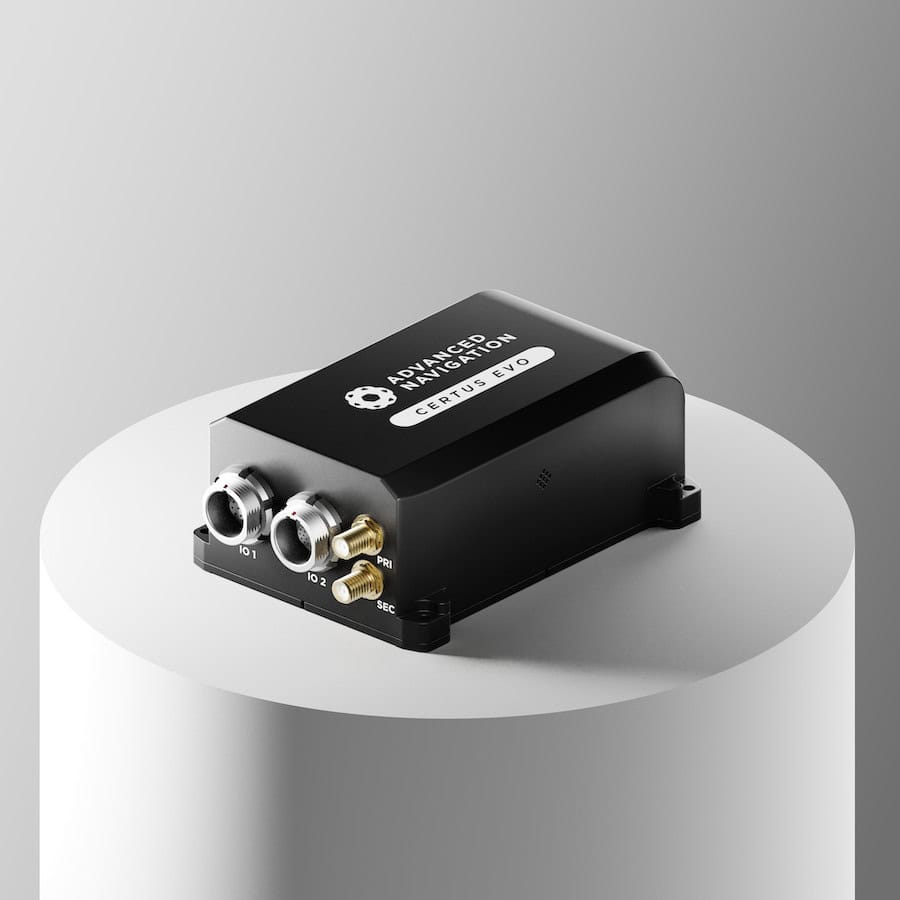
The Certus Evo is a MEMS-based GNSS/INS developed for applications where size, weight, power, and cost considerations are critical. The system provides heading and attitude data for mobile counter-UAS operations while supporting rapid deployment requirements through dual-antenna heading functionality.
Designed for tactical integration, the Certus Evo has been tested against multiple MIL-STDs to withstand shock and vibration associated with vehicle-mounted and dismounted deployments. Its compact design makes it suitable for applications where fast operational readiness and reduced SWaP-C are priorities.
Boreas D Series: FOG-Based Inertial Performance
For applications requiring higher levels of inertial precision, the Boreas D50, D70, and D90 systems utilize digital fiber-optic gyroscope (FOG) technology to provide stable heading performance and low-noise operation.
The Boreas series is intended for counter-UAS deployments that demand precision engagement capability over longer distances or in support of high-value asset protection missions. The systems are suited to fixed-site defense and area security operations where sustained accuracy and reliability are critical.
Supporting Counter-UAS Program Requirements
Counter-UAS development programs face increasing pressure to accelerate deployment timelines while adapting to rapidly changing threat environments. Beyond technical performance, manufacturing scalability, export flexibility, and environmental resilience have become key considerations during supplier selection.
Manufacturing Scalability and Supply Chain Stability
The rapid pace of drone threat evolution places pressure on production schedules and deployment timelines. Advanced Navigation has invested in vertically integrated manufacturing processes intended to support transition from low-rate production to larger-scale deployment requirements.
This manufacturing approach is designed to support:
- Production scalability for testing and fielding phases
- Schedule consistency for urgent operational requirements
- Reduced delays associated with transitioning from qualification to full-rate production
ITAR-Free Export Flexibility
Coalition operations increasingly require interoperable counter-UAS systems that can be deployed across allied forces. As an ITAR-free supplier, Advanced Navigation supports simplified international integration pathways that can reduce export-related delays.
This approach can assist defense programs seeking to establish shared capabilities across partner nations while streamlining deployment schedules for international customers.
Environmental and Electronic Warfare Resilience
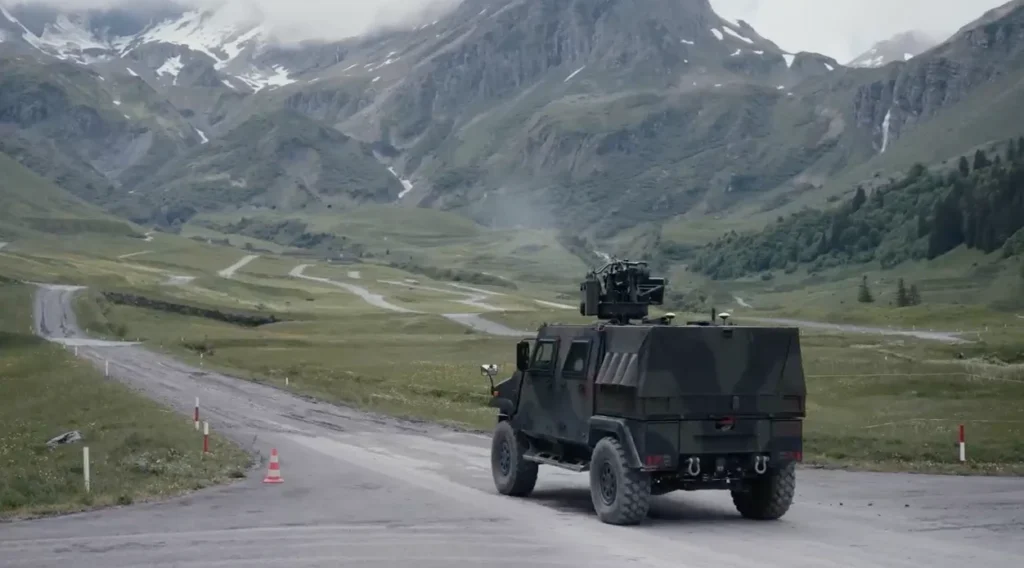
Counter-UAS platforms frequently operate in demanding tactical environments, including rough terrain, extreme temperatures, and electronically contested battlespaces.
Advanced Navigation designs its systems to comply with MIL-STD-810H and MIL-STD-461G requirements, with engineering considerations focused on resistance to shock, vibration, electromagnetic interference, and electronic warfare threats such as GPS jamming and spoofing.
This environmental resilience supports operational availability while helping reduce maintenance requirements across deployed systems.
Delivering Navigation Capability for Contested Environments
For counter-UAS programs, inertial navigation performance can directly affect operational effectiveness, deployment timelines, and system reliability. Advanced Navigation’s INS portfolio is designed to support counter-drone platforms operating in GPS-denied and electronically contested conditions while addressing broader programmatic requirements such as scalability, interoperability, and ruggedization.