Ethernet Switch Boards: Low SWaP Solutions for Drones
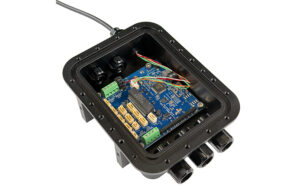
Ethernet switches ensure seamless communication between various devices and systems within an unmanned platform. This category details leading providers and manufacturers of Ethernet switch board solutions, including bare board, miniature, and multi-port variants. This guide explores technical considerations for specifying an ethernet switch board within aerial, ground, and maritime unmanned applications.
If you design, build or supply Ethernet Switch Boards and Hardware, create a profile to showcase your capabilities and connect with visitors who have an active requirement for your solutions.
Engineering Procurement Guide to Ethernet Switch Boards for Unmanned Systems
Overview by
Sarah Simpson
Updated:
Embedded networking is critical for high-bandwidth ISR and autonomous flight control. Designed for reliability and performance, ethernet switch boards provide the backbone for networked environments, handling high data throughput in real-time operations. Whether it’s integrating sensor data, controlling onboard systems, or ensuring remote connectivity, Ethernet switches play a crucial role in supporting mission-critical tasks across air, land, and sea-based unmanned platforms. From Layer 2 switches to advanced network configurations, their adaptability makes them indispensable for ensuring efficient data routing and system integration.
Technical Foundation: The Role of Embedded Switching in Unmanned Systems
In the architecture of modern unmanned systems, switch boards are far more than generic IT components. They occupy the critical path for Command and Control (C2), telemetry, sensor fusion, and high-bitrate ISR video streams. A sophisticated sourcing strategy begins by mapping mission-specific traffic to the actual hardware capabilities of an embedded ethernet switch board. This involves evaluating how the silicon manages latency and jitter, supports Layer 2/3 traffic prioritization (QoS), and behaves during sudden power transients or thermal throttling.
Because most deployments interface commercial networking protocols with ruggedized military or industrial platforms, engineers must treat the switch as a system-level component. It must be specified in tandem with cabling, specialized connectors, enclosure design, and the platform’s overall Electromagnetic Compatibility (EMC) plan. The board form factor introduces unique integration challenges, including mechanical mounting, signal integrity across headers, and the necessity for conformal coating to protect against environmental degradation.
Platform-Specific Applications
Fixed-Wing UAVs
Fixed-wing unmanned aerial vehicles combine long endurance with extreme environmental exposure. Components must survive altitude-driven cooling variations and continuous airframe vibration. An ethernet switch board in these aircraft serves as the high-speed backbone connecting the flight computer, mission payload, EO/IR gimbals, and datalinks.
Integration focuses on predictable performance: the switch must maintain line-rate forwarding at temperature extremes without “mystery latency” during bursty video transmissions. Co-site interference is a major risk, particularly when Ethernet lines run near sensitive GNSS receivers or high-power RF front ends. Engineers should specify board-level grounding strategies and MIL-STD-461G compliance to ensure signal integrity. If cable runs are extensive, fiber-optic interfaces via SFP modules are often preferred over copper to eliminate common-mode noise.
Rotary-Wing UAVs
Rotary platforms present a brutal broadband vibration profile and highly constrained packaging volumes. Multi-port 3, 4 or 5-port ethernet switch boards are a common choice for these platforms, providing enough density for a standard avionics stack while fitting into tight payload bays. Thermal management is paramount here: boards running at high temperatures can force late-stage, weight-heavy thermal fixes like custom heat spreaders or active ducting.
Reliability is often dictated by connector retention. Procurement specifications should mandate locking connectors or M12 X-coded interfaces rather than standard RJ45. Furthermore, boards must be characterized for power stability, ensuring the network state remains intact during the voltage dips common to high-torque motor maneuvers.
Tactical and Heavy UGVs
Ground vehicles face automotive-grade shock events and heavy contamination from dust and moisture. An ethernet switch pcb board in a UGV typically sits at the center of a dense compute stack, ingesting data from LIDAR, radar, and autonomy sensors.
Power quality is the primary integration hurdle. Vehicle electrical systems are notorious for transients and cranking dips. Boards must be specified to meet MIL-STD-1275 standards for 28VDC systems, featuring robust inrush control and reverse polarity protection. For environmental protection, the board must be rated for performance within a sealed compute bay where airflow is restricted, necessitating a focus on conduction cooling and MIL-STD-810H environmental testing.
USVs (Uncrewed Surface Vessels)
Maritime environments are defined by salt fog and humidity. An ethernet switch board used in a USV must be sourced with a comprehensive corrosion strategy. This includes the use of Acrylic or Paraxylylene conformal coatings and salt-resistant connector finishes.
Network architecture on a USV is often complex, requiring the switch to handle AIS, radar, and multiple communication bearers like SATCOM and line-of-sight links. Sourcing teams should prioritize managed features like IGMP snooping to manage multicast video streams effectively, preventing the network from being flooded by high-bandwidth sensor data.
ROVs and AUVs (Underwater)
Subsea vehicles operate in pressure housings where convection is non-existent. An ethernet port switch board in this domain must be highly power-efficient to minimize heat buildup. Timing is also critical for underwater autonomy; many AUVs require precise sensor timestamping via PTP (IEEE 1588v2).
Integration involves interfacing with specialized penetrators and bulkhead connectors. Procurement must define whether the board needs to support copper or fiber media conversion internally. Because deep-sea repairs are impossible, these programs prioritize boards with high MTBF (Mean Time Between Failure) and documented performance in low-airflow, high-pressure environments.
Technical Sourcing and Integration of Ethernet Switch Boards
Managed Features and Determinism
Managed switching is the bridge between a functional system and a chaotic one. Engineers should specify use cases rather than checkboxes: VLAN separation for C2 and payload traffic, or priority queuing for telemetry. For systems requiring strict timing, distinguish between basic PTP support and hardware-based PTP (IEEE 1588v2 or 802.1AS) to ensure sub-microsecond accuracy across the network.
Port Configuration and Miniature Form Factors
The hardware footprint is often the deciding factor. A 2 port miniature board ethernet switch provides a lightweight solution for point-to-point bridging or simple payload expansion. Conversely, a 3 port ethernet switch board might be required for a modular payload that needs an uplink to the flight computer and a secondary connection to a specialized sensor.
For PCB-level integration, the bare board ethernet switch allows for direct mounting within a custom enclosure or onto a carrier board. This requires clear documentation on signal integrity for high-speed traces and mechanical retention for high-vibration environments.
Power Architecture and MIL-STD Alignment
Ruggedized boards must handle more than just standard DC input. They must tolerate the electrical noise of a tactical environment. Specify adherence to MIL-STD-704 for aircraft power or MIL-STD-1275 for ground platforms. The board must not only survive a transient but also demonstrate a deterministic recovery time: the network must be back online and forwarding packets within milliseconds of power stabilization.
Qualification and Lifecycle Management
Technical sourcing must include a rigorous verification plan. Acceptance criteria should be objective: zero packet loss at 90% load across the full temperature range (-40°C to +85°C). Firmware control is equally vital; ensure the supplier provides a stable BOM and controlled firmware baselines to prevent “configuration drift” across a fleet of unmanned systems.
Selecting an Ethernet Switch Board Supplier
The directory at the top of this page features leading global suppliers of ethernet switch boards and related hardware, and serves as the primary resource for qualifying vendors against specific mission or application requirements. These suppliers provide COTS and modified-COTS solutions that meet the stringent SWaP-C and ruggedization demands of the unmanned systems industry. When evaluating candidates, prioritize those who provide comprehensive thermal characterization, MTBF data, and long-term lifecycle support to mitigate obsolescence risks in multi-year programs.
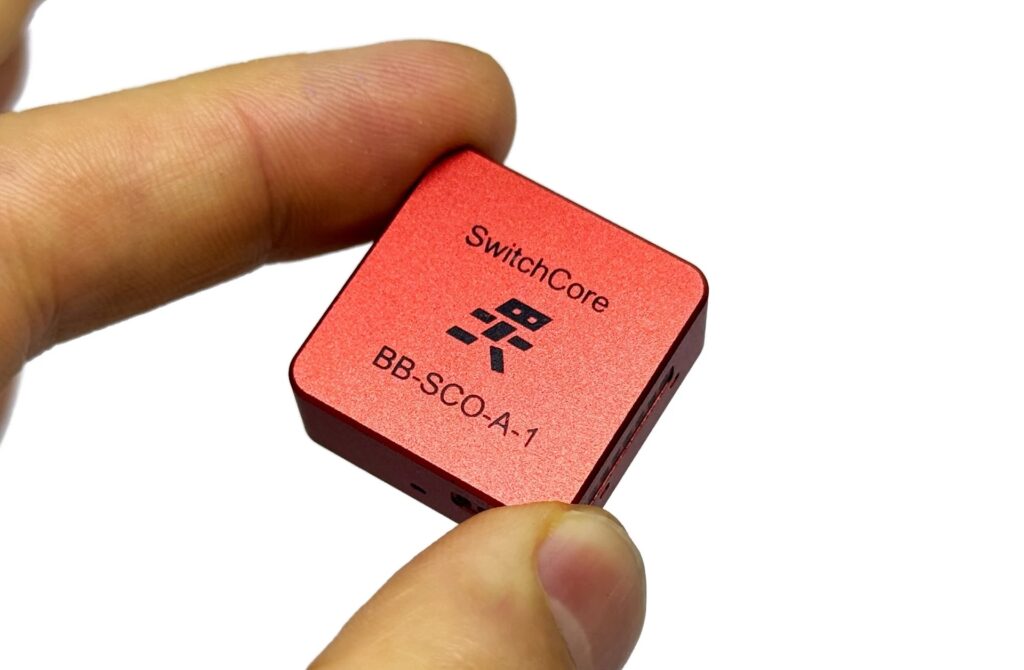
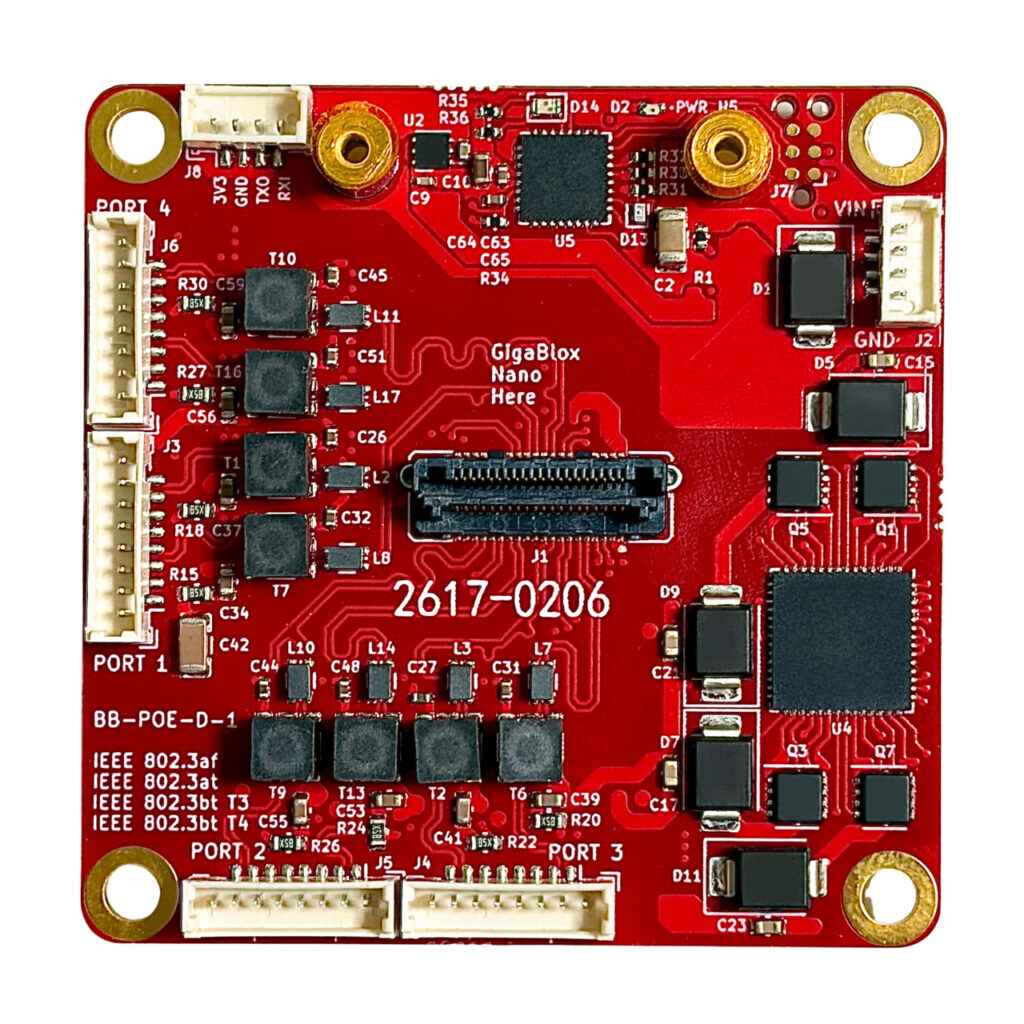
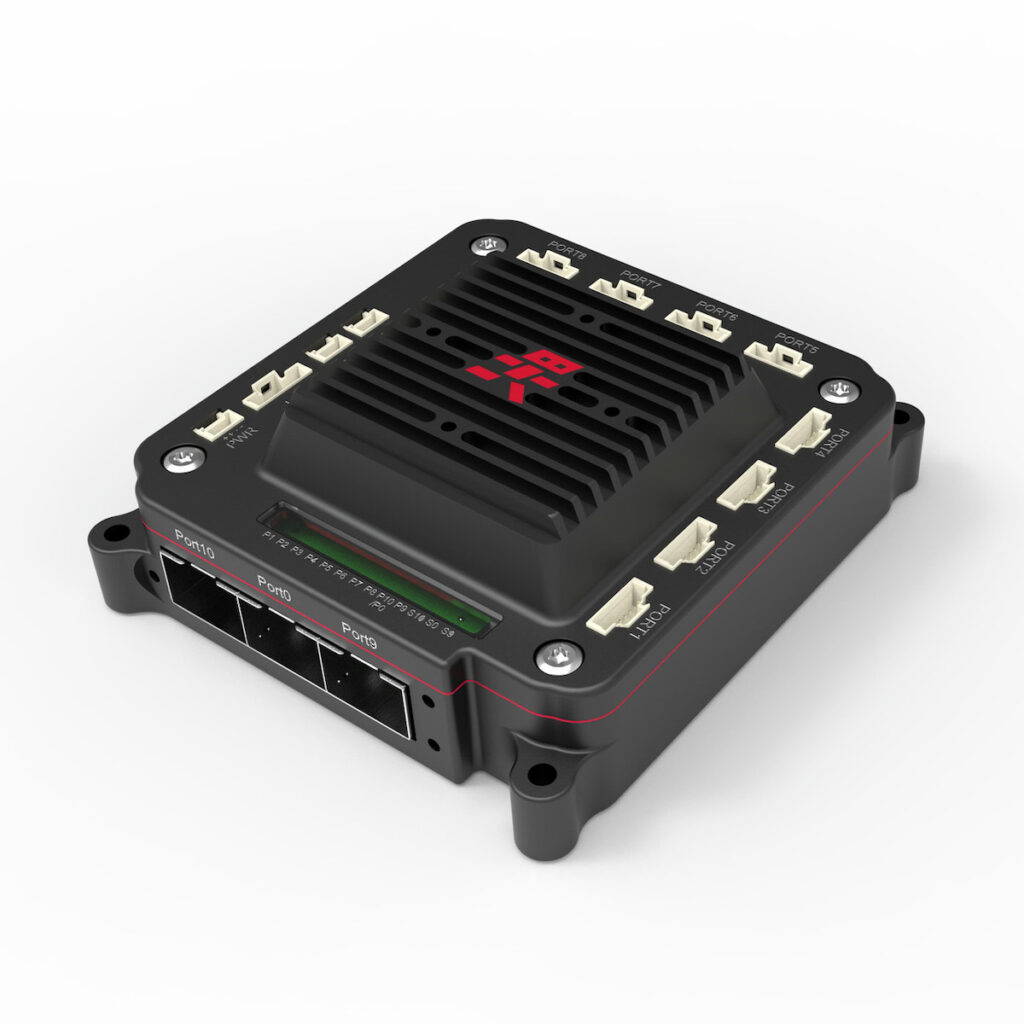
BotBlox has released SwitchCore, an ultra-compact and low-power eight-port Ethernet switch module featuring an integrated aluminum chassis designed for direct carrier board integration in demanding robotic and industrial applications
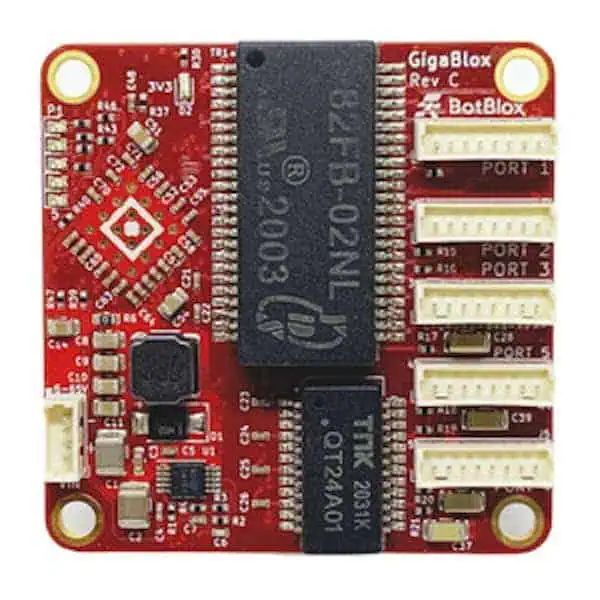
Josh Elijah from BotBlox explores the evolution of ultra-compact networking hardware, the challenges of miniaturization, and the growing role of Ethernet in next-generation unmanned systems
United Electronic Industries outlines how TSN adapters and bridges enable legacy aerospace and defense interfaces to integrate with modern Ethernet-based networks, highlighting its scalable TSN solutions that offer seamless integration, portability, and a wide range of I/O options
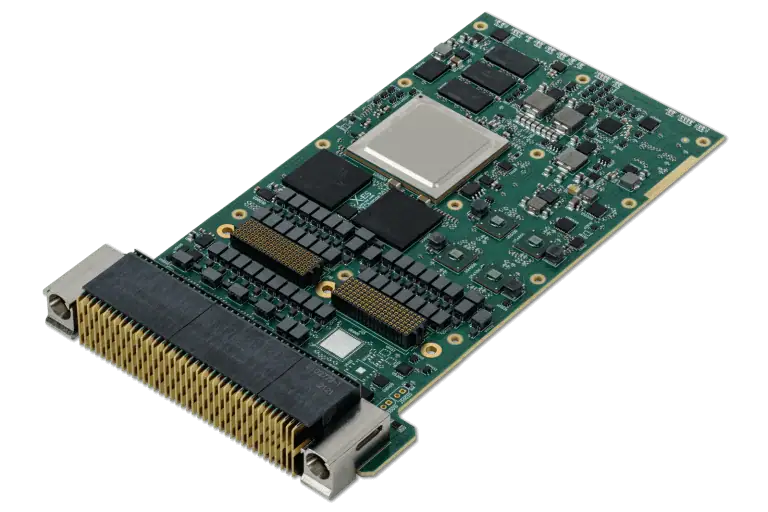
X-ES' XChange3031 is a rugged 3U VPX Ethernet switch designed for high-performance embedded networking in military, aerospace, and C4ISR systems with optional routing capabilities
BotBlox has unveiled the SPEBlox Module, a compact and efficient solution for converting between standard gigabit Ethernet (1000BASE-T) and gigabit Single Pair Ethernet (1000BASE-T1).
Explore BotBlox's Ethernet switches for GigE Vision cameras, comparing their suitability for high-performance streaming in drones and embedded platforms
Jan 17, 2025
Advancing Unmanned Systems Through Strategic Collaboration
UST works with major OEMs to foster collaboration and increase engagement with SMEs, to accelerate innovation and drive unmanned systems capabilities forward.