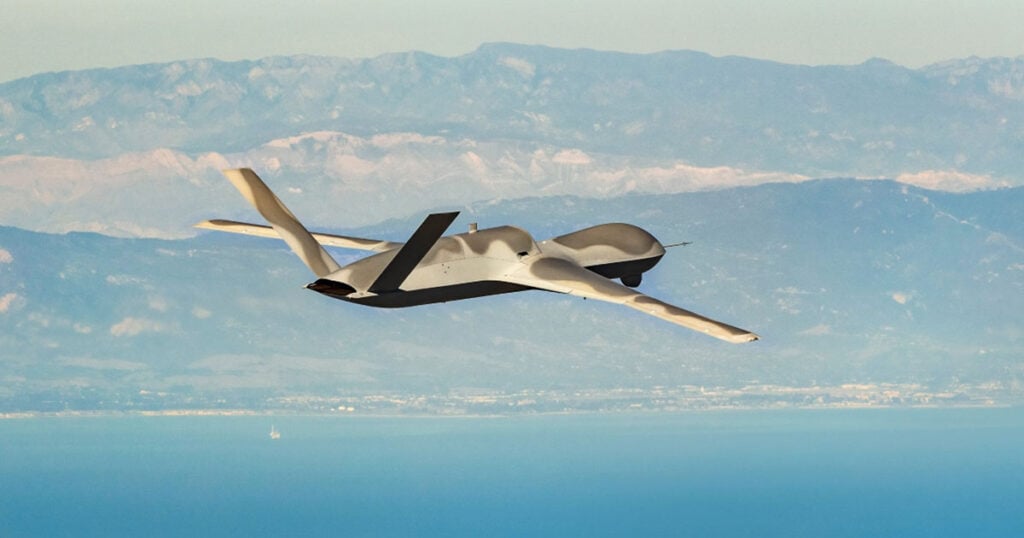
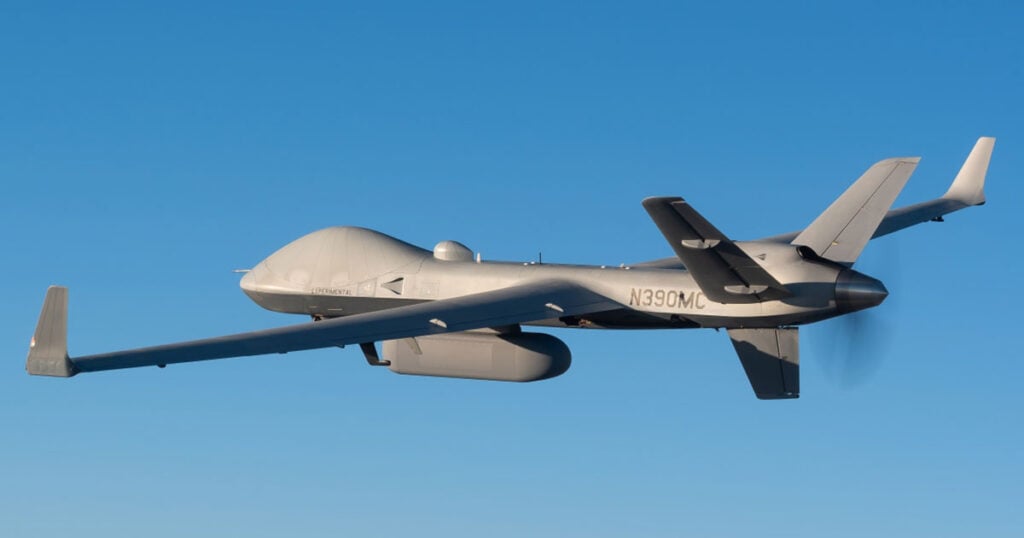
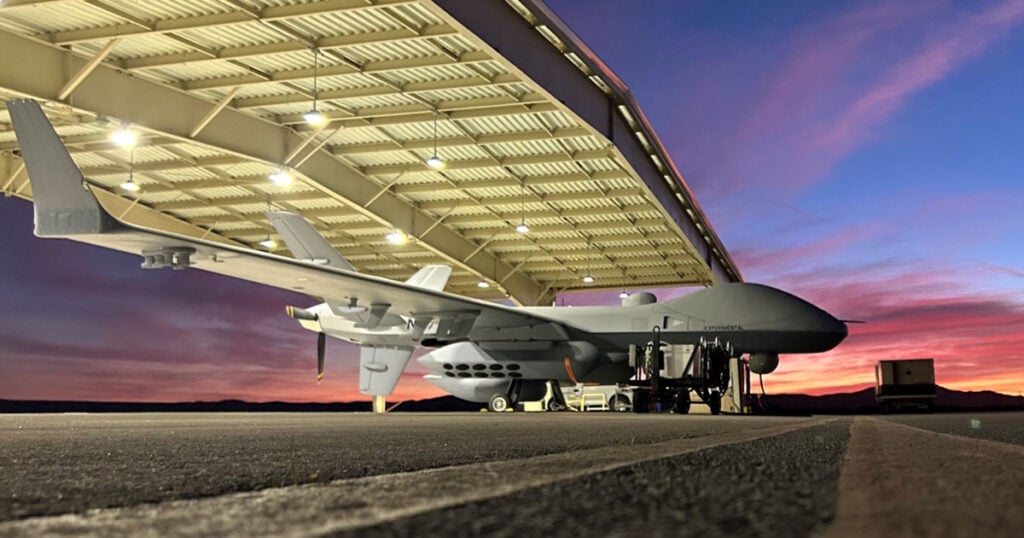
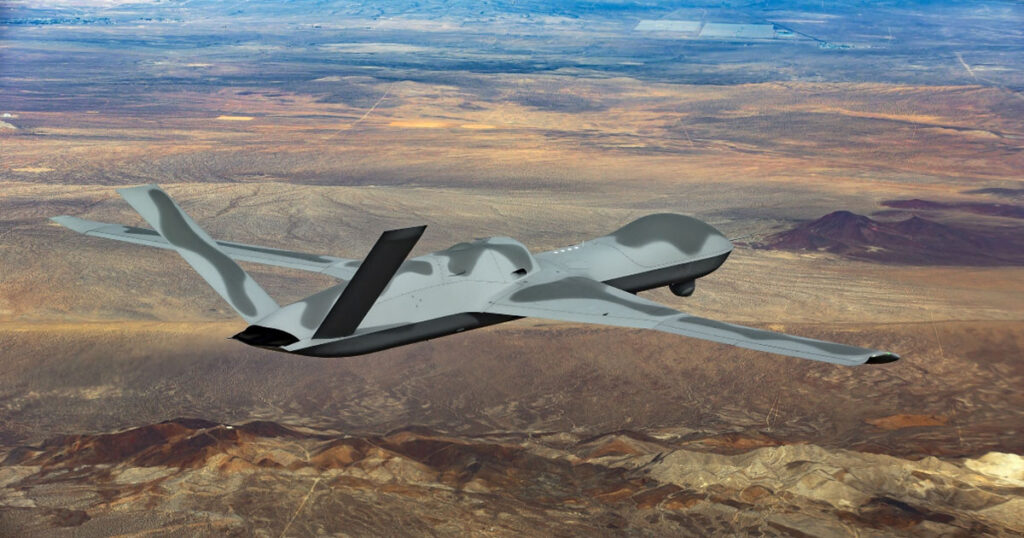
In its latest demonstration of advanced autonomy development, General Atomics Aeronautical Systems, Inc. (GA-ASI) successfully executed a mission autonomy flight using its MQ-20 Avenger® jet equipped with the latest government reference autonomy software.
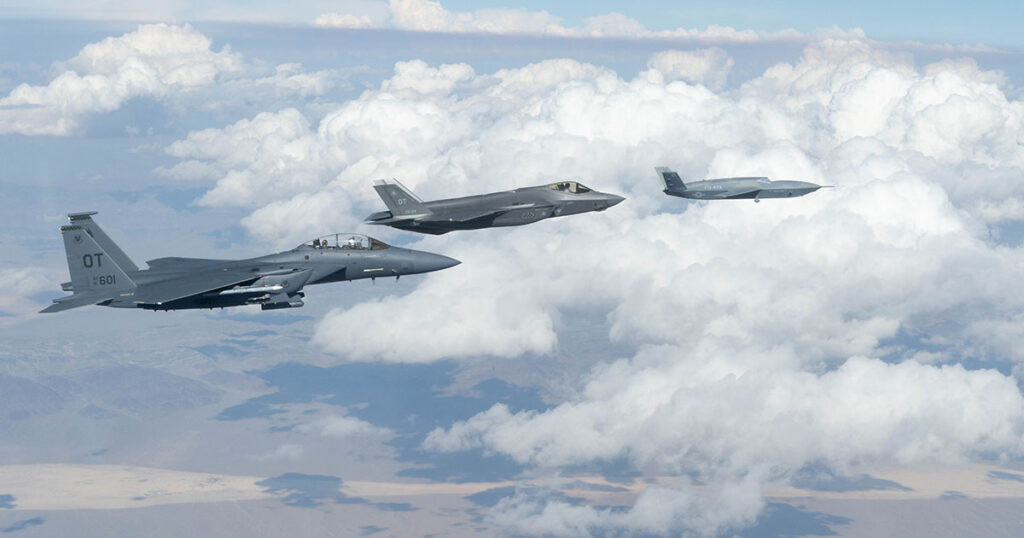
The test included a live engagement between the MQ-20 and an aggressor aircraft flown by an onboard human pilot, highlighting the advanced maturity of autonomous systems, seamless integration of mission elements, and the ability of autonomy to leverage onboard sensors to make independent decisions and execute complex tasks.
GA-ASI’s Avenger jet has served as a surrogate for Collaborative Combat Aircraft (CCA) for more than five years, both before and since the arrival of GA-ASI’s purpose-built XQ-67A and YFQ-42A aircraft. The recent Avenger demo began with planning in the Human-Machine Interface (HMI), followed by loading the mission profile onto the MQ-20.
Once airborne, the team confirmed positive transfer between mission autonomy and flight autonomy systems, demonstrating the systems’ ability to dynamically adapt to mission requirements. The MQ-20 showcased adherence to operator-assigned Keep-Out Zones (KOZ) and Keep-In Zones (KIZ), which it avoided during all mission phases. In other words, the aircraft flew exactly where it was supposed to and stayed away from areas where it was not.
One of the highlights of the demonstration was the MQ-20’s use of a live Infrared Search and Track (IRST) sensor from Anduril to passively range a live target aircraft in flight. Using this sensor data, the autonomy system independently established a track, calculated an intercept solution, and simulated the firing of a weapon at a live target — showcasing the ability of autonomy to close on a target using onboard sensors and its own logic, without human intervention. The simulated shot, if real, would have destroyed the target.
Additional mission elements included the MQ-20 flying a pre-designated route to a standard instrument hold – in which the aircraft pauses and orbits, as real human pilots frequently do on real missions, before continuing to another waypoint or objective – and executing routes commanded via Heading, Speed, and Altitude (HSA), all while successfully avoiding the designated keep-out zones.
This demonstration reinforces GA-ASI’s commitment to advancing Human-Machine Teaming and highlights the growing sophistication of autonomous systems in using sensor data and onboard decision-making to execute complex mission profiles for the warfighter. It also highlights GA-ASI’s ongoing commitment to investment and experimentation of new capabilities for America’s warfighters.
In 2023, GA-ASI announced a partnership with Divergent Technologies, Inc., to support additive manufacturing development efforts and implement a full digital manufacturing process for GA-ASI’s products. In 2024, GA-ASI collaborated with U.S. Air Force Special Operations Command to integrate and launch the Altius 600 loitering munition, also built by Anduril, and teamed with Dillion Aero to integrate that company’s DAP-6 gun pods for a live-fire demonstration with GA-ASI’s new Mojave STOL aircraft. In 2025, GA-ASI partnered with Shield AI for two flight demonstrations on theAvenger using the company’s Hivemind mission autonomy software.