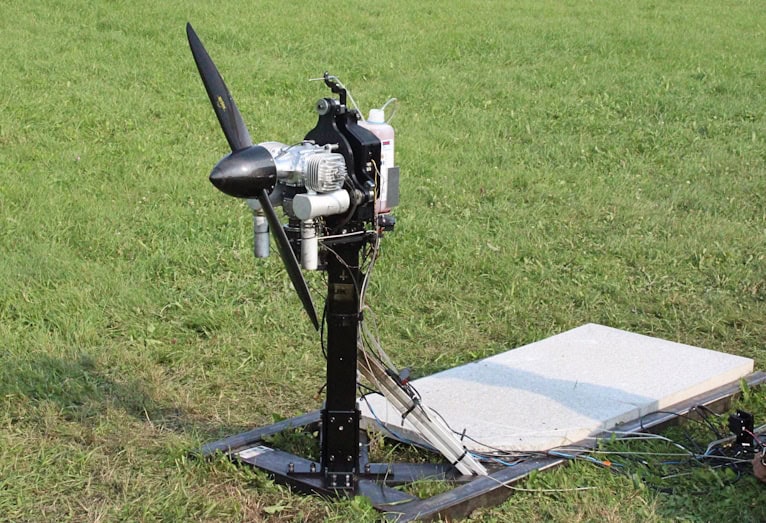

Tyto Robotics has conducted a detailed assessment of single-blade propeller performance to evaluate long-standing claims of improved aerodynamic efficiency. Read more >>
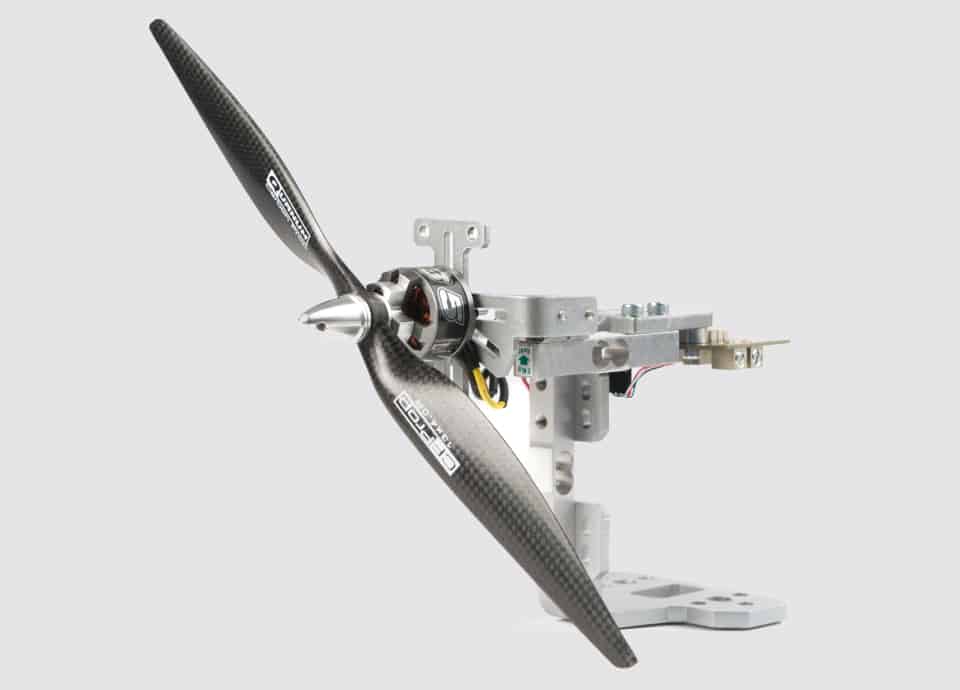
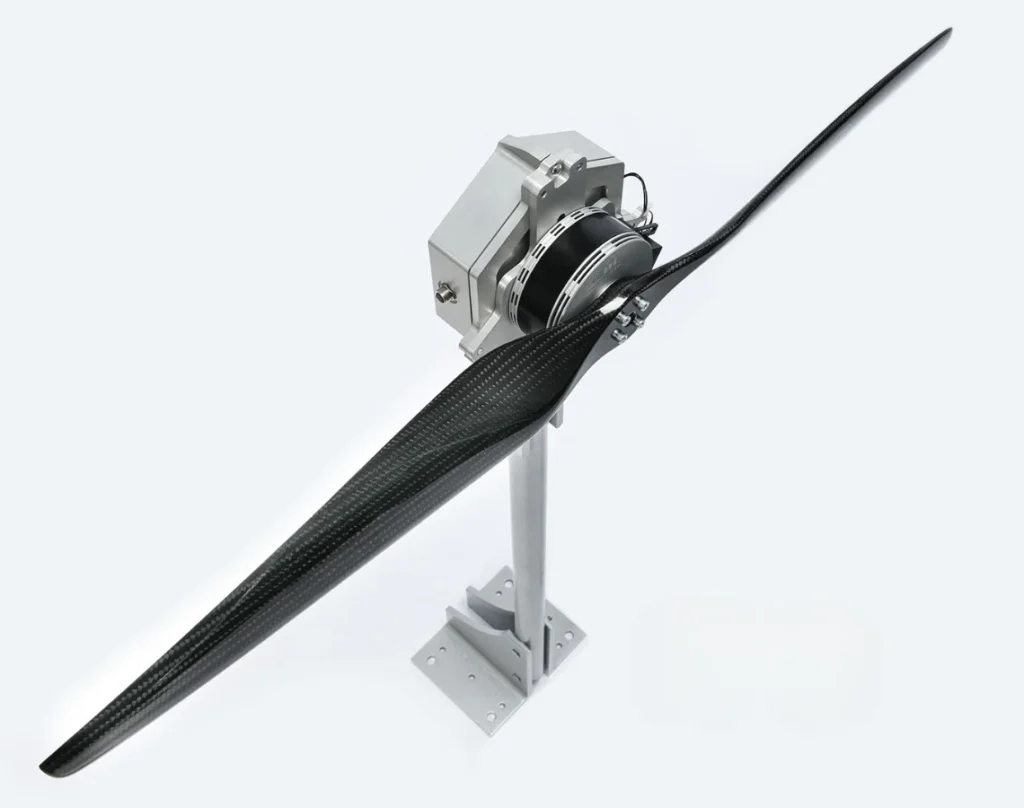
Using the company’s Flight Stand 15 test platform, engineers compared a modified single-blade propeller with a standard two-blade version of the same make, examining how theoretical efficiency advantages translate into measured results.
The study reviewed established explanations for potential single-blade benefits, including reduced blade tip vortices and operation in less disturbed airflow. The team modified and balanced a carbon-fiber propeller to create a single-blade configuration, then executed automated step tests across a range of rotational speeds to collect thrust, RPM, and powertrain data.
Findings indicated that the single-blade configuration achieved higher propeller efficiency at lower thrust values, while the two-blade propeller demonstrated greater overall powertrain efficiency, largely due to superior motor and ESC performance. The results also underscored trade-offs associated with single-blade operation, such as increased vibration, added counterweight mass, and limitations in achievable thrust.
Tyto Robotics notes that additional experiments could be conducted under simulated flight conditions to better represent operational environments and refine these findings.
Read the full article to explore Tyto Robotics’ complete single-blade propeller performance analysis.