
ParaZero Technologies provides an in-depth overview of the emerging threat posed by fiber-optic drones and the growing challenges they create for modern counter-UAS (C-UAS) operations. Read more >>
Fiber-optic cables, long used as the backbone of global communications, are now reshaping the modern battlefield. While fiber-optics carry 99% of international internet traffic across more than 1.5 million kilometers of undersea networks, the same fiber-optic cable technology is being integrated into small, low-cost, mass-produced attack drones, making them increasingly difficult to counter and providing soldiers with an operational advantage.

Traditional Electronic Warfare (EW) C-UAS measures, such as RF jamming and GNSS spoofing, have become standard responses to inexpensive drones used in conflicts worldwide. These ‘soft-kill’ methods disrupt the command communications link and cause drones to lose control, offering a cheaper and more sustainable alternative to ‘hard-kill’ solutions such as missiles.
However, emerging fiber-optic drones eliminate this vulnerability. Using thin optical fiber spooled from the airframe to replace traditional RF links, these low-cost, mass-produced drones operate without emitting radio signals, drastically reducing their radio signature, making them harder for large-aperture radars to detect, and negating conventional jamming techniques.
First observed in operational use during the Ukraine-Russia conflict and now appearing in other global conflict zones, these systems enable long-range First Person View (FPV) operations with clear, uninterrupted flight broadcasts and minimal real-time video delay. Depending on the design, fiber spools can carry many kilometers of cable, allowing pilots to operate at extended distances without risk of RF interception.
To address this growing threat, two key lessons have emerged. First, effective defense requires a comprehensive, multi-layered C-UAS architecture that integrates long-range radar and optical detection with real-time tracking and interception capabilities. Interconnecting different solutions is essential, creating a layered C-UAS field that even fiber-optic drones will struggle to navigate.
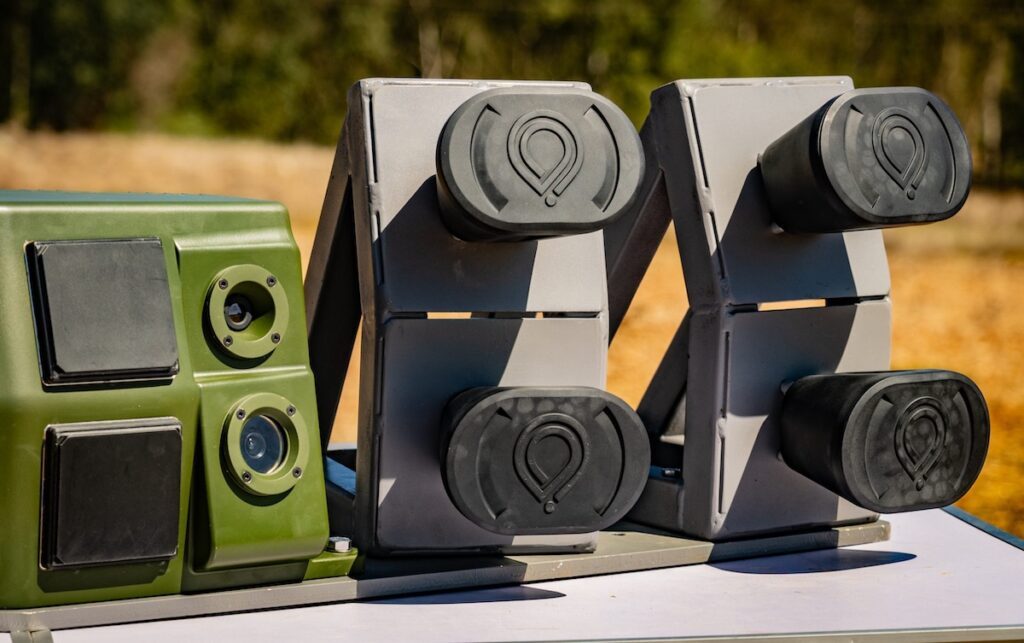
Second, kinetic and physical countermeasures remain critical. Even though the drone’s communication systems cannot be hacked, its propellers remain vulnerable. Systems such as DefendAir, which employ a net to physically intercept drones, offer adaptable solutions for air-to-air interceptions, turret-based systems, and soldier-portable use.
When integrated into a broader C-UAS posture that combines sensor fusion with both electronic and kinetic responses, these capabilities provide robust operational coverage and strengthen defenses against both wireless and fiber-optic UAV threats.