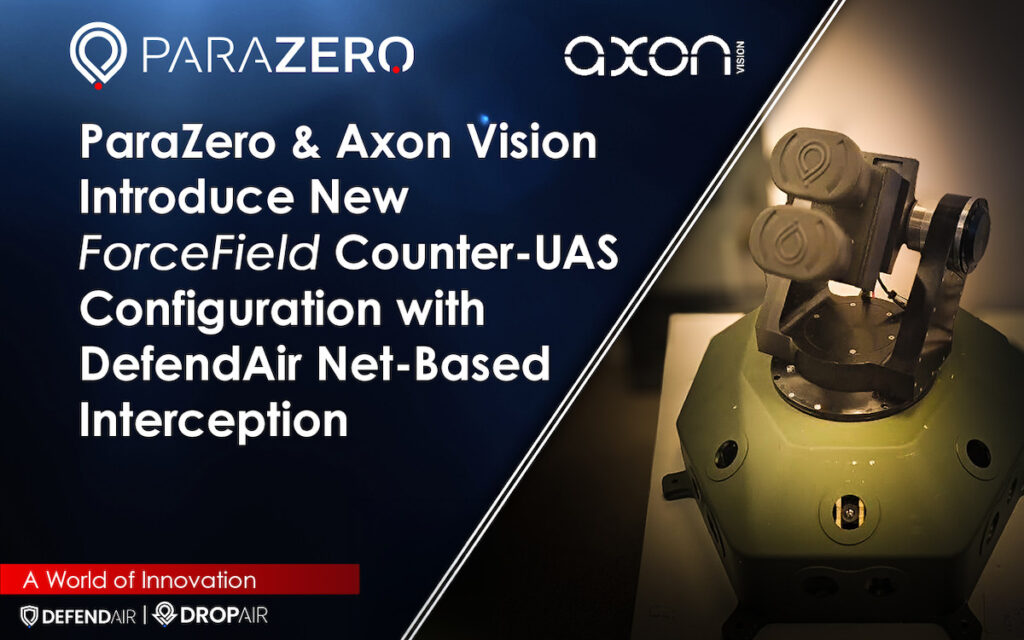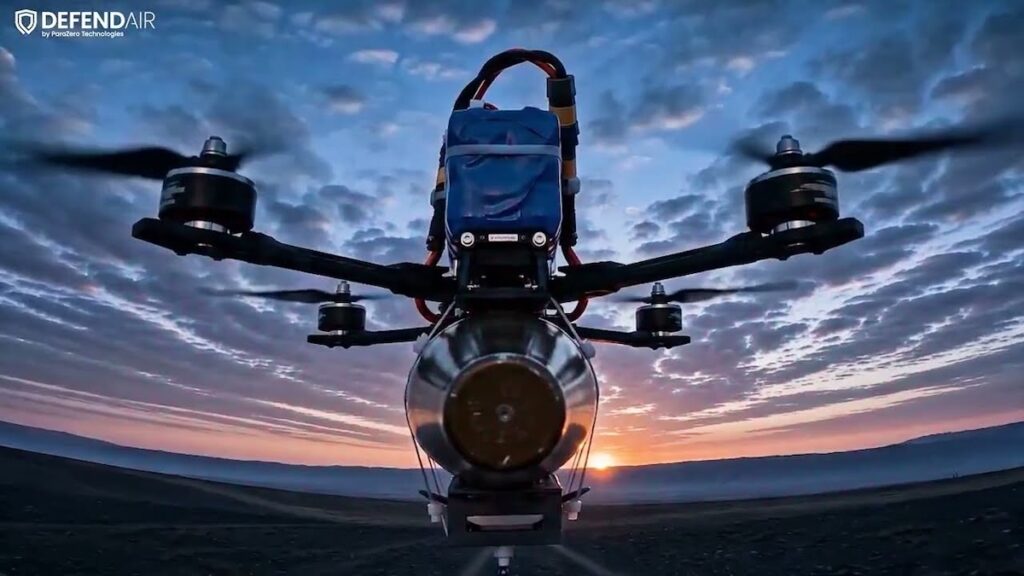




ParaZero Technologies examines the trade-offs between legacy kinetic solutions and newer net-based interception methods in its analysis, “Shotguns or Net-Launchers: Which Should You Choose for C-UAS Defense?”
The article outlines how affordable drones widely deployed in recent conflicts are altering offensive tactics and guiding last-tier defensive planning.
First Person View (FPV) quadcopters used extensively in the Russia-Ukraine conflict have demonstrated how low-cost platforms can track ground units, strike rapidly, and evade electronic-warfare countermeasures through non-GPS navigation or fiber-optic control. These conditions have increased reliance on kinetic countermeasures when jamming or spoofing is not feasible.
The comparison highlights the limitations of shotguns, which provide short-range engagement and familiarity but introduce substantial risks, including fragmentation from impacted drones and collateral hazards in urban areas. ParaZero’s DefendAir net-launcher is a non-lethal alternative that maintains a familiar form factor while delivering controlled interception. The system reaches up to 35 meters, requires minimal training, and uses a net to entangle the drone’s rotors instead of destroying the airframe. This approach prevents explosive shrapnel and reduces risks to surrounding personnel and civilians.
ParaZero’s net-based method also preserves the captured drone for forensic use, providing operators with intact hardware for intelligence gathering. The modular net pods enable integration across handheld devices and airborne platforms, expanding deployment flexibility. By emphasizing control, safety, and applicability in both military and civil environments, the DefendAir system offers a practical final-layer option for mitigating small-UAS threats.
Readers can review the full analysis on ParaZero Technologies Ltd.’s website.