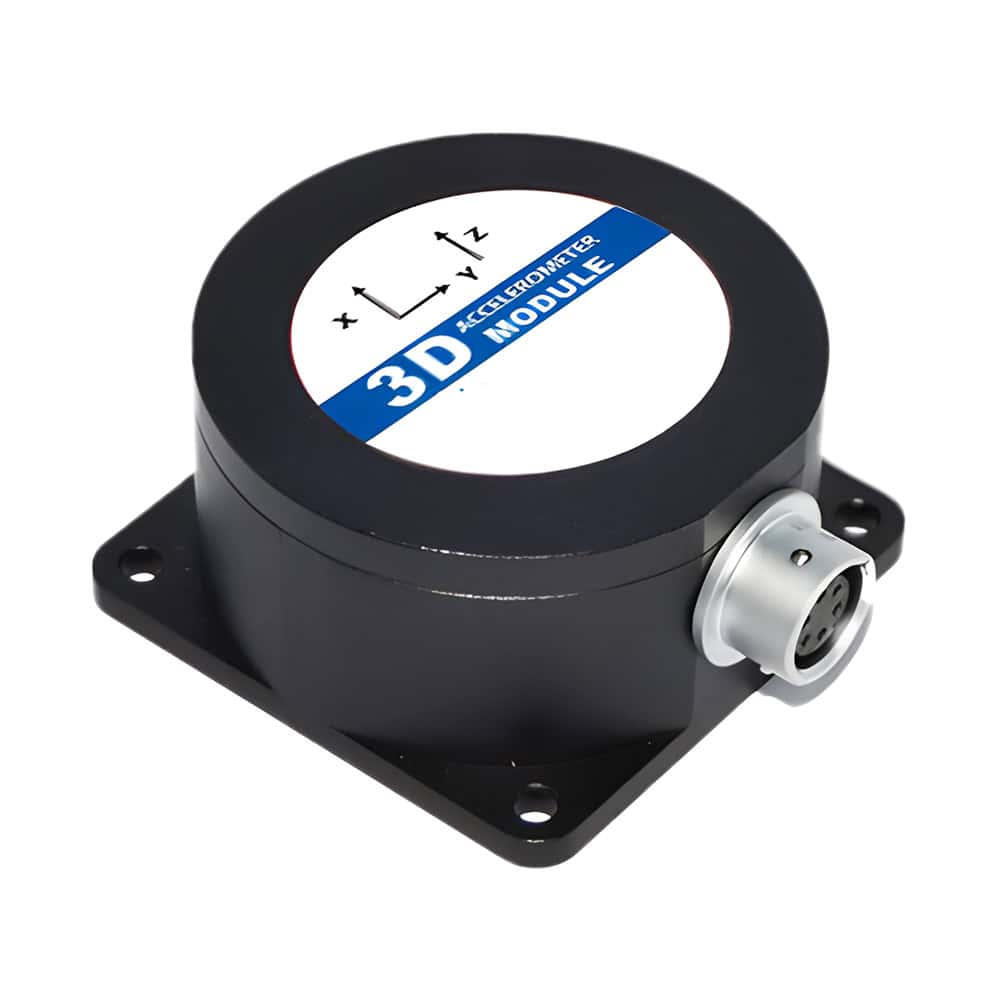
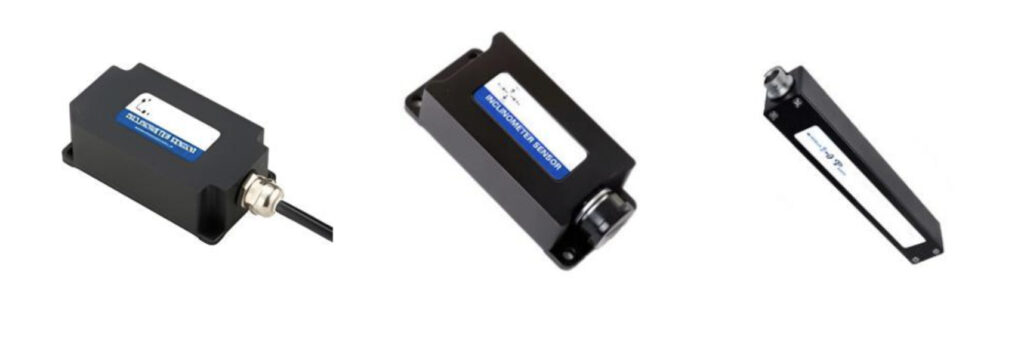
Micro Magic Inc supplies MEMS-based tilt sensors designed for the structural health monitoring of bridges. The following article examines how tilt sensors are applied in bridge engineering, the advantages of MEMS devices compared with traditional sensing methods, and key factors influencing their deployment.
Bridge Monitoring Applications
Pier and Tower Tilt
Tilt sensors are used to detect uneven settlement of bridge pier foundations, which can result in inclination. Continuous angle measurements provide long-term trend data. During construction, real-time monitoring ensures that piers and towers maintain verticality or follow design parameters.
Bearing Rotation and Displacement
Bridge bearings undergo rotation under load, and abnormal angular changes may indicate material degradation or structural constraint. By measuring the relative inclination between the top and bottom bearing plates, and combining this with design parameters, the sliding displacement of the bearing can be indirectly calculated.
Main Girder Alignment
Although deflection is often measured with displacement transducers, installing inclinometers at mid-span or pier tops allows rotation of girder cross-sections to be tracked. When integrated with girder geometry, these measurements enable calculation of deflection trends, supporting long-term monitoring of large-span bridges.
Cable Tower and Arch Ribs
Inclinometers installed on cable-stayed bridge towers or arch ribs record angular changes under load. This data provides insight into overall structural stability and deformation.
Advantages of MEMS Tilt Sensors
MEMS tilt sensors are compact, lightweight, and simple to mount on bridge surfaces or embed in components. Their relatively low cost compared to fiber optic or precision tilt meters allows dense sensor networks to be deployed across structures, providing detailed monitoring coverage.
Low power requirements make MEMS devices suitable for wireless systems powered by batteries or energy harvesting. Many models output digital signals such as I2C, SPI, and RS485, enabling direct integration into automated monitoring platforms. Higher-performance variants also offer bandwidth sufficient for capturing dynamic response caused by vibration.
Implementation Considerations
Bridge monitoring typically demands high accuracy, often better than 0.01° and in some cases approaching 0.001°. MEMS sensors continue to improve, but temperature sensitivity and long-term drift remain factors. Sensor selection, compensation methods, and calibration are important for accuracy over extended periods.
Since bridge deformations are generally small, within tenths of a degree, sensors require high resolution and linearity within narrow ranges, while still accommodating larger angles generated by extreme events such as earthquakes. Devices must also tolerate environmental challenges including temperature swings, moisture, vibration, and electromagnetic interference.
Accurate results depend on secure installation. The mounting surface must remain flat and stable, as even slight movement can affect measurements.
Micro Magic Sensor Solutions
Micro Magic Inc manufactures multiple MEMS tilt sensor lines, including the 70, T700, and T7000 series. These products meet industrial design standards and are available in single-axis and dual-axis formats. Output options include both digital and analog signals, with communication protocols such as RS232, RS485, RS422, TTL, CAN, and MODBUS.
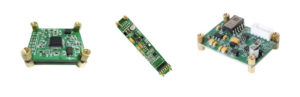
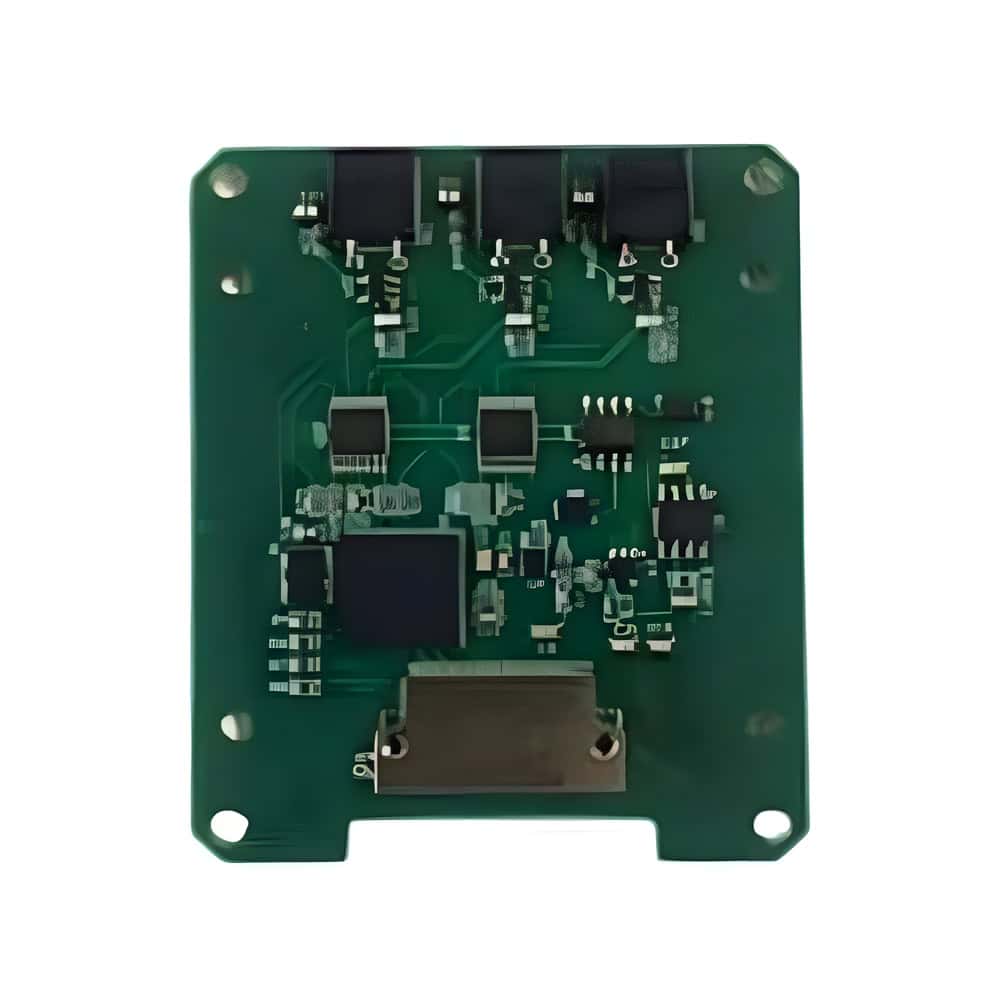
Single-Board Tilt Sensors by Micro Magic.
The company also supplies single-board sensors for integration into customer systems. For applications such as bridges and dams, Micro Magic offers wireless tilt sensors powered by lithium batteries and available with Bluetooth or Zigbee transmission options. These solutions help avoid wiring constraints in challenging environments.
Conclusion
MEMS tilt sensors provide an efficient method for local angle monitoring in bridge structural health management. Their use in applications such as pier tilt, bearing rotation, girder deflection, and tower stability makes them suitable for long-term, large-scale deployment. As sensor performance advances and data processing techniques develop, tilt sensing is expected to play an increasing role in bridge monitoring.