Advanced Navigation highlights how cost-effective all-band GNSS/INS is reshaping positioning performance in mining, addressing persistent challenges related to accuracy, reliability, and operational efficiency. Read more >>
By integrating all-band GNSS technology with inertial navigation systems, Advanced Navigation enables more consistent and resilient localization for modern fleet operations.
Improving Positioning Reliability Across Mining Operations
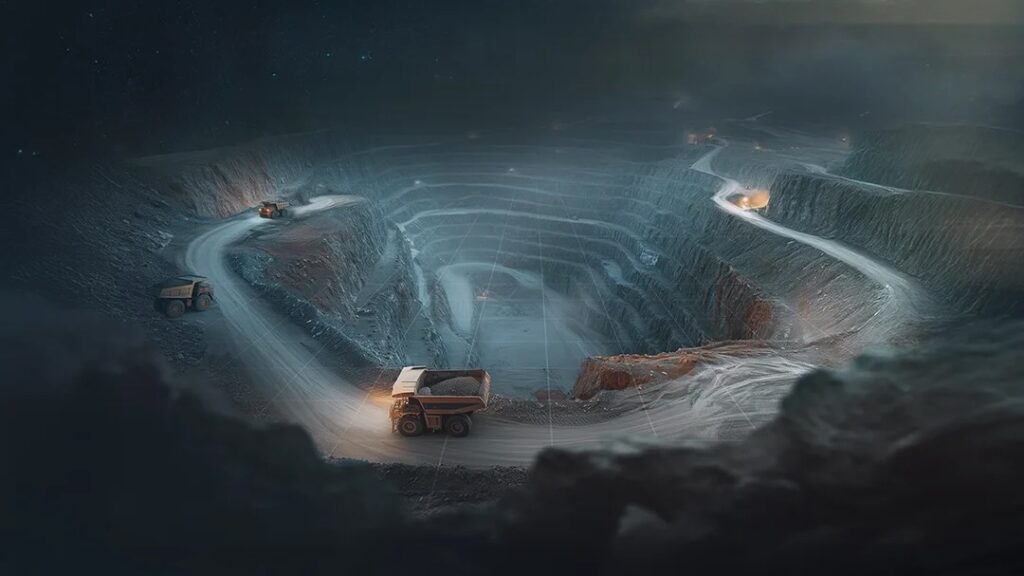
Sustained productivity in mining operations depends heavily on accurate and continuous positioning data delivered through Global Navigation Satellite System technologies. Applications such as autonomous haulage, machine guidance for excavators and dozers, and fleet management systems all rely on dependable localization of mobile assets.
When positioning becomes inconsistent, operational efficiency is directly affected. Loss of RTK lock, intermittent signal availability, or degraded accuracy can disrupt critical processes. For example, autonomous haul trucks may struggle to align precisely under loading equipment, while inconsistencies in vehicle positioning can compromise material tracking and reduce confidence in operational data.
Many fleet management and dispatching platforms continue to depend on GNSS-only configurations, often based on dual-band L1/L2 receivers. While historically cost-effective, these systems are increasingly challenged by the complexity of modern mining environments. Even when supported by RTK corrections, dual-band solutions can lack the robustness required for consistent, high-accuracy performance.
All-Band GNSS/INS as a Scalable Solution
Advanced Navigation addresses these limitations by combining its established inertial navigation system technology with cost-effective all-band GNSS capabilities. This approach enables simultaneous access to multiple constellations and frequencies, including modernized signals such as L6 and E6.
The integration of inertial sensing with access to additional GNSS frequencies and constellations enhances both positioning accuracy and system resilience. In addition to improved satellite signal utilization, the system delivers real-time vehicle motion and orientation data, supporting more reliable navigation even in challenging conditions.
All-band GNSS has traditionally been associated with high-end, survey-grade equipment due to cost constraints. However, recent advancements have made it more accessible, allowing mining operations to adopt higher-performance positioning without the need for extensive infrastructure investments.
Enhancing Consistency and Reducing Infrastructure Dependence
The transition from dual-band to all-band GNSS provides incremental improvements in accuracy, while significantly increasing consistency and reliability. With access to a broader set of signals, RTK solutions can achieve fixed solutions more quickly and maintain them more reliably, improving overall RTK availability.
In addition, modernized signals such as L6 and E6 enable high-accuracy positioning under clear sky conditions without requiring local RTK base stations or subscription-based correction services in certain scenarios. These capabilities can deliver accuracy levels comparable to earlier RTK-based configurations.
This increased reliability supports comprehensive asset tracking across the entire mining operation. Accurate records of loading and unloading locations enable improved material traceability, which is essential for monitoring ore grades and ensuring efficient processing workflows.
Scalable Solutions for Fleet Integration
Advanced Navigation provides a range of all-band GNSS-enabled inertial navigation systems designed to support diverse mining applications.
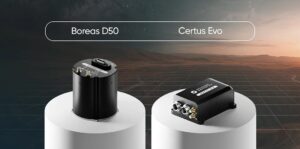
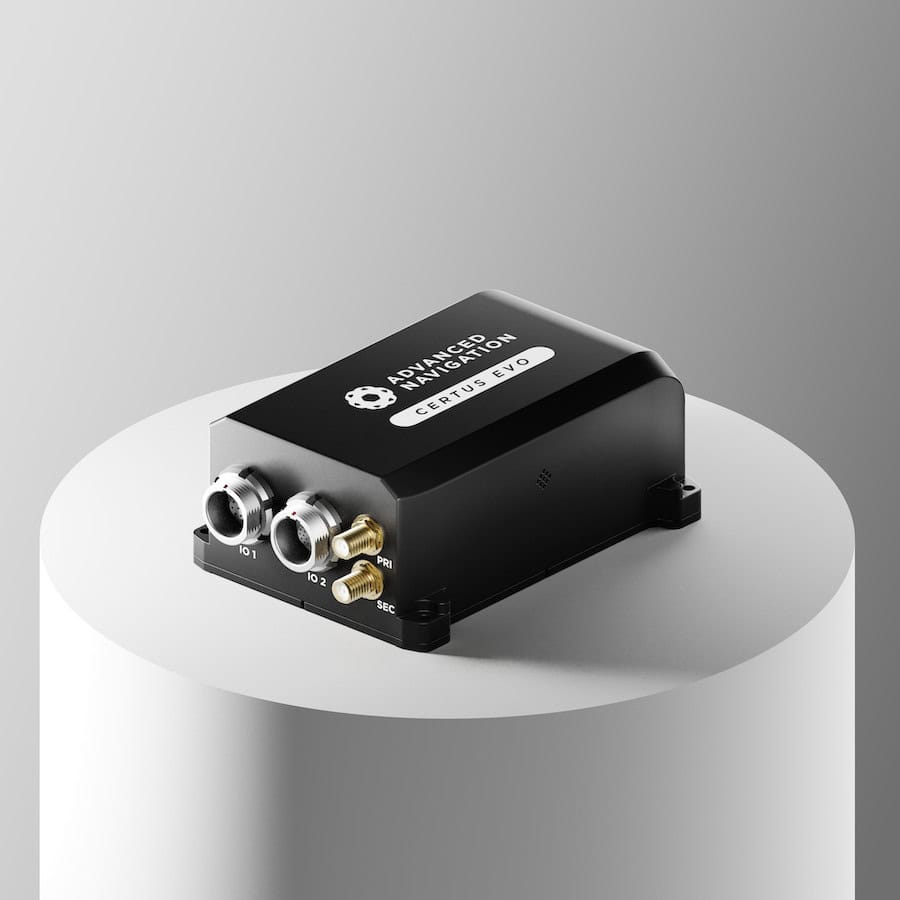
Certus Evo
Certus Evo is a compact MEMS-based INS developed for integration across a wide variety of mining vehicles. It supports both autonomous and crewed operations, making it suitable for environments where different types of equipment must operate in close coordination.
With a low size, weight, power, and cost profile, Certus Evo can be integrated into existing fleets with minimal disruption. Its design supports efficient retrofitting, reducing installation time and avoiding the need for extensive vehicle modifications.
Boreas D50
For more demanding applications, such as autonomous haulage in environments where GNSS performance may be degraded, the Boreas D50 fiber-optic gyro INS provides enhanced resilience.
The system supports accurate north-seeking and extended dead-reckoning capabilities, maintaining reliable positioning even during complete GNSS outages. This ensures that critical operations can continue with minimal interruption, even in challenging signal conditions.
Supporting the Next Generation of Mining Efficiency
The adoption of cost-effective all-band GNSS/INS solutions represents a shift in how positioning data is utilized across mining operations. Rather than being a source of uncertainty in challenging conditions, positioning systems can become a dependable foundation for operational decision-making.
By improving localization accuracy, increasing system reliability, reducing reliance on RTK base stations and subscription-based correction infrastructure, and helping to avoid vendor lock-in, Advanced Navigation’s all-band GNSS/INS solutions support more efficient fleet management and enhanced asset visibility.
This approach enables mining operators to optimize dispatching, improve material tracking, and achieve greater overall operational efficiency without compromising safety or scalability.