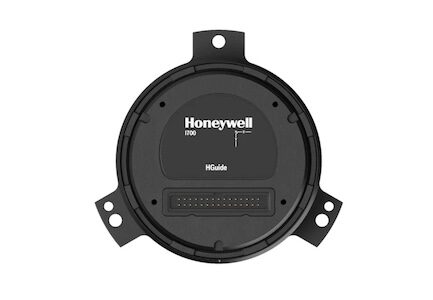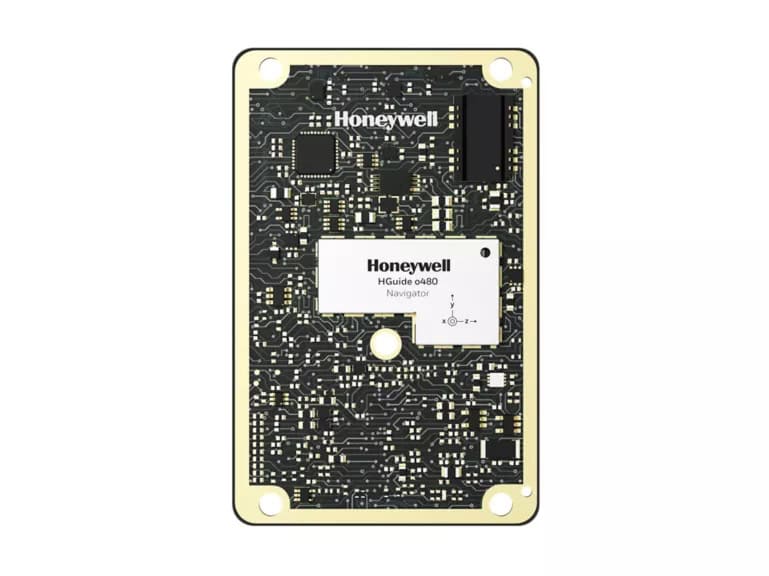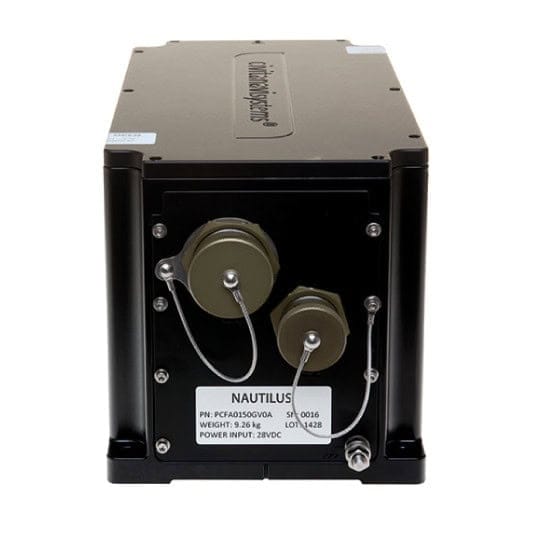
Honeywell Aerospace’ ONEBOX represents a major step forward in integrated avionics, combining advanced processing, robust navigation, and compact design to meet the demanding needs of modern unmanned and emerging air mobility platforms.
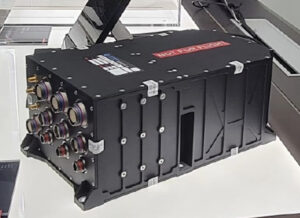 This Q&A with Dario Donati, Senior Engineering Manager at Italian company Civitanavi Systems by Honeywell Aerospace, explains how the system unifies multi-core computing, high-integrity inertial sensing, and cybersecurity within a single compact unit, while maintaining performance even in GNSS-denied environments.
The interview also explores how ONEBOX streamlines integration, adheres to assurance best practices, and is evolving to support higher levels of automation and future AAM requirements.
1. How does ONEBOX combine multi-core processing, partitioning, and high-integrity navigation in one system?
In the ONEBOX system we applied the concept of Integrated Modular Avionics to a multi-core processing unit that allows to have fully time and spatial segregation between the software applications that run on the available processor’s cores, even with different design assurance levels. This is possible thanks to an appropriate ARINC653 compliant Real Time Operating system that takes care of the application scheduling while ensuring segregation between the various software applications. Concerning the navigation integrity, the ONEBOX features a proprietary temperature compensation, filtering and Fault Detection and Exclusion software that leverages the huge experience of Civitanavi Systems on inertial FOG units for obtaining the same integrity and performance offered by three separate 6DoF IMUs from the skew redundant five axis inertial sensor unit that is installed within the ONEBOX chassis.
2. How does ONEBOX maintain navigation accuracy in GPS/GNSS‑denied or jammed environments?
GNSS denied or jammed environment are challenged by ONEBOX thanks primarily to the high inertial coasting performances of its sensor unit (<0.7NM/h, after GNSS lost) and by the presence of a Chip Scale Atomic Clock (CSAC) that is used for keeping very accurate timing for long periods without GNSS, and to improve the GNSS spoofing detection capability already included in the unit. To complete ONEBOX capabilities in GNSS denied environments, an optional Vision Based Navigation module is also available that needs the installation of an additional software application and an external equipment to have GNSS-like navigation performance in most of the conditions.
3. How does ONEBOX balance size, weight, power, and integration speed for unmanned platforms?

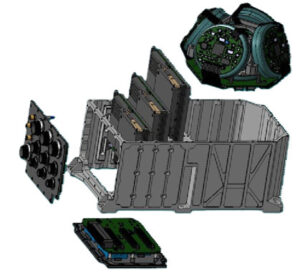
ONEBOX integrates three separated computing lanes, and five axes skew redundant inertial sensor unit, with each axis fully autonomous by the other ones. Each computing lane includes dual redundant power supply module able to supply the skew redundant sensor unit, an I/O mezzanine card that can be configurable in order to meet different I/O needs, and a powerful, yet compact and low power, System-on-Chip module.
The whole system is packaged in an efficient and thermal effective way so that, thanks to the embedded software for sensor fault detection and exclusion and the high speed synchronization and data interchange link between the computing lanes, offers the same redundancy of three separate Inertial Measurement Units (IMU) and three Vehicle Management Systems (VMS) in a box that has size weight and power comparable to what required by a single IMU plus VMS. System integration in unmanned platforms is therefore facilitated by its compactness and the adoption of the Integrated Modular Avionic approach. This allows using only redundant digital busses for interconnecting the related peripherals, while standard software interfaces and a development toolkit supplied with the unit, allows easily integration of customer developed applications also re-using already available legacy code.
4. How are cybersecurity and software/hardware assurance implemented?
Cybersecurity features in ONEBOX concern both the possibility to detect and mitigate GNSS spoofing attacks from external devices, and includes some countermeasures directly related to the unit security. GNSS spoofing detection leverage the presence of both Chip Scale Atomic Clock and the high accurate IMU revealing even very sophisticated cyber-attacks. GNSS spoofing mitigation is then performed using IMU only and the Vision Based Navigation module if present. Moreover, specific security features of each processing board are related to the presence of an embedded Configuration Security Unit (CSU) in the System-on-Chip module that is in charge of encrypting/decrypting memory data and of detecting tentative of security violation during boot, programming, software execution (i.e. access to memory) and tentatives of reset.
Concerning the software and hardware assurance level, the current unit design has not actually followed any HW and SW certification process. However, the current design has taken into account as much as possible the best practices derived from certified designs compliant to RTCA/DO-178C and RTCA/DO-254, up to Design Assurance Level A, so that it is expected to not incur to major re-design activities and/or showstopper when performing the certification process.
5. How will ONEBOX evolve for Advanced Air Mobility and high-autonomy applications?
The SWaP-C, features, safety, security and I/O capabilities of ONEBOX have been already designed keeping in mind the key avionic requirements of electrical Air Mobility Vehicles, either manned or unmanned. The planned evolution concerns mainly the possibility of obtaining adequate certifications for being used in Air Mobility applications and in adding the possibility to have optimized hardware parallel resources (i.e. neural processors) allowing to host also Artificial Intelligence modules, more easily than in the current architecture.