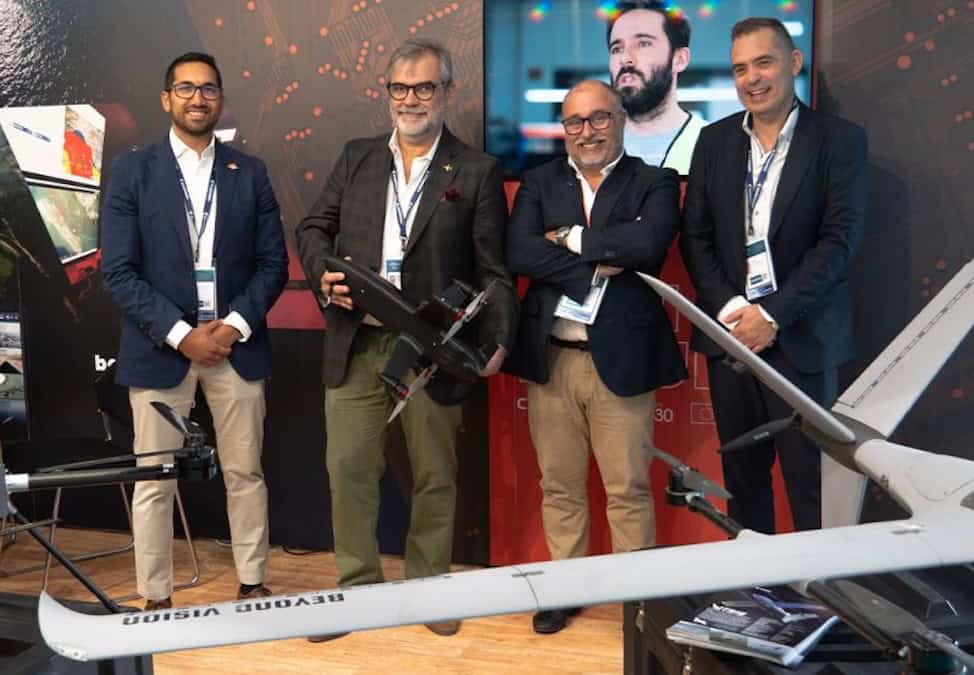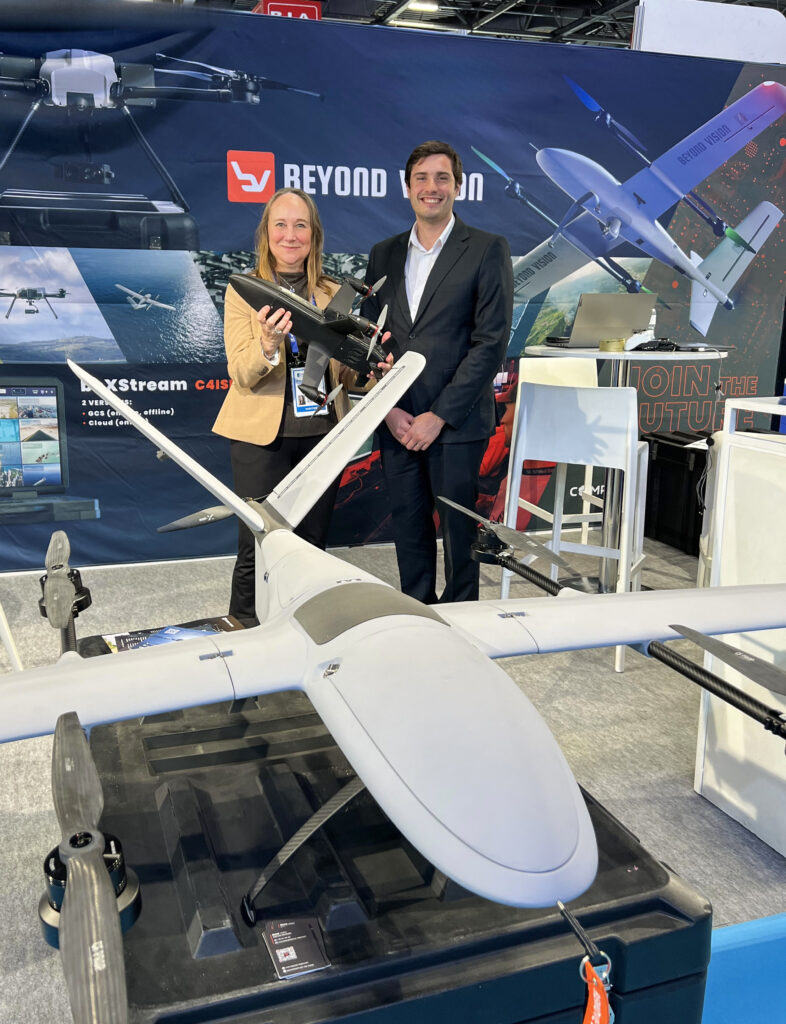




Beyond Vision participated in the European Defence Agency’s first Operational Experimentation Campaign (OPEX), held in Italy during the summer of 2025. Conducted under the framework of the Hub for European Defence Innovation (HEDI) and hosted by the Italian Army at advanced training sites including CEPOLISPE near Rome, the campaign provided a platform to assess autonomous systems in realistic military environments.
The initiative was designed to accelerate the adoption of unmanned technologies for cross-domain logistics, medical evacuation, and reconnaissance. To achieve this, the procurement process organized the campaign into seven technology categories: Low-Cost Attritable UAS, VTOL UAS, Heavy Lift VTOL UAS, Low-Cost Attritable UGS, Medium Wheeled UGS, Medium Tracked UGS, and the OPEX Support Team.
All systems selected were required to demonstrate a Technology Readiness Level of at least 5 and undergo structured field testing. The campaign was structured into three phases: preparation and readiness checks, live operational experimentation in June and July, and an assessment phase intended to inform future EU defense policy and procurement planning.
Beyond Vision’s Role in the Campaign
Beyond Vision participated in the Low-Cost Attritable Unmanned Aerial Systems (UAS) category. This lot was dedicated to assessing small, cost-effective aerial platforms capable of transporting payloads under 10 kilograms. The objective was to examine how affordable UAVs could be deployed in distributed logistics networks to enable agile and scalable resupply operations in contested or hard-to-reach areas.
UAV Systems Presented
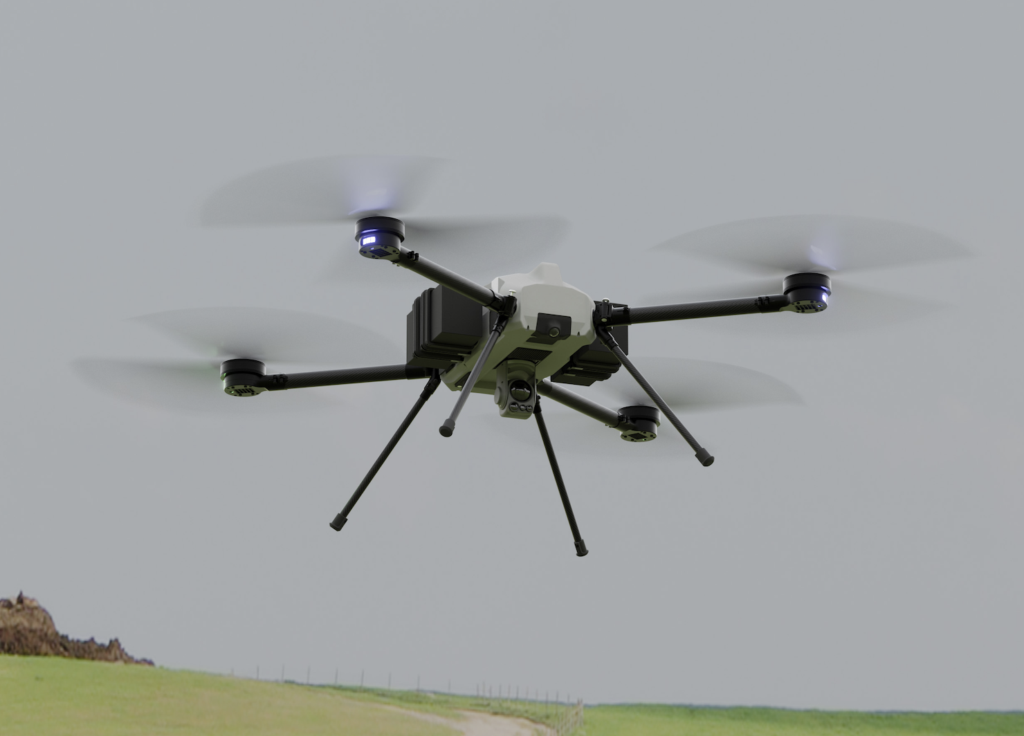
The company participated in the campaign with two established platforms: the BVQ418 and the VTOne.
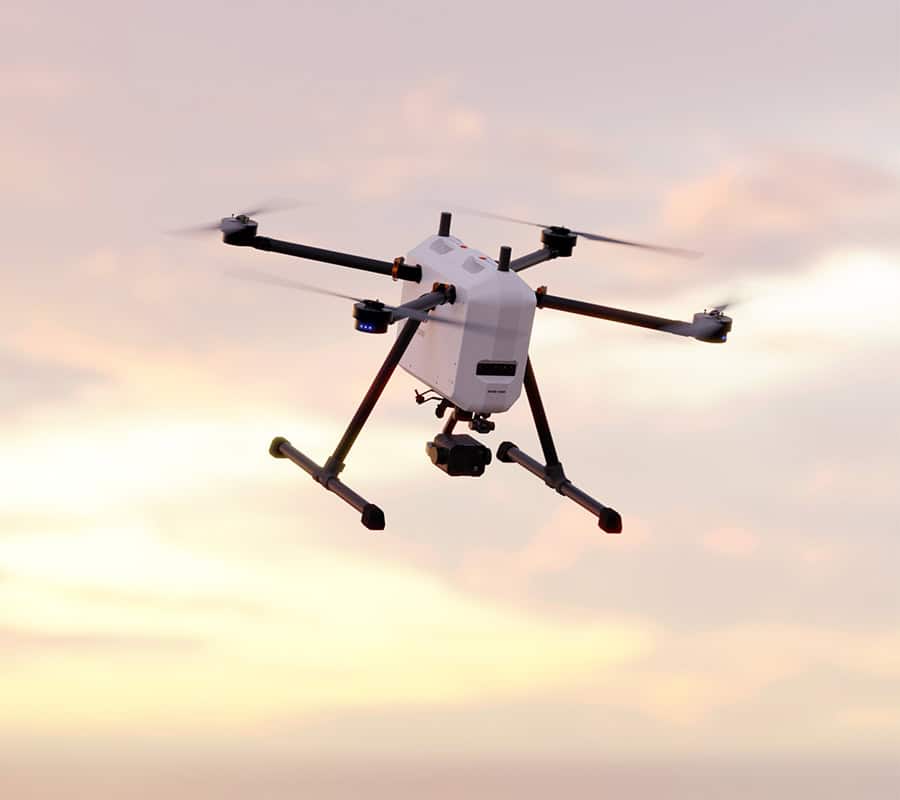
- BVQ418: A fully electric Class 3 quadcopter UAV, designed for portability and modular payload integration. It supports up to 7 kilograms of cargo, with a flight endurance of up to 90 minutes. The system incorporates AI-driven autonomous navigation and can carry a variety of payloads, including cargo modules and sensors for real-time monitoring.
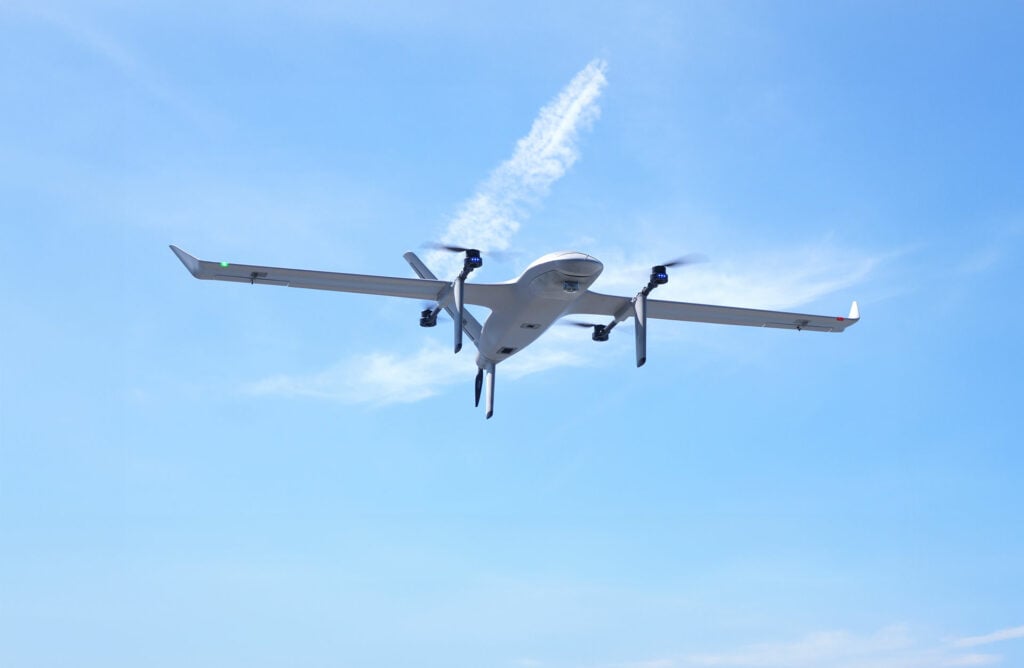
- VTOne: A fixed-wing hybrid quadcopter designed for vertical take-off and landing. With a range of 300 kilometers and a payload capacity of 2 kilograms, VTOne is suited for long-distance delivery and intelligence, surveillance, and reconnaissance missions.
Both UAVs are integrated into beXStream, Beyond Vision’s cloud-based command and asset management platform, which provides mission planning tools, secure communications, and live telemetry. Key operational capabilities intended for evaluation included autonomous landing in confined or mobile locations as small as 5 × 5 meters or on vehicles moving at up to 15 knots, direct drone-to-drone communication for coordination in low-connectivity environments, and the use of spotter drones for obstacle detection and route optimization. Payloads such as LiDAR and modular transport boxes were also employed.
All systems presented were at Technology Readiness Levels 7–9, indicating advanced development and prior use in both civilian and defense contexts.
Team Expertise
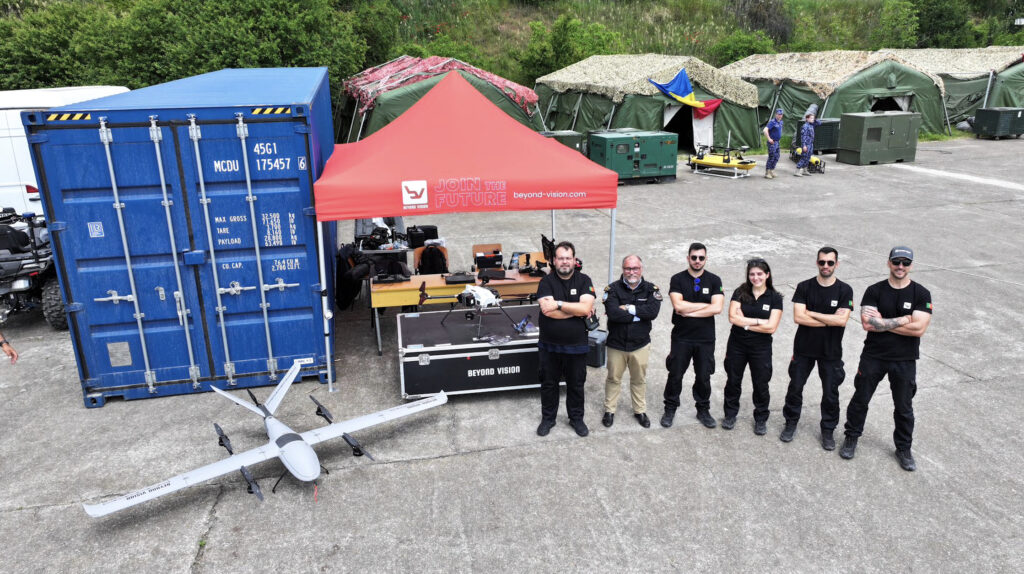
Beyond Vision’s participation was supported by a multidisciplinary team combining academic expertise and operational experience. The project was led by Dário Pedro, CEO of Beyond Vision, who holds a PhD in Artificial Intelligence and specializes in UAV applications. Duarte Alemão, R&D Project Manager, brought expertise in robotics and EU-funded innovation projects. UAV flight operations were supported by Pedro Santos, an experienced UAS pilot with operational background in the Portuguese Navy and Air Force.
Additional technical contributions were provided by engineers Duarte Correia, João Mendes, and Rodrigo Carvalho, with skills spanning systems integration, ROS-based control, and signal processing.

Campaign Objectives
The OPEX campaign provided Beyond Vision with the opportunity to test its UAVs under operational conditions within a European defense framework. The intended aims of the company’s participation included:
- Validation of system performance in logistics scenarios, including endurance, payload handling, and autonomy.
- Demonstration of interoperability with European situational awareness and command tools such as ATAK.
- Evaluation of swarm-based logistics concepts and multi-platform coordination using the beXStream platform.
- Contribution to the development of regulatory and operational benchmarks for unmanned logistics in Europe.
Conclusion
By contributing to the Low-Cost Attritable UAS category of OPEX, Beyond Vision took part in Europe’s effort to evaluate emerging technologies for defense logistics. The campaign was designed as a step toward aligning industrial innovation with future operational requirements, supporting the European Defence Agency’s goal of accelerating the integration of autonomous systems across military domains.