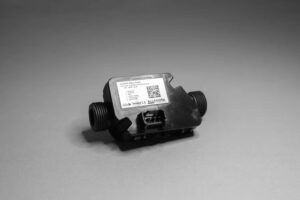

Showcase your capabilities
If you design, build or supply Coolant Flow Sensors, create a profile to showcase your capabilities and connect with visitors who have an active requirement for your solutions.




Coolant flow sensors measure liquid circulation through thermal management circuits in UAVs, UGVs, USVs, AUVs, ROVs, and other unmanned platforms. They support cooling for engines, batteries, motors, power electronics, avionics, computing systems, and mission payloads by providing flow-rate or circulation-status data to vehicle controllers.
This page features suppliers of coolant flow meters and sensors, including ultrasonic, turbine, Hall-effect, paddlewheel, vortex, thermal, and electromagnetic sensor designs.
Read the Technology Overview
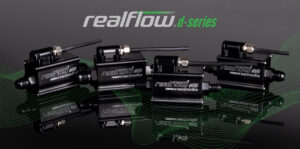
High-Accuracy Ultrasonic Fuel Flow Meters for UAVs | Real-Time UAV Fuel Monitoring

If you design, build or supply Coolant Flow Sensors, create a profile to showcase your capabilities and connect with visitors who have an active requirement for your solutions.

Coolant flow sensors measure the movement of liquid through thermal management circuits used to regulate engines, batteries, power electronics, propulsion systems, avionics, and mission equipment. In unmanned platforms, reliable coolant monitoring can help control systems confirm that pumps, valves, heat exchangers, and cold plates are operating as intended.
A coolant flow meter may provide continuous flow-rate data or simply detect whether circulation remains within a defined operating range. Depending on the platform architecture, sensor output can be transmitted to a vehicle controller, flight computer, engine control unit, or dedicated coolant monitoring system using pulse, analog, frequency, or digital interfaces. Compact inline designs are particularly useful where installation space, weight, electrical power, pressure drop, and hydraulic losses must be tightly controlled.
Ultrasonic coolant flow sensors determine flow by measuring the behavior of acoustic signals transmitted through the liquid. Transit-time designs compare the travel time of sound moving with and against the flow direction, allowing velocity and volumetric flow to be calculated without placing rotating components in the fluid stream. Their lack of moving parts can reduce mechanical wear and flow restriction, although bubbles, installation geometry, and fluid acoustic properties can influence measurement performance.
Turbine sensors place a small rotor in the coolant stream and determine flow from its rotational speed. A Hall-effect device can detect the passage of magnetic rotor elements and generate a pulse frequency proportional to flow rate. This approach is well suited to compact inline coolant flow meter designs, but bearings and other moving components may be affected by contamination, long-term wear, or highly viscous fluids. Pressure drop through the sensor should also be considered when available pump head is limited.
Paddlewheel sensors use a rotating impeller positioned partly or fully within the coolant stream. The rotation rate is converted into an electrical signal that corresponds to fluid velocity and, after calibration for the flow passage, volumetric flow. Paddlewheel devices can provide a relatively simple means of coolant monitoring, although installation orientation, deposits, particulate contamination, and low-flow behavior should be considered.
Vortex sensors introduce a bluff body into the flow path and measure the vortices generated downstream. Within the sensor’s specified operating range, vortex shedding frequency corresponds to fluid velocity and can therefore be used to calculate flow rate. These sensors contain no rotating measurement element, but they require sufficient flow velocity and an appropriate Reynolds number to establish a stable vortex pattern, which can limit performance at very low flow rates.
Thermal flow sensors measure changes in heat transfer caused by coolant moving across a heated sensing element. Their solid-state construction can suit compact and low-maintenance installations where moving parts are undesirable. Performance depends on the thermal properties of the coolant, so calibration and temperature compensation are important when coolant composition or operating temperature varies substantially. Electromagnetic flow sensing can also be used with sufficiently conductive water-based coolants, providing measurement without a rotating sensing element, although it is unsuitable for nonconductive dielectric fluids and many oils.
Internal combustion engines require controlled coolant circulation to transfer heat from engine components to a radiator or other heat exchanger. Electric and hybrid propulsion systems may also circulate coolant through motors, inverters, generators, and associated power electronics, while fuel cell systems require carefully managed thermal conditions. Flow sensing helps verify circulation and can provide an early indication of pump degradation, blockage, leakage, or restricted coolant passages.
High-energy batteries and power conversion equipment can generate substantial heat during high-load operation and charging. Liquid-cooled systems may route coolant through cold plates or channels adjacent to cells, modules, inverters, and motor controllers. A flow meter for coolant allows the control system to correlate thermal performance with actual circulation and identify inadequate flow before component temperatures exceed permitted limits.
High-performance processors, sensor payloads, radar electronics, communications equipment, and other mission systems can require liquid cooling when passive or air-based methods cannot remove sufficient heat. Coolant flow data can be integrated with temperature measurements to verify heat-removal performance and support adaptive control of pumps or valves. This can be particularly important in densely packaged Unmanned Aerial Vehicles (UAVs), where thermal capacity and available airflow vary during flight.
Unmanned Ground Vehicles (UGVs) may use liquid cooling for combustion engines, electric drivetrains, batteries, power converters, computers, and sensor suites. Their cooling systems can be exposed to dust, vibration, shock, steep vehicle attitudes, and wide temperature variations. A rugged coolant flow sensor can help maintain visibility into circulation where restricted flow or component degradation would otherwise be difficult to detect during autonomous operation.
Unmanned Surface Vessels (USVs), Autonomous Underwater Vehicles (AUVs), and Remotely Operated Vehicles (ROVs) may use closed-loop coolant circuits to transfer heat away from propulsion electronics, batteries, computing systems, and subsea instruments. Sensors intended for these platforms must be selected with attention to corrosion, sealing, internal system pressure, external pressure exposure, fluid compatibility, and packaging. Reliable flow feedback is especially valuable when the vehicle has limited opportunities for manual inspection during a mission.
The coolant itself can materially affect sensor accuracy, service life, sealing, pressure drop, and calibration. Common media include:
Material selection should also consider seals, sensor housings, wetted surfaces, corrosion inhibitors, and possible changes in coolant chemistry throughout the service life of the platform.
Choosing an inline coolant flow meter involves more than matching the nominal pipe diameter. Important selection factors include:
Sensor accuracy should ultimately be assessed as part of the complete cooling system. Plumbing geometry, pressure drop, air entrainment, pump pulsation, temperature variation, installation orientation, electrical noise, and signal processing can all influence measurement uncertainty and the quality of the reported flow measurement.


 Searching Companies & Products


 Subscribe to the Weekly eBrief
The latest engineering and technical developments straight to your inbox - join thousands of engineers who receive it.
Subscribe to the Weekly eBrief
The latest engineering and technical developments straight to your inbox - join thousands of engineers who receive it.