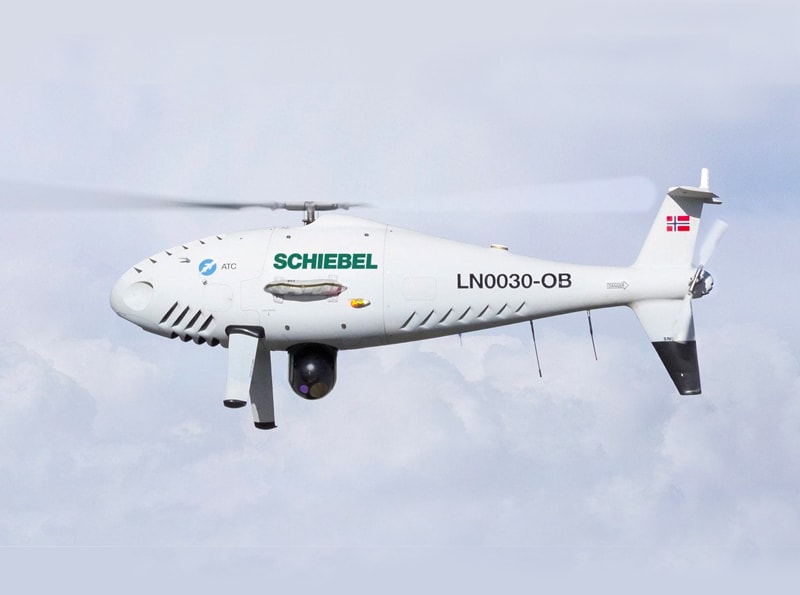
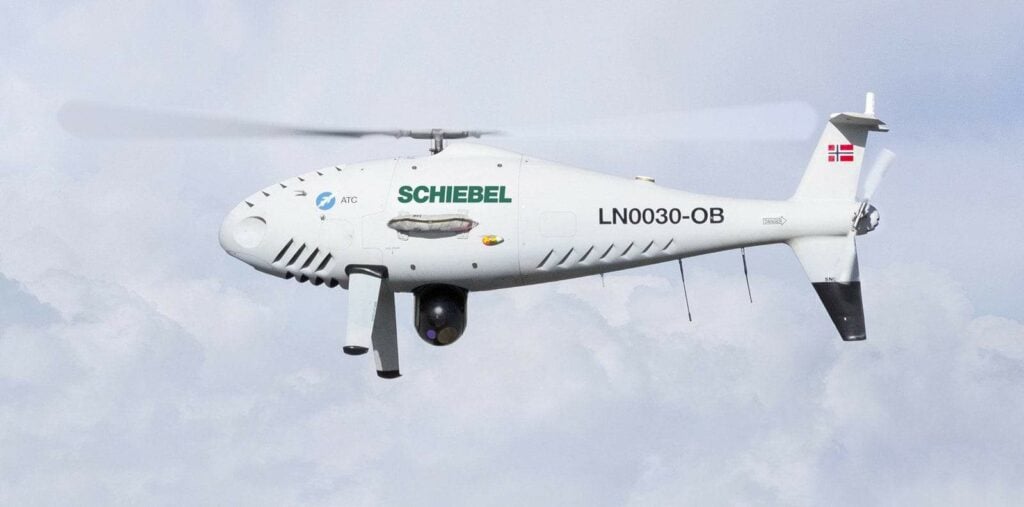
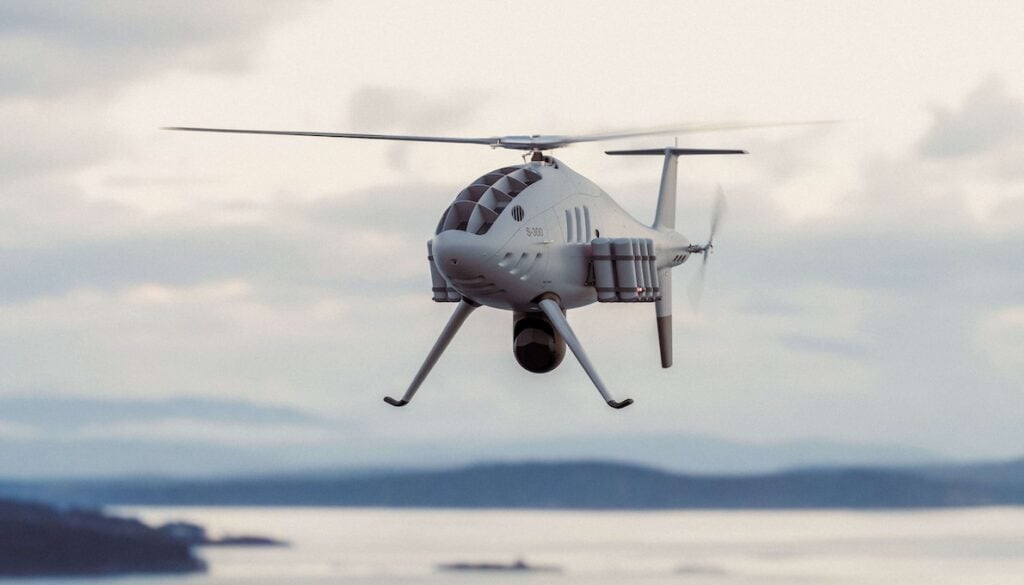
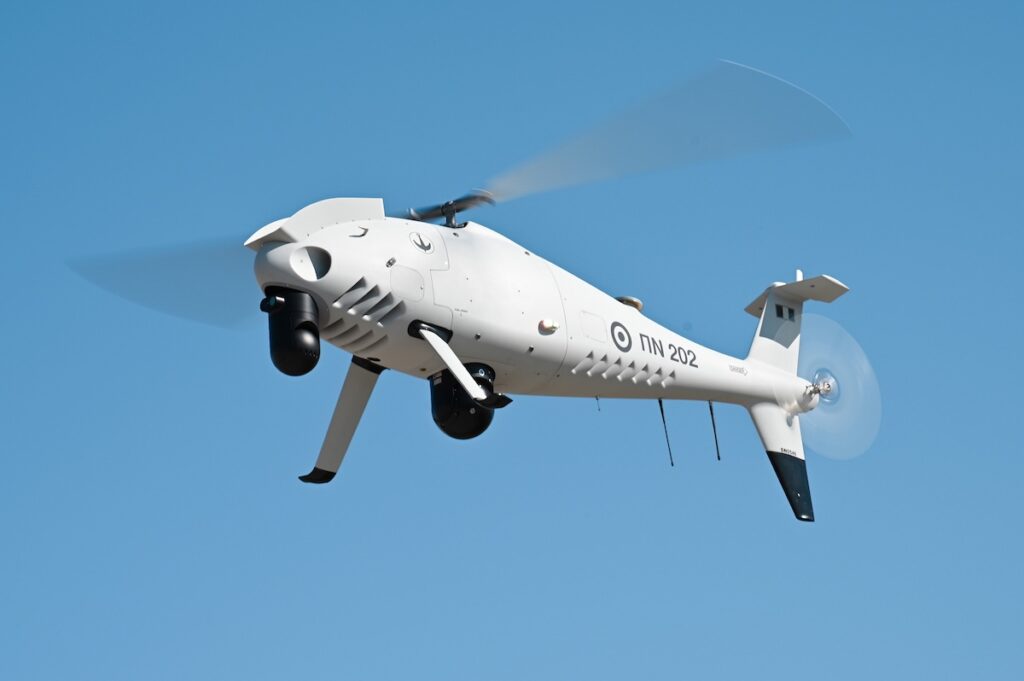
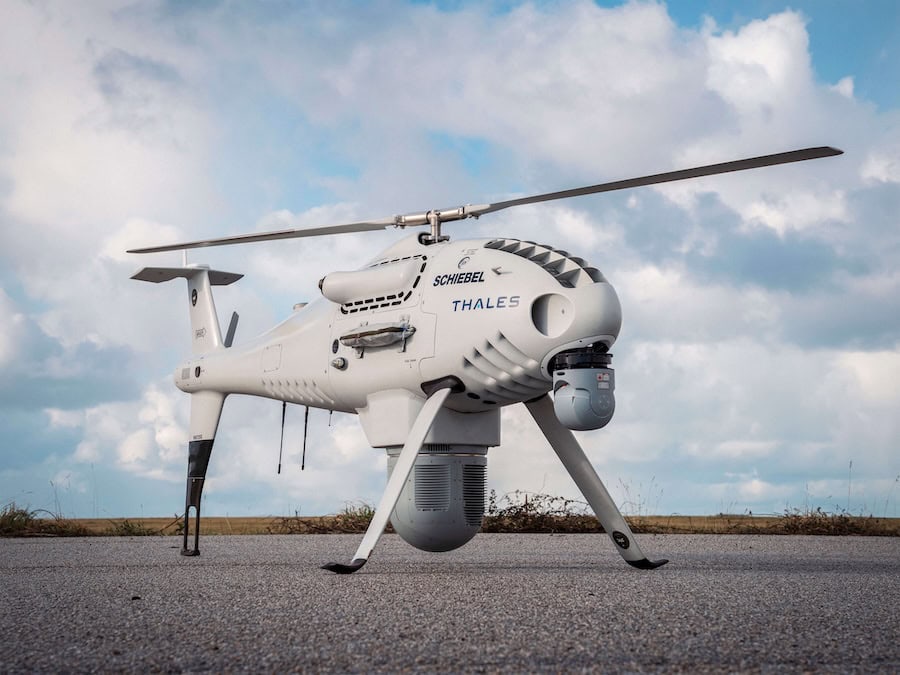
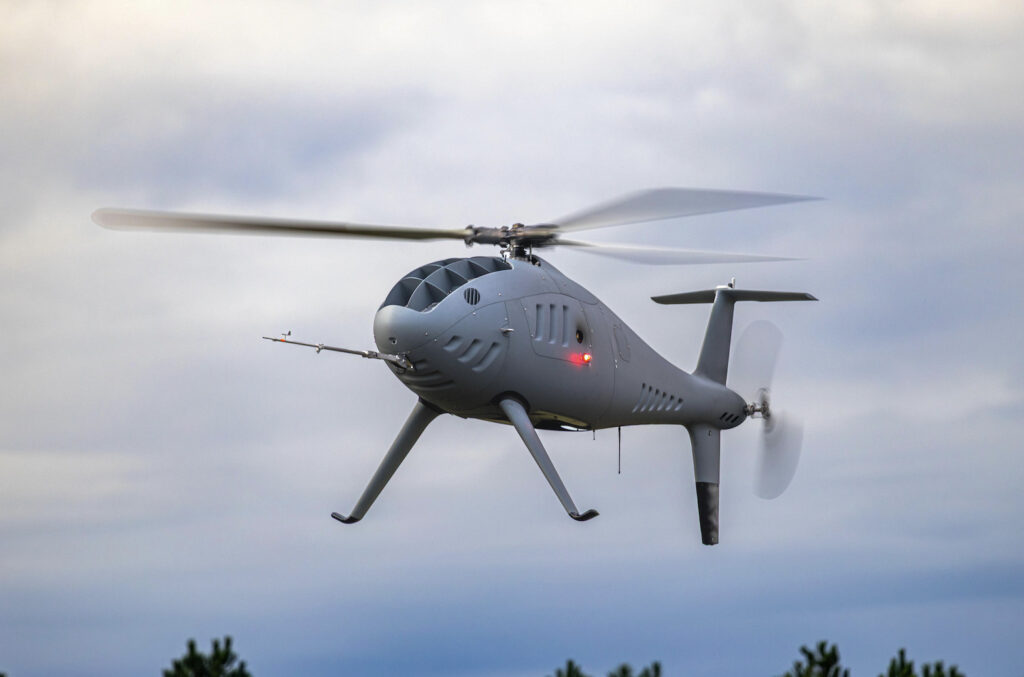
Schiebel‘s CAMCOPTER S-100 Vertical Take-Off and Landing Uncrewed Aerial Vehicle (VTOL UAV) demonstrated its operational versatility during NATO’s annual Robotic Experimentation and Prototyping using Maritime Uncrewed Systems (REPMUS) exercise, hosted by the Portuguese Navy.
The VTOL UAV flew multiple missions carrying advanced sensors, communication links, and AI-assisted data fusion modules, underscoring its role as a multi-mission asset designed for integration into naval combat systems within complex maritime environments.
A key integration was the CRFS RFeye Node 100-18 LW, a high-fidelity radio frequency intelligence sensor. This sensor, installed on the S-100, is designed to capture spectrum activity up to 18 GHz and collect I/Q data, enabling geolocation in contested electromagnetic conditions and delivering real-time Signals Intelligence (SIGINT).
The exercise also featured the Akheros Skylock module, which implements NATO’s Defence Innovation Accelerator for the North Atlantic (DIANA) Artificial Intelligence (AI) framework. This integration enabled in-flight data analysis, telemetry ingestion, and the detection of irregularities via onboard AI-driven analytics.
Interoperability with the emerging STANAG 4817 protocol was showcased through integration with Thales’ Tacticos combat management system. This allowed operators to directly task and control the CAMCOPTER S-100 from the Tacticos console, enabling true mission tasking and reporting beyond simple data exchange. The cooperation with Thales aims to harmonise command and control across domains, allowing uncrewed systems (UAS, USVs, and UUVs) to be managed under a shared NATO framework.
Hans Georg Schiebel, Chairman of the Schiebel Group, stated, “REPMUS is the ideal environment to validate the S-100’s operational flexibility in partnership with leading industry innovators. From AI-driven analytics with Akheros and multi-domain interoperability testing with Thales, to RF intelligence gathering and advanced bathymetric LiDAR mapping, the CAMCOPTER S-100 continues to prove why it is the trusted VTOL UAS of choice for naval operations worldwide.”
In addition to these integrations, the CAMCOPTER S-100 was demonstrated with a series of other capabilities. In partnership with U.S. company Areté, the S-100 carried the Pushbroom Imaging LiDAR for Littoral Surveillance (PILLS) Next Generation System (PNGS). This technology doubled performance from the legacy 60 Hz to 120 Hz, delivering enhanced bathymetric and obstacle detection.
The system was successfully launched and recovered from a Portuguese Offshore Patrol Vessel. The platform also carried the Oceanwatch PT-8 maritime surveillance sensor, designed to autonomously detect small objects across wide areas of the ocean surface.