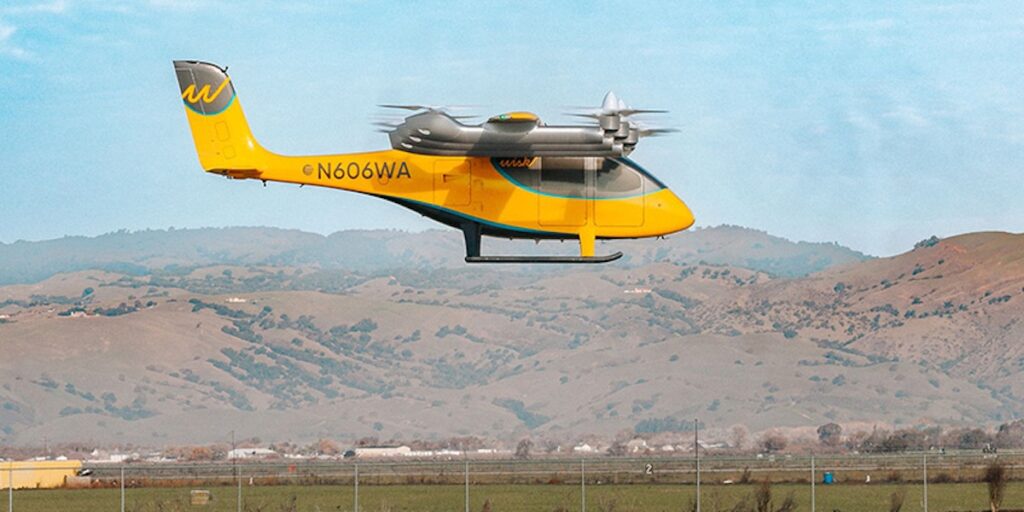

Researchers at Mississippi State University’s Raspet Flight Research Laboratory are flying Aurora Flight Sciences drone, SKIRON-X, as part of a project designed to assist first responders.
The Raspet Flight Research Laboratory is leading a groundbreaking initiative to advance Unmanned Aircraft Systems (UAS) for emergency response operations Beyond Visual Line of Sight (BVLOS). Aurora Flight Sciences, a Boeing company, provided its Group 2 UAS, SKIRON-X, as the project’s test platform.
Jason Grzywna, Senior Director of Products at Aurora, said, “Working with MSU’s Raspet Flight Research Laboratory has been invaluable. Training the team to operate SKIRON-X was easy and they quickly became expert users. Their work toward BVLOS operations with SKIRON-X will optimize the user experience for future customers.”
Raspet Director Bryan Farrell, added, “This collaboration with Aurora has provided Raspet with the opportunity to test a cutting-edge UAS platform while working toward a solution that could make a real difference for first responders. Developing the safety case for BVLOS operations is a critical step in unlocking the full potential of UAS for public safety. As a FAA Part 107 compliant, long-endurance VTOL aircraft, the SKIRON-X, coupled with strategic and technical means of airspace deconfliction, greatly enable first responders to leverage the technology to achieve their mission.”
SKIRON-X combines the convenience of vertical take-off and landing with the extended endurance of fixed-wing flight. In its standard battery-powered configuration, the drone can stay airborne for up to 3.5 hours. Over the past few months, Raspet researchers have logged more than 30 flight hours with SKIRON-X, collecting detailed flight data and pilot feedback to refine the platform for first responders and BVLOS missions.
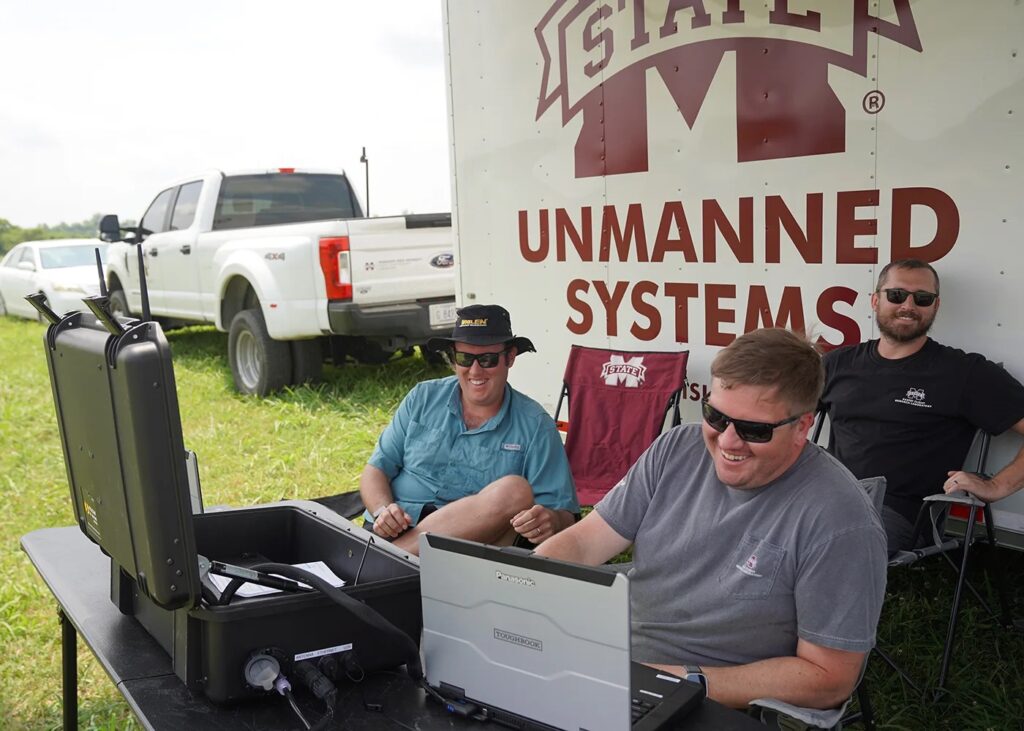
The project aims to support emergency responders by developing a process manual to guide them through the Federal Aviation Administration’s (FAA) BVLOS waiver process. Extending UAS operations beyond the flight crew’s visual line of sight can significantly enhance drone effectiveness during time-critical missions such as search and rescue. Raspet is demonstrating how UAS like SKIRON-X can safely and efficiently conduct these advanced operations.
Raspet will continue SKIRON-X flights through the end of October. The team plans to complete testing for the current project, submit its BVLOS waiver application, and conduct multiple SKIRON-X flights at events associated with FAA ASSURE, where Mississippi State University is recognized as a leading institution.