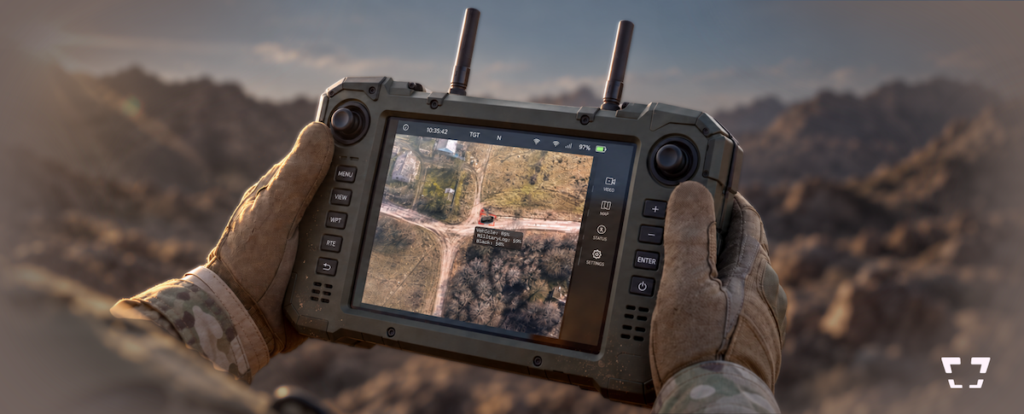
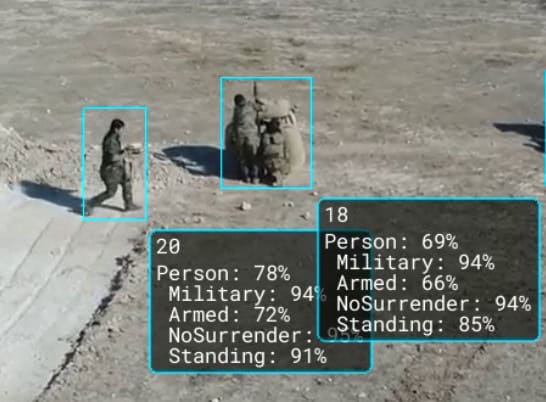
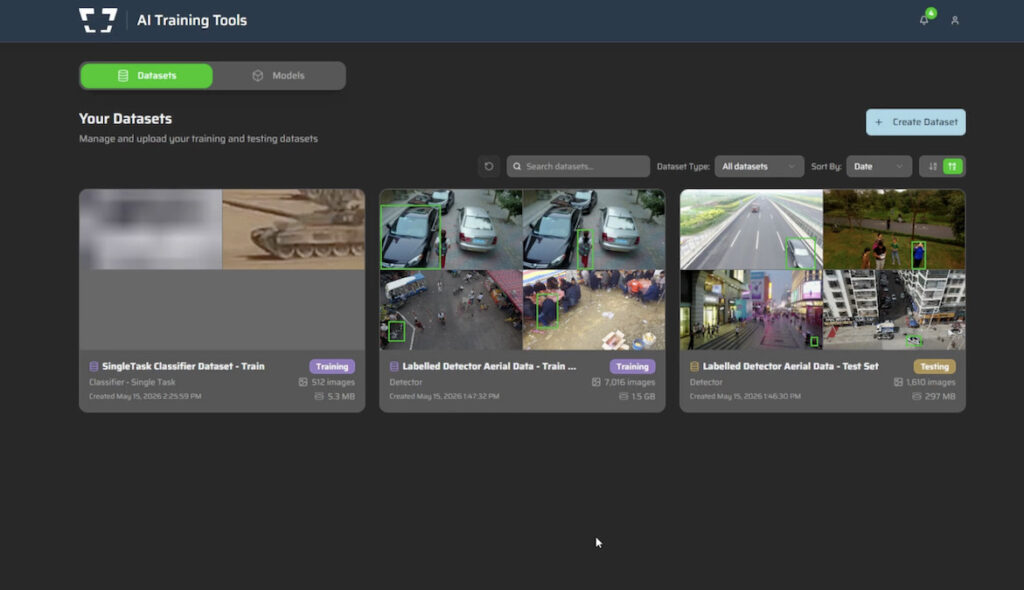
Sightline Intelligence outlines how machine learning systems for defense applications differ fundamentally from traditional rule-based software, emphasizing that performance is shaped by training data rather than predefined logic.
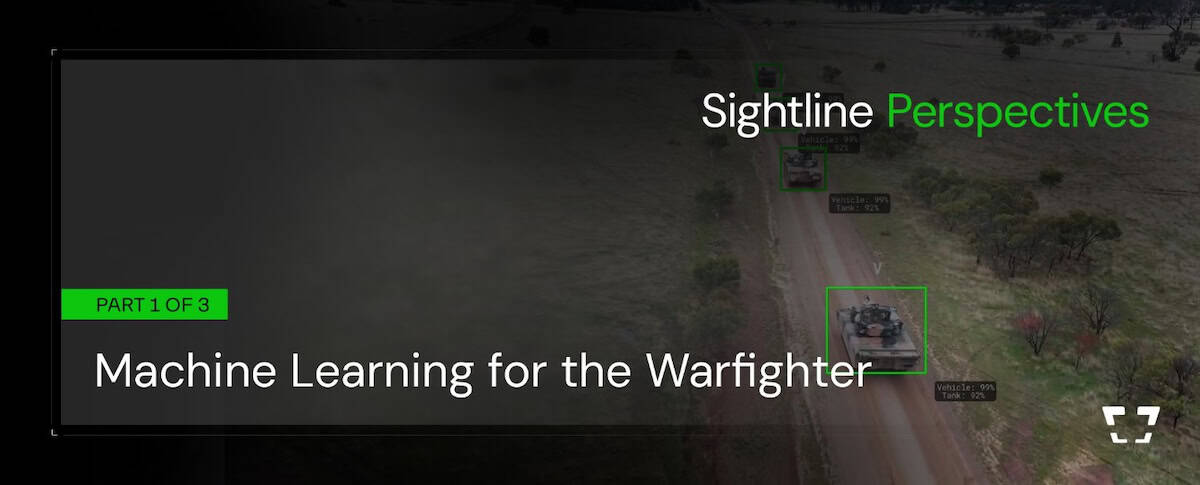
Computer vision models for detection and classification learn statistical patterns from labeled examples, meaning effectiveness is constrained by the diversity and quality of both training and test datasets. The test set defines a “confidence envelope,” where performance is reliable only under conditions represented in the data.
Variations in sensors, environments, weather, and operational perspectives introduce distribution shifts that can significantly impact results, particularly as deployments expand into new or evolving theaters.
Data Dependency & Generalization Limits
Domain specificity extends across sensor modalities, environmental artifacts, and mission contexts, limiting a model’s ability to generalize beyond what it has previously encountered. Even minor changes such as lighting conditions or camera differences can degrade performance, as demonstrated in testing scenarios where strong benchmark results do not translate to new inputs.
While comprehensive and diverse test sets help establish expected performance boundaries, they cannot fully account for rare edge cases or changing battlefield conditions. Ongoing monitoring, retraining, and system designs that anticipate unknown inputs are therefore essential to maintaining reliable performance as conditions evolve.
Metrics, Confidence & Evaluation
AI outputs require careful interpretation, particularly confidence scores, which indicate relative certainty rather than statistical probabilities of correctness. Common evaluation metrics such as precision, recall, and Mean Average Precision (mAP) provide insight into detection performance, but each reflects specific trade-offs and limitations.
For example, mAP can underrepresent small-object detection accuracy due to IoU sensitivity, and it evaluates performance at a single-frame level without capturing system-level effects. Capabilities such as multi-frame tracking and temporal filtering can improve overall performance beyond what base model metrics reflect.
Operational decisions must balance false positives against missed detections, with the appropriate threshold determined by mission requirements. Metrics are only as meaningful as the test data they are derived from, making representative evaluation datasets critical. These considerations become more pronounced in edge AI deployments, where limited compute, memory, and power require trade-offs in model size, capability, and robustness.
Architecture, Heuristics & Edge Reliability
System reliability is achieved through architecture rather than model performance alone. Multi-stage pipelines separate tasks into detection and classification, with initial detectors optimized for recall to identify regions of interest, followed by classifiers that refine object identification, including attributes such as object type or class. Heuristics such as size thresholds, motion constraints, temporal persistence, and spatial reasoning act as guardrails to reduce error propagation through the pipeline.
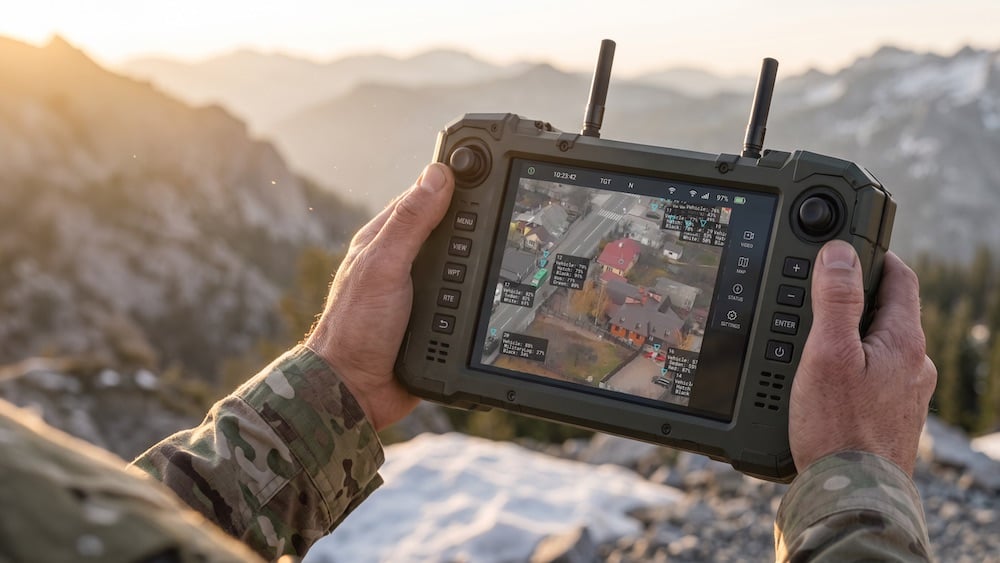
Out-Of-Distribution (OOD) detection adds a critical safeguard by identifying inputs that fall outside the model’s training distribution and rejecting them rather than forcing a classification. Implemented within Sightline Intelligence’s AiTR suite, this approach reduces false classifications, lowers cognitive load, and improves operator trust. Combined with efficient processing that concentrates compute where needed, these architectural strategies enable robust performance on edge AI systems operating within strict Size, Weight, and Power (SWaP) constraints.