MEMS Accelerometers
Discover cutting-edge solutions from 7 leading global suppliers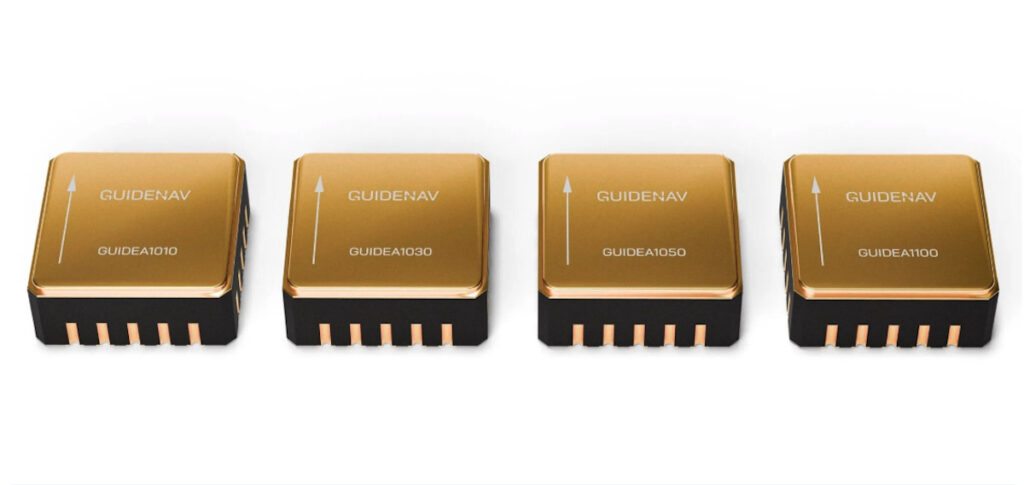
GuideNav, a developer of advanced inertial sensing and navigation systems, outlines the key considerations when choosing a MEMS accelerometer for mission-critical applications.
Small variations in drift, bandwidth, and shock endurance can influence guidance, control, and measurement performance, making device selection a system-level decision rather than a datasheet exercise.
What a MEMS Accelerometer Does
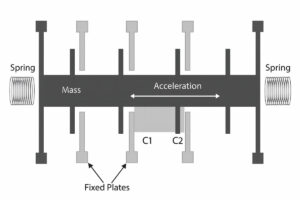
A MEMS accelerometer measures linear acceleration by detecting capacitance changes as a proof mass shifts within its microstructure. This allows capture of static and dynamic forces while maintaining compact size and low power draw. The approach supports integration into navigation units, flight-control systems, robotic platforms, and defense technologies requiring rugged sensing.
Specifications That Define Performance
Four parameters most directly shape accuracy and stability:
- Bias stability: Low drift, often below 50 micro g for navigation tasks, helps maintain long-term alignment.
- Noise density: Lower noise, such as values under roughly 100 micro g per root hertz, supports clear signal interpretation.
- Bandwidth: Fast-motion platforms frequently require bandwidths exceeding 1 kHz.
- Measurement span: Low-g units suit tilt and slow movement, while high-g versions support impact analysis.
Incorrect specification choices can propagate into degraded control or navigation quality.
Performance Under Harsh Conditions

Reliability depends on behavior under real-world loading rather than nominal ratings. Extended vibration or thermal cycling can introduce drift or compensation error not visible during qualification. Verification under representative mission conditions is essential for airborne, ground, and autonomous systems.
Electrical Integration Factors
When integrating a MEMS accelerometer into embedded systems, electrical compatibility is as critical as sensor performance. Power consumption influences endurance in Unmanned Aerial Vehicles (UAVs) and portable platforms, while interface choices such as SPI or I²C dictate communication speed and integration effort. The output data rate must also align with processor timing, with navigation architectures often requiring rates above 1 kHz. Confirming these factors early helps prevent communication faults and timing conflicts.
GuideNav Capabilities as a Sensor Manufacturer
GuideNav designs and produces its accelerometers in-house, ensuring controlled performance and long-term support.
- Application-focused assistance supports tuning and integration stages.
- Configurable designs adapt bandwidth, range, or connector requirements.
- Stable supply supports extended defense and industrial programs.
- ITAR-free products enable global deployment.
- Comprehensive documentation shortens development timelines.
Selecting a MEMS accelerometer is only one step. GuideNav provides the sensor capabilities and technical continuity required for dependable integration across demanding environments.