FarSounder has made integration of its Argos Forward Looking Sonars (FLS) straightforward, with around half of customer projects involving retrofits on existing hulls. Read more >>
In some new builds, installations are also approached as refits when the sonar is added late in construction. The company provides an Installation Design Guide and drawing packages, giving naval architects, shipyards, and integrators clear documentation to support efficient integration.
Installation Options for Different Hulls
Argos Transducer Modules can be adapted to a wide range of hull geometries, including v-bottom and bulbous bow forms, with hoist-mounted options also available. Suitable installation methods exist for varied vessel types, including sailing yachts and ice-capable ships, ensuring flexibility across different projects.
Fixed installations do not require hydraulic or electromechanical lifts, reducing maintenance needs and limiting the amount of interior space required. The fairing footprint is compact, and in many cases it can be positioned within an existing tank, reducing the need for redesign of interior layouts.
For ice-class vessels, a fixed system is appropriate if the fairing is installed below the ice draft. On icebreakers, a hoist system allows the sonar to be retracted during active icebreaking operations. The Argos 350 provides additional flexibility, as it may be installed either in a fixed fairing or within a standard 10-inch sea chest on a hoist.
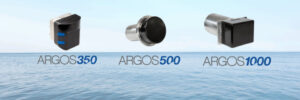
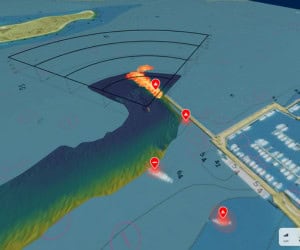
The Argos Navigation Sonar Family.
Design Review and Classification Support
FarSounder offers complimentary drawing review services to confirm acoustic suitability and highlight potential placement concerns. This support is particularly useful for designers working with forward looking sonar for the first time.
Fairings are mechanically simple, generally making them less costly to fabricate at the shipyard. Classification societies including Lloyd’s, DNV, and ABS are familiar with Argos systems, allowing customer drawings to be reviewed and approved efficiently.
System Components and Placement
An Argos sonar system is composed of three main elements:
- Transducer Module, housed in a fairing, either integrated into or mounted externally on the hull.
- Power Module, located in a dry interior compartment.
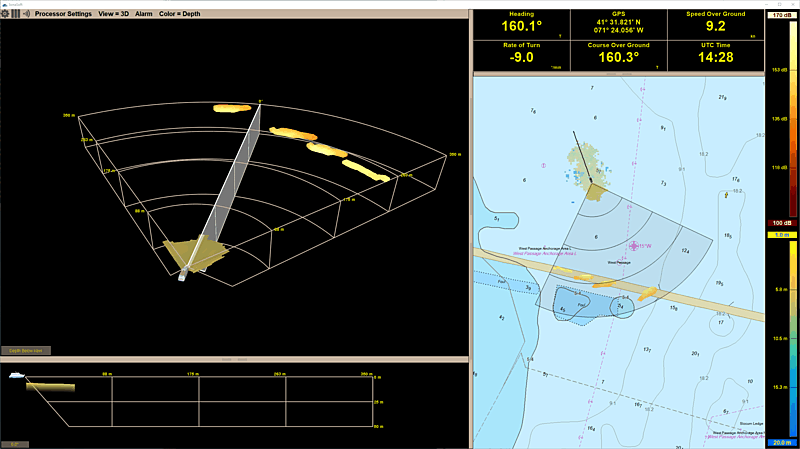
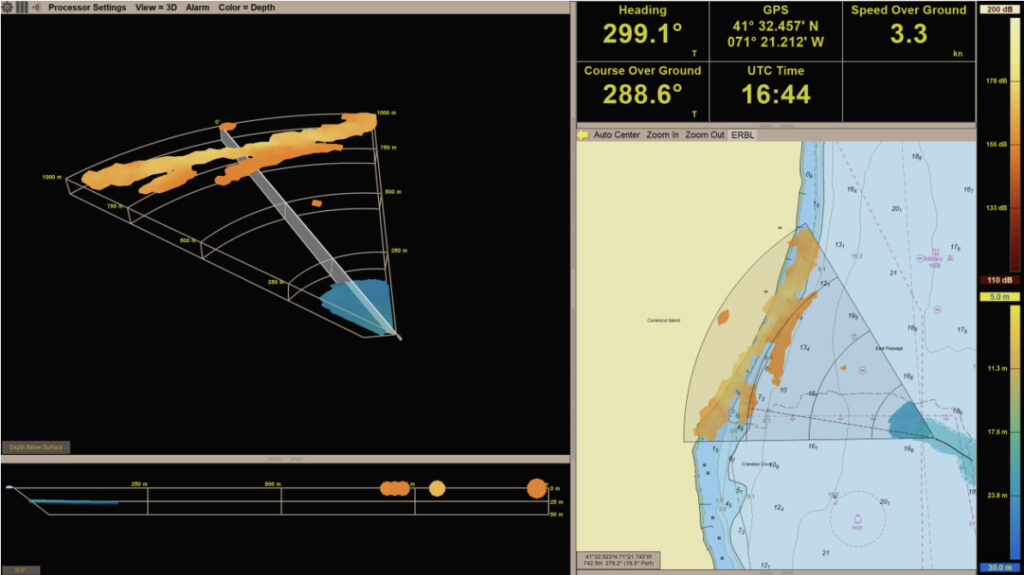
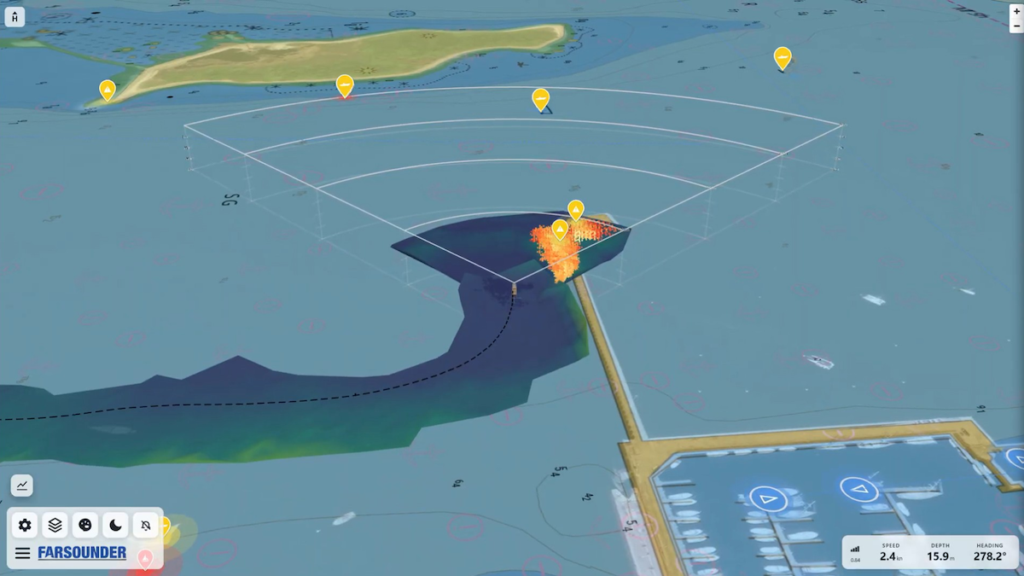
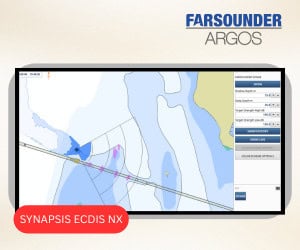
- Computer running SonaSoft™ software, handling sonar processing and display.
Only a single cable penetration through the hull is required. The Transducer Module can also be removed and reinstalled in-water by a diver using a wet-mateable connector.
Fairing placement is determined by vessel characteristics such as hull shape, stem rake, and the presence of a bulbous bow. Depending on these factors, the fairing may be located on the stem centerline, forward of the stem, slightly off-center, or inset into the bulb.
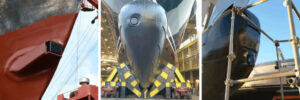
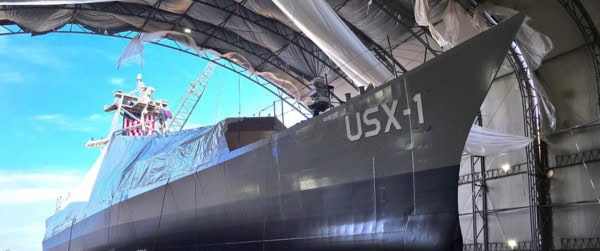
Installations of Argos Sonars.
Performance Considerations
Although Argos sonars appear larger than conventional echosounders, their relative scale compared to the vessel is small. There have been no reports of changes to vessel performance before or after installation. In practice, hull coatings often have a greater effect on drag than the addition of a sonar fairing.
Installation and Dealer Network
Integration, commissioning, and service are supported by FarSounder Certified Dealers, who work closely with naval architects and shipyards to manage the process. Customers are encouraged to use FarSounder’s complimentary design review before making hull modifications. Installation guides and drawing packages are available directly from the company.