



Textron Systems, a developer of multi-mission uncrewed systems for air, land, and sea, outlines its long-standing role in advancing Uncrewed Aircraft Systems (UAS) that support U.S. and allied forces. Read more >>
Over nearly four decades, the company has developed and sustained platforms shaped by real-world operational use, including deployments at sea and under demanding conditions. This foundation began with the Pioneer aircraft, an early system that demonstrated the practical value of uncrewed aviation in military operations.
In the mid-1980s, the U.S. Navy selected the Pioneer RQ-2A for ship-based surveillance and reconnaissance. Developed by AAI Corporation, later known as Textron Systems, in partnership with Israel Aircraft Industries, the aircraft provided a compact and durable solution with notable capability for its size.
By 1986, trials aboard USS Iowa had established its operational effectiveness, giving commanders persistent aerial visibility without placing pilots at risk. Its impact was further demonstrated during the 1991 Gulf War, when a Pioneer operating near Faylaka Island was associated with the first recorded instance of opposing troops surrendering to an uncrewed system.
Experience gained from early deployments informed the evolution of more advanced platforms, including the Shadow® Tactical UAS. With more than 1.3 million flight hours, Shadow has supported operations in demanding environments.
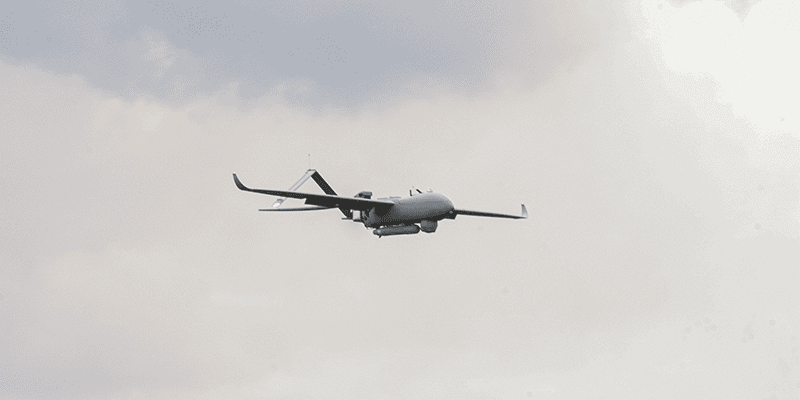
Building on this progression, the Aerosonde® UAS family has been developed to address current operational needs, including extended endurance, flexible deployment, and integration across joint forces.
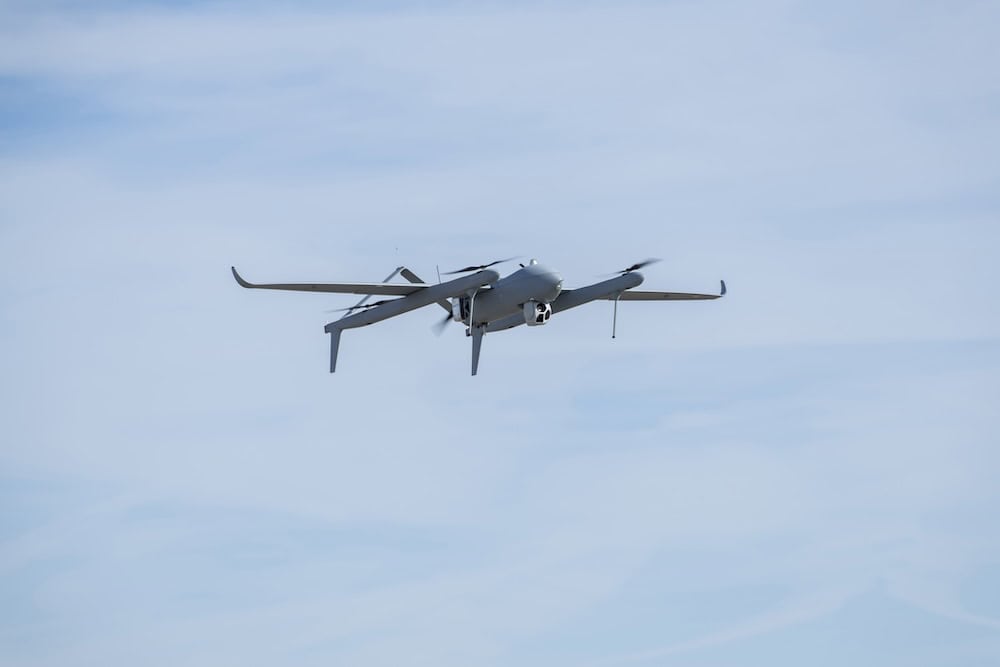
Featuring automated launch and recovery and available in both fixed-wing and Vertical Take-Off and Landing (VTOL) configurations, Aerosonde can operate across land and maritime environments, including from ships with limited deck space. Its modular payload suite includes Electro-Optical/Infrared (EO/IR) cameras, SIGINT sensors, a Synthetic Aperture Radar for low-visibility conditions, and communications relay systems.
With more than 700,000 flight hours, Aerosonde reflects a continued emphasis on adaptability and operational relevance. Across its UAS portfolio, Textron Systems draws on decades of applied experience to inform system design, focusing on performance in challenging conditions, sustained operational support, and technologies intended to reduce risk while improving clarity.
From early shipboard deployments to current autonomous capabilities, these systems remain aligned with the objective of supporting mission success while enhancing the safety of personnel.
To find out more information, read ‘Leading Innovation in Uncrewed Aviation’ here >>