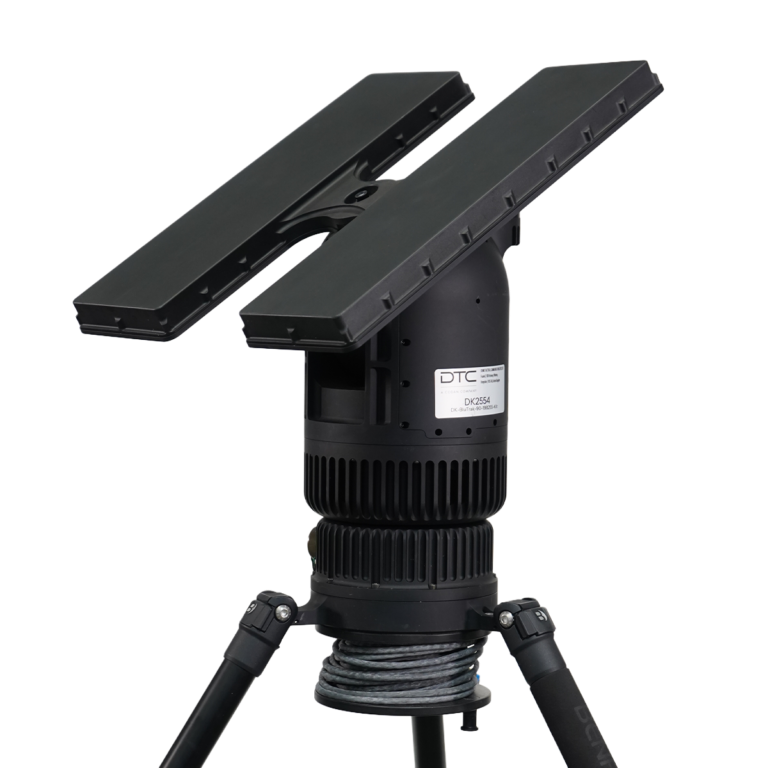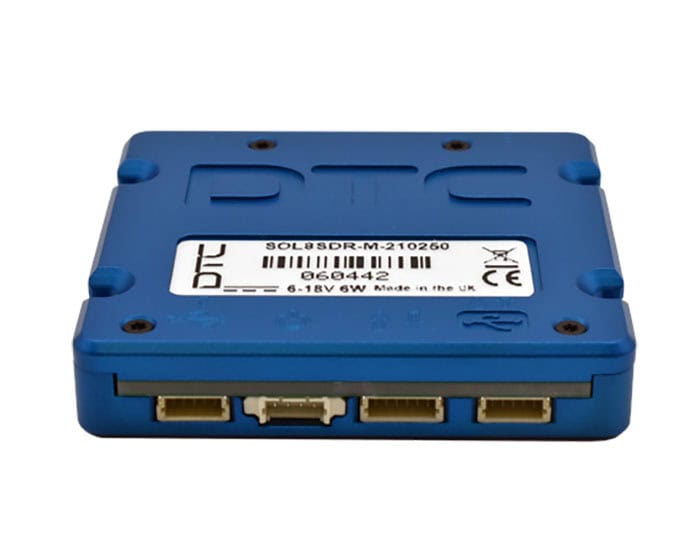

DTC, a Codan Company‘s MESH wireless communications architecture is designed to maintain resilient connectivity in contested environments where traditional fixed infrastructure is prone to failure.
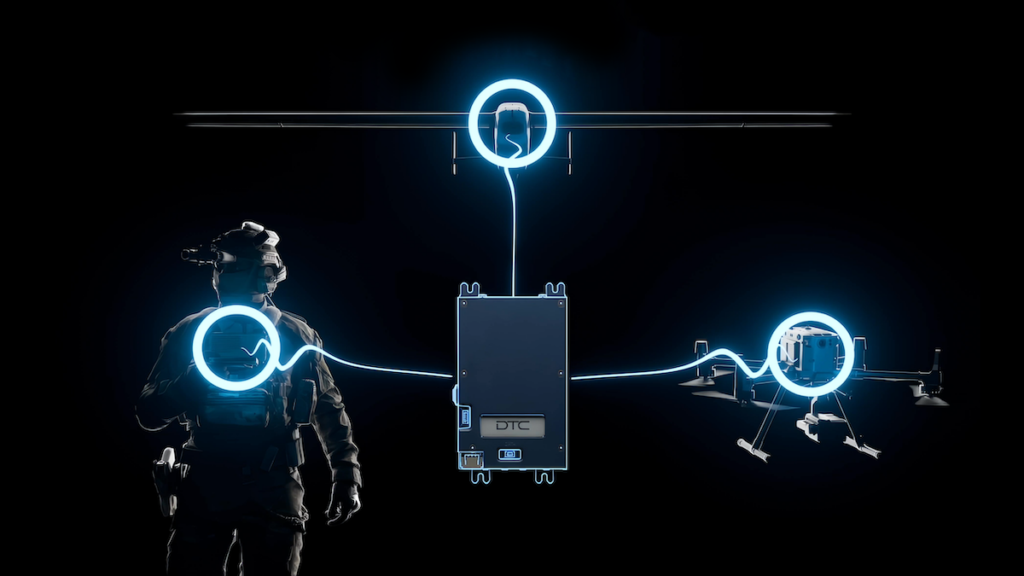
The system utilizes a peer-to-peer architecture in which every node, including radios, vehicles, personnel, drones, and sensors, connects directly to multiple other nodes simultaneously. This allows data, voice, and video to travel along multiple paths to reach their destination.
Andrew Dobson, Vice President of Military Communications for DTC, commented, “It’s about sending data to the next node or platform, and then that node communicates it on your behalf, and so on and so forth. Think of it like stepping stones across a river. You don’t broadcast out and hope everybody is within range. Instead, the network finds its own path, one node at a time, all the way to its destination.”
Using a token-based system, the network brings discipline to data transmission by continuously mapping optimal paths for information flow. This creates a flexible, scalable network where individual radio range limitations are overcome by collective reach. This represents a departure from traditional military and public safety communications that rely on infrastructure-dependent networks, such as fixed base stations or centralized repeaters, which introduce single points of failure vulnerable to jamming or physical destruction.
The system is defined by its self-forming and self-healing capabilities, both designed to expect and adapt to disruption. Self-forming enables the network to establish itself automatically when radios power on and identify other nodes with matching credentials.
“Self-forming is having the network establish itself and broadcast ‘I’m here,’ and then other radios respond, ‘I’m here too. I have the same credentials.’ Just like that, the network forms,” said Dobson.
Self-healing ensures that if a node is lost due to jamming, interception, or movement out of range, the remaining nodes immediately recognize the gap and reform connections.
“Self-healing is about maintaining the network as nodes pop in and out – whether that’s due to jamming, some form of interception, or simply being out of range. You want a network that continuously and dynamically changes. You want it to be intelligent,” said Dobson.
This recovery occurs dynamically, with network reconvergence happening within seconds, ensuring communications remain seamless even as the underlying structure shifts.
The reliability of MESH networks makes them particularly suited to urban environments, where buildings often block line-of-sight communications. By routing around obstacles using available nodes, personnel remain connected in complex terrain.
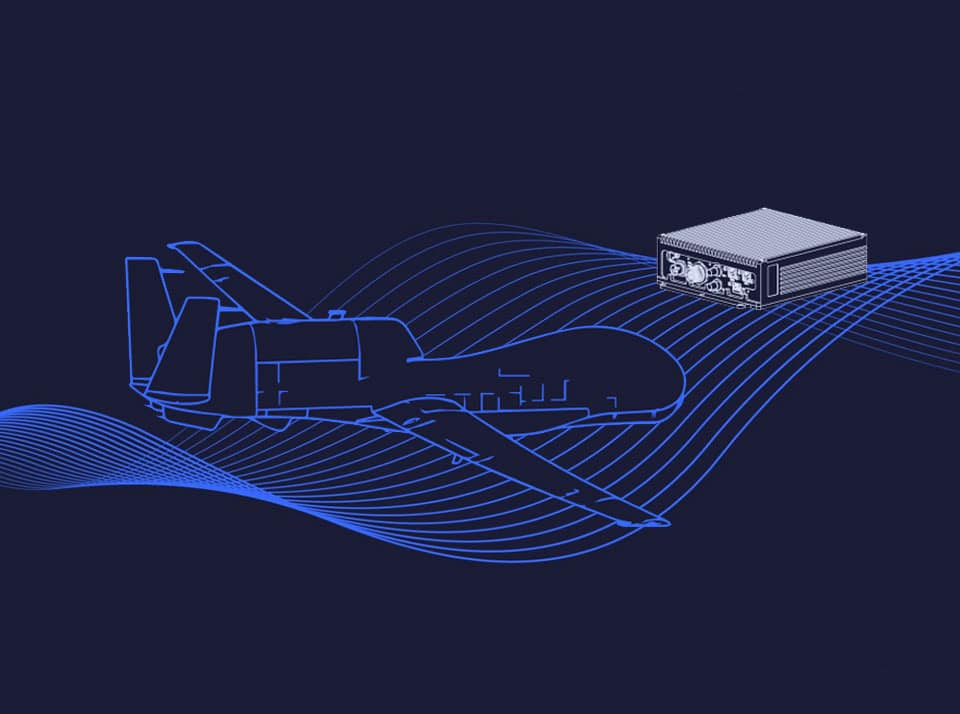
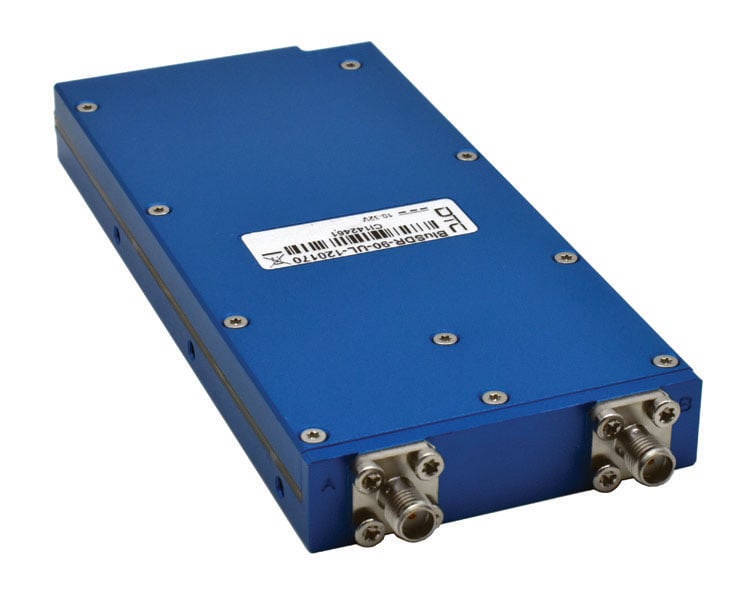
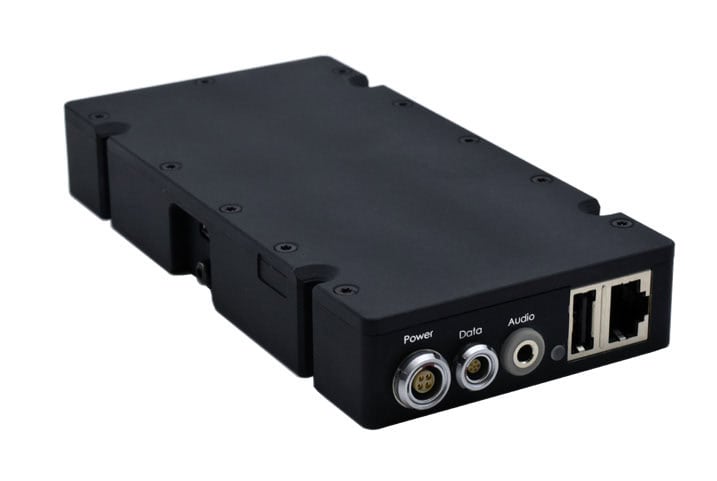
This flexibility extends to unmanned systems integration, such as the BluSDR-30 platform. Operators equipped with MESH radios can seamlessly connect to drones on the same network, allowing any node to view or control drone feeds in real time. The network treats airborne platforms as additional nodes, adapting continuously as UAVs move to enhance situational awareness and mission planning.
To ensure the technology remains future-proof, DTC has adopted a software-defined, open architecture rather than tying capability to hardware refresh cycles.
Dobson added, “Looking ahead, we’re going to keep developing and incrementally improving all the features, applications, and capabilities. But the base hardware will remain the same, giving customers longer use out of it. We’re moving away from a hardware-centric world.”
This approach enables users to access the latest capability enhancements through software updates, protecting initial investment while extending hardware lifespan.