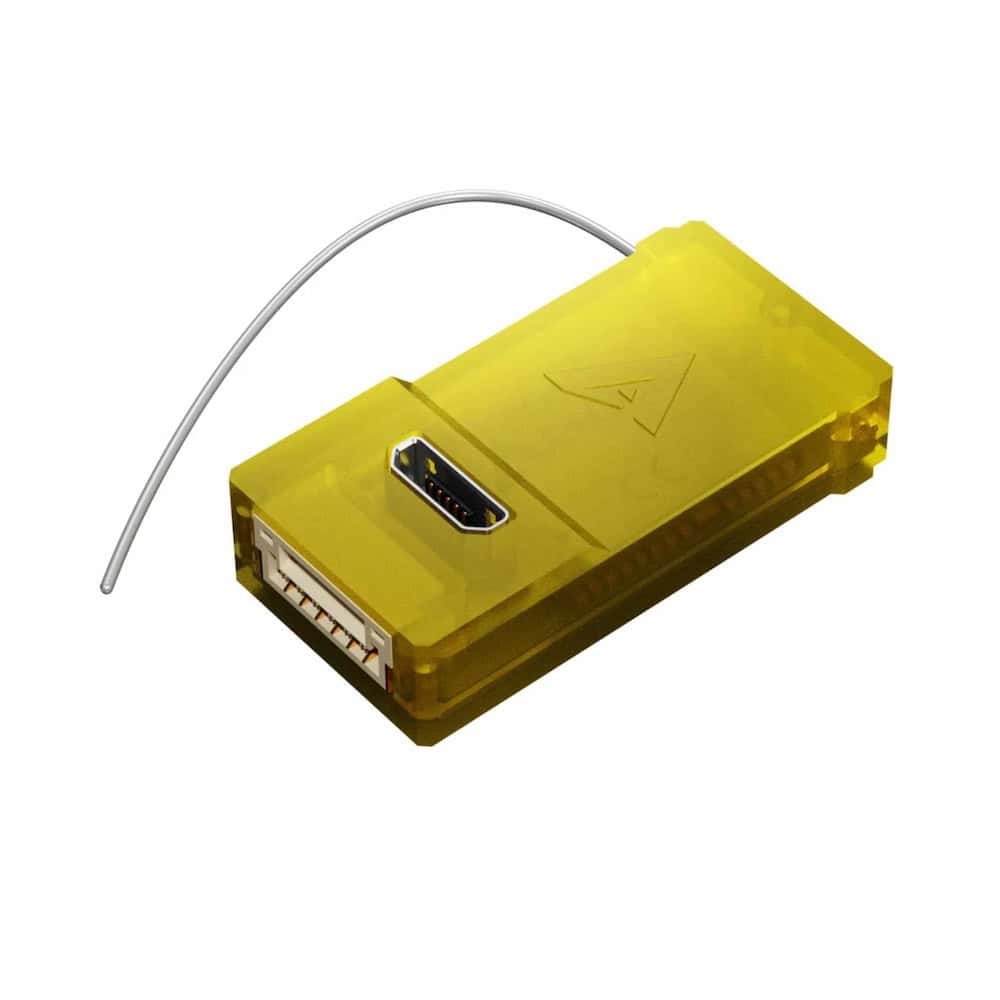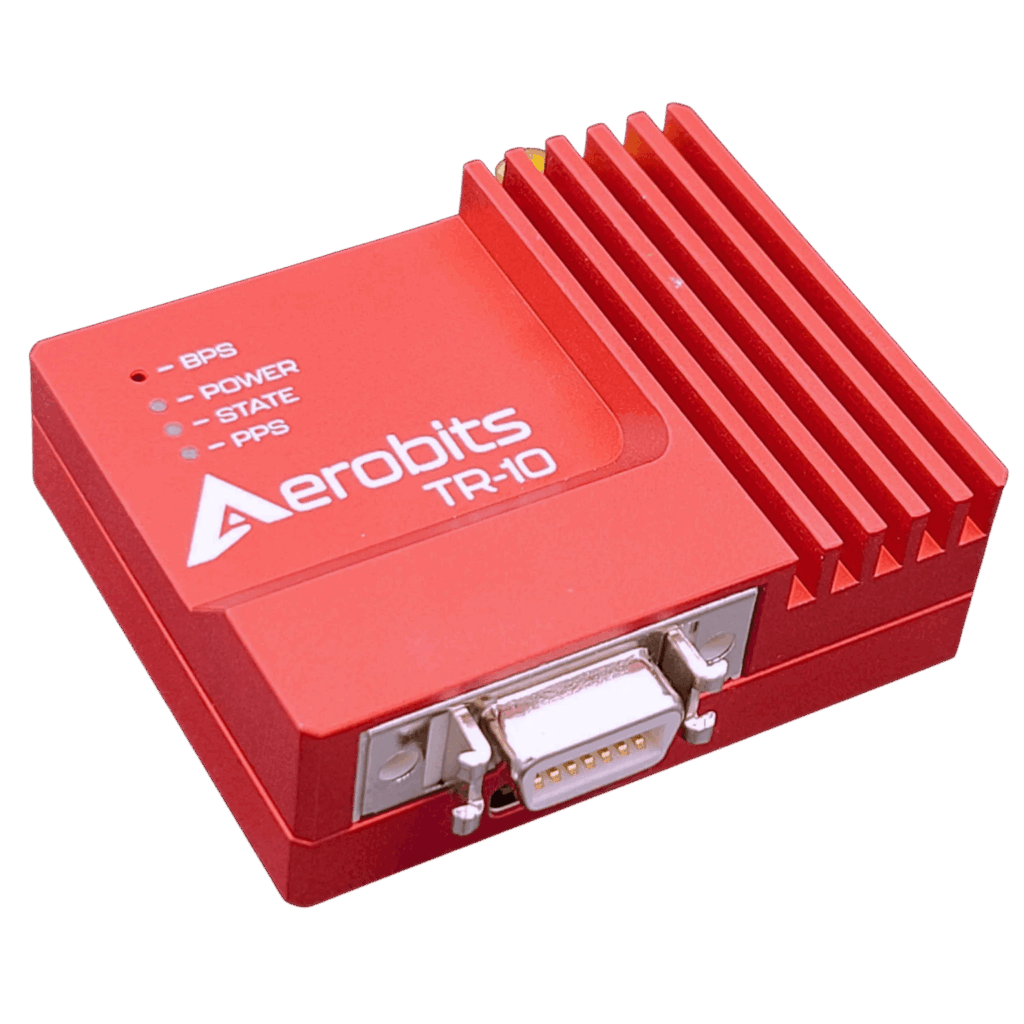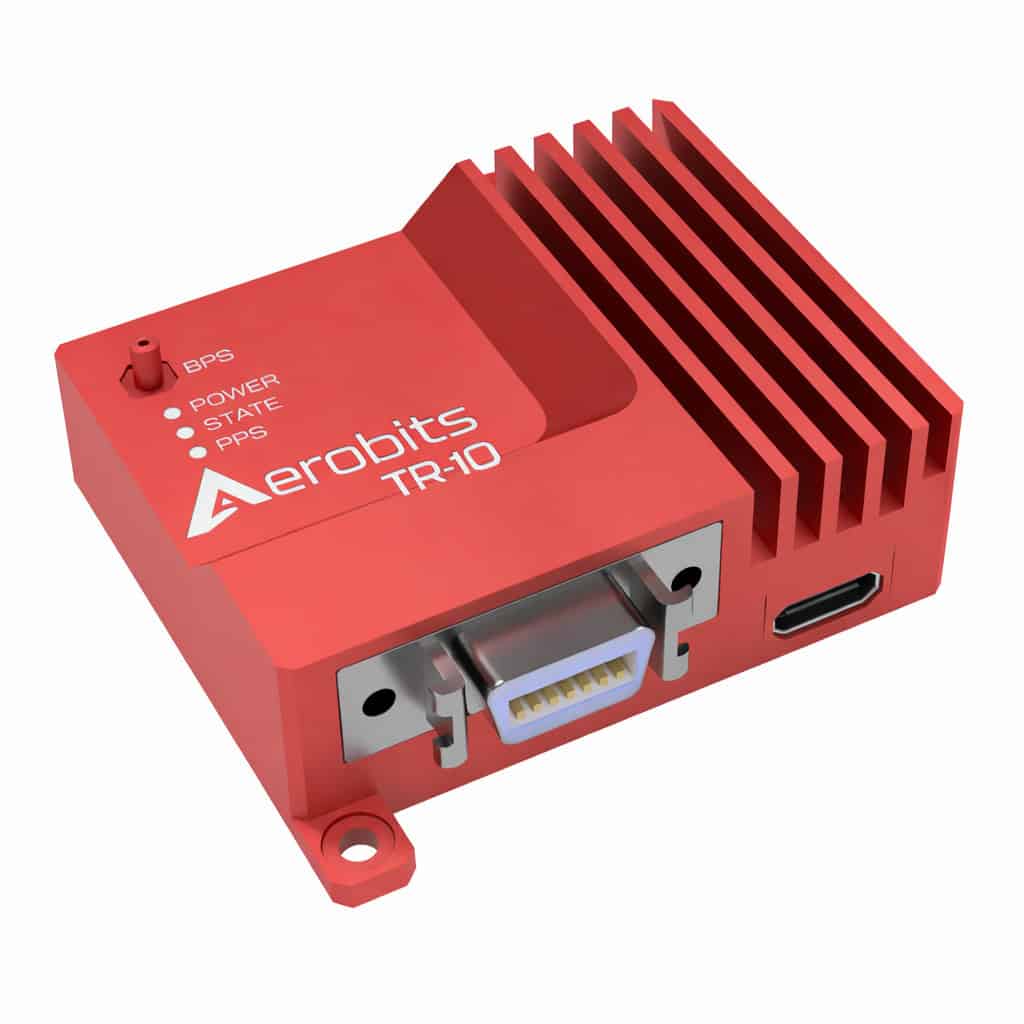
Aerobits TR-3 Series is a family of compact UAV transceivers designed to support cooperative surveillance in unmanned aircraft operations. Read more >>
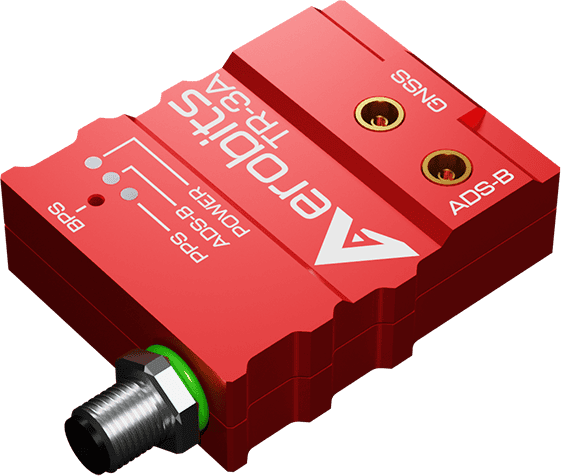
TR-3A
The system is designed for integration into unmanned platforms operating in complex and evolving airspace environments, enabling the reception and transmission of traffic information using established aviation surveillance standards.
The product line is available in three configurations: TR-3A with ADS-B and GNSS, TR-3F with ADS-B, a licensed FLARM transceiver and GNSS, and TR-3U with ADS-B, UAT and GNSS. Each variant addresses different operational requirements depending on airspace conditions and mission profile.
Cooperative Surveillance in Unmanned Operations
Unmanned aircraft operating in extended or autonomous missions do not rely on onboard human perception in the same way as crewed aviation. Instead, they depend on a combination of onboard automation, ground control, communication links, and external traffic awareness systems.
Cooperative surveillance forms part of this architecture by enabling the exchange of positional and identification data between aircraft and infrastructure. When implemented on UAV platforms, these systems can support detection of nearby cooperative traffic, enhance situational inputs for onboard logic, and contribute data to ground-based or networked airspace services.
This layer of shared awareness supports operations such as infrastructure inspection, energy network monitoring, mapping, emergency response, logistics trials, and flight testing, where airspace interaction is increasingly common.
Surveillance Technologies Used in UAV Integration
The TR-3 Series supports multiple established surveillance protocols, each addressing different operational environments.
ADS-B is widely used in cooperative airspace for the broadcast and reception of aircraft position and identification data. UAV implementations typically use ADS-B In to receive surrounding traffic information, while ADS-B Out functionality, where permitted and configured, enables the platform to broadcast its own position.
FLARM is commonly used in general aviation environments, particularly among gliders and light aircraft. The inclusion of a licensed FLARM transceiver supports operations in mixed airspace where non-ADS-B-equipped users may be present.
UAT provides an additional surveillance pathway used in selected regional and experimental aviation environments. It supports test campaigns, validation activities, and deployments aligned with specific regulatory or demonstration requirements. In TR-3U configurations, UAT capability may include reception and, where configured, transmission functionality.
Each protocol addresses different airspace conditions, and UAV surveillance requirements vary depending on mission profile and operating environment.
Designed for UAV Integration Constraints
UAV avionics integration requires careful consideration of size, weight, and power consumption. Traditional aviation hardware is often not optimized for unmanned platforms, making compact design and simplified integration important factors.
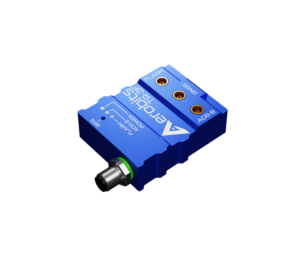
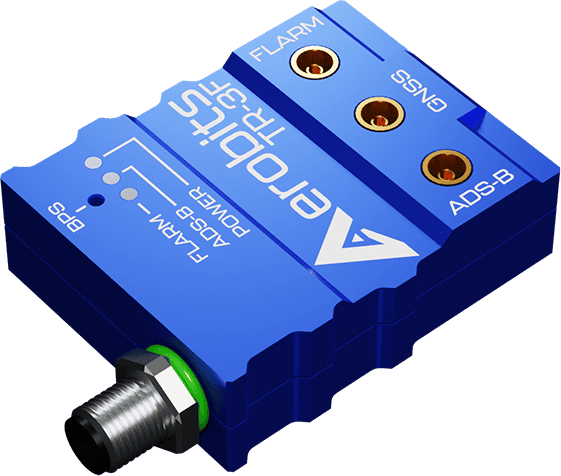
TR-3F
The TR-3 Series follows a UAV-oriented design approach. It is built as a low-power system with a compact footprint suitable for integration into small and medium unmanned aircraft platforms.
Integration is supported through standard UAV communication interfaces, including MAVLink and AERO protocols. The system incorporates multi-constellation GNSS positioning and an onboard barometric pressure sensor for altitude reference. Configurable ADS-B transmission output allows adaptation to different operational and regulatory environments.
These features reduce the need for additional external components and support streamlined avionics integration.
TR-3 Series Variants
The Aerobits TR-3 family is offered in three configurations, each addressing a specific surveillance requirement.
TR-3A combines ADS-B capability with integrated GNSS positioning and is intended for UAVs requiring ADS-B-based situational awareness and cooperative visibility.
TR-3F integrates ADS-B, a licensed FLARM transceiver, and GNSS. It is suited to operations in mixed airspace environments where gliders and light aircraft are present, supporting broader traffic awareness in shared aviation regions.
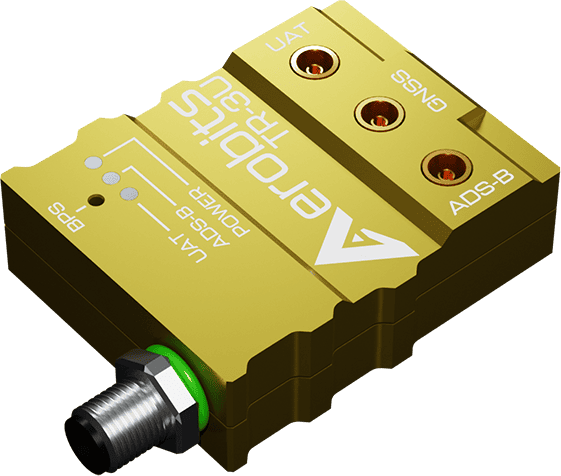
TR-3U incorporates ADS-B, GNSS, and UAT functionality. It is intended for development programs, demonstrations, and regional implementations where UAT-based surveillance is required or evaluated, including test and integration activities where reception and, in some configurations, transmission capability may be used.
Across all variants, the system maintains a consistent design approach focused on compact form factor, low power consumption, integrated positioning, and support for both reception and transmission of cooperative traffic data.
Matching Capability to Operational Requirements
Selection between TR-3 variants is driven by airspace environment and mission requirements rather than a universal specification.
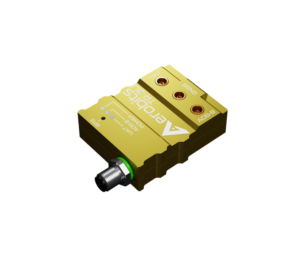
TR-3U
TR-3A is typically used in UAVs requiring ADS-B-based situational awareness in structured or controlled airspace.
TR-3F is suited to operations alongside mixed aviation users, particularly where FLARM-equipped aircraft are present.
TR-3U is intended for scenarios involving UAT-based infrastructure, regulatory test programs, or development work where UAT compatibility is required.
This modular approach allows UAV integrators to align surveillance capability with mission needs without redesigning core avionics architectures for each deployment.
UAV Application Areas
The TR-3 Series supports integration into a range of professional unmanned system applications, including:
- Beyond visual line of sight operations
- Traffic awareness for onboard and ground-based systems
- Cooperative position broadcasting
- Detect and avoid development programs
- Industrial UAV inspection and monitoring platforms
- Flight testing and validation campaigns
- OEM integration into UAV avionics stacks
- Research and development in autonomous aviation
Cooperative Surveillance for BVLOS and Airspace Integration
Cooperative surveillance remains an important element in the development of unmanned aviation within shared airspace. ADS-B, FLARM, and UAT each provide distinct capabilities depending on operational context, regulatory environment, and traffic composition.
The Aerobits TR-3 Series combines these technologies within a compact UAV-focused transceiver platform, offering three configurations tailored to different surveillance requirements. TR-3A, TR-3F, and TR-3U allow integrators to align surveillance capability with aircraft requirements, mission objectives, and operating environments while maintaining a compact, low-power footprint.
As BVLOS operations, flight testing programs, and future UTM and U-Space concepts continue to evolve, UAV platforms will increasingly require access to cooperative traffic data and airspace awareness tools. By supporting ADS-B, FLARM, and UAT-based surveillance capabilities, the TR-3 Series provides a flexible integration option for manufacturers and developers working to enable safer operations in shared airspace.